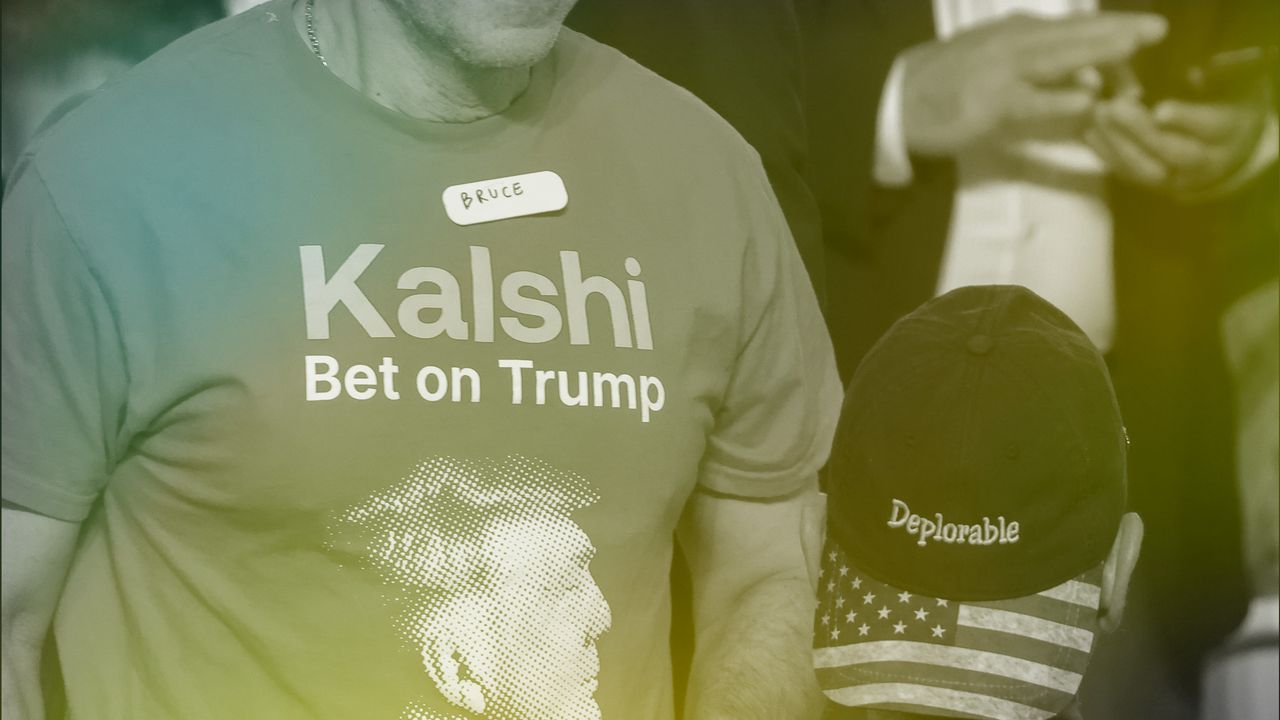
This intervention comes as the C.F.T.C. is expanding its supervisory role in another fast-developing industry, one in which the Trump family has even bigger financial interests: crypto. According to the watchdog group Public Citizen, World Liberty Financial, a new-age finance firm that issues crypto tokens and stablecoins, and which Trump co-founded in 2024, has created more than a billion dollars for him in equity and cash inflows. Trump’s two oldest sons are co-founders of American Bitcoin, a company that mines bitcoins and accumulates them in its treasury. Under the CLARITY Act, which is awaiting Senate approval, the C.F.T.C. would be granted exclusive jurisdiction over all “digital commodities,” a category that includes Bitcoin, Ether, and Solana. “Likewise, and even more importantly,” Trump went on in his Truth Social post, “where we are currently the Crypto (Bitcoin, etc.) Capital of the World, other Countries are trying diligently to replace us in that capacity, but we won’t let that happen. It is a major Industry, and we must protect it. Mike Selig, C.F.T.C. Chairman, and respected by all, is doing a great job.”
The C.F.T.C. is now facing challenges on two fronts: not just from the states but also from media revelations about how its enforcement division has been neutered since Trump came to office. A couple of days before the President posted his online screed, the Times published a barn burner of a story that described how, since the start of last year, the C.F.T.C. has “shrunk its work force, purged career officials, sharply curtailed crypto enforcement and helped out prediction markets at virtually every turn.” One veteran employee of the agency who rose to acting chief of its enforcement division, before retiring last year, was quoted as saying, “This is really the first time that politics have affected the C.F.T.C. in such a dramatic way.”
In the legal battle with the states, the central issue is whether buying or selling an “events contract” on Polymarket, say, one based on whether Novak Djokovic will win his next match, is the same as betting on a site such as DraftKings or FanDuel, or with your neighborhood bookie. The states argue it is. The prediction platforms and the Trump Administration say that the wagers are events contracts, which are subject to the jurisdiction of the C.F.T.C. So far, courts in various parts of the country have issued clashing rulings. The dispute seems certain to go all the way to the Supreme Court, and some independent observers expect the prediction markets to end up with a loss. “We continue to give the advantage to the states in this fight, as the states have long been in charge of regulating sports gambling,” Jaret Seiberg, an analyst at the investment bank TD Cowen, wrote in a note to clients last week. “Litigation could still take two years or longer to fully play out.”
In the meantime, what’s happening at the C.F.T.C. looks like a classic case of what economists refer to as regulatory capture, where vested interests effectively seize control of a government agency, which then advances their interests. The Biden Administration had expressed concern about how prediction markets were running: in January, 2022, the C.F.T.C. forced Polymarket to pay a $1.4 million penalty for operating an unregistered “contract market.” Subsequently, the agency, along with the Justice Department, investigated whether Polymarket had violated this settlement by accepting bets from people in the United States. In November, 2024, F.B.I. agents raided the apartment of Polymarket’s young founder, Shayne Coplan. After Trump came to power, the C.F.T.C. reversed course, closing its investigation this past July without bringing any charges. A month later, Polymarket announced that 1789 Capital had made a strategic investment in the company, and Trump, Jr., joined its advisory board.
Some career officials at the C.F.T.C. have tried to exercise some independence. Last year, two senior officials in the enforcement division queried the steps that Polymarket had taken to prevent fraud. But, per the Times account, these officials were eventually purged.


