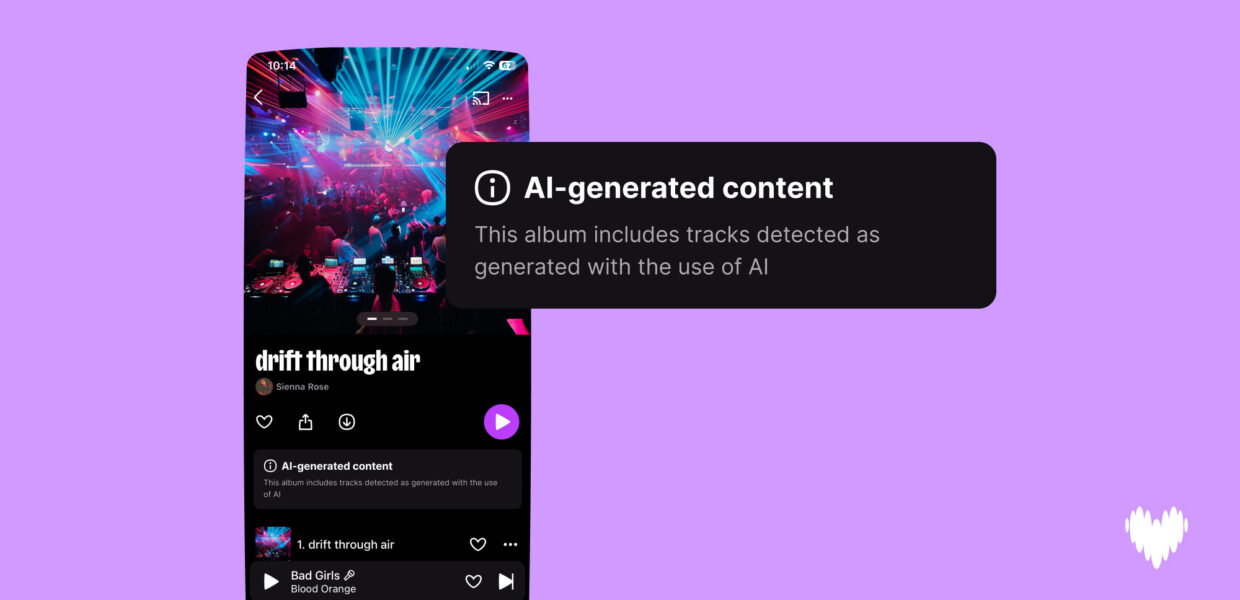
Music streaming service Deezer reports that 44 percent of all songs uploaded to its platform daily are now fully AI-generated. The company uses its own detection technology and plans to license it to the broader music industry.
According to Deezer, nearly 75,000 fully AI-generated tracks are uploaded to the platform every day. That works out to roughly 44 percent of all daily uploads and more than two million AI tracks per month. Just over a year ago, the number was around 10,000 tracks per day.
Deezer says it’s the only streaming platform worldwide that systematically detects and labels AI-generated music. Since January 2025, the company has been using a patented detection tool designed to identify output from popular generative models like Suno and Udio. Deezer says the tool has flagged and tagged more than 13.4 million AI tracks.
The company has been licensing its detection technology to other music industry companies since January.
In a survey Deezer commissioned from Ipsos with 9,000 participants, 97 percent couldn’t tell AI-generated music from human-made tracks in a blind test. Still, 80 percent of respondents said they want clear labeling, and 52 percent don’t want AI songs showing up in regular charts.
Bot-driven streams account for most plays on AI tracks
Detected AI tracks are automatically removed from algorithmic recommendations and editorial playlists on the platform. As a result, AI music accounts for just one to three percent of total streams on Deezer. But even those numbers are mostly fake – 85 percent of streams on AI-generated tracks come from stream manipulation, meaning bots or automated playback designed to siphon royalties from the shared payment pool. Deezer excludes these manipulated streams from payouts.
A recent case in the US shows just how real the problem of AI-powered streaming fraud has become. A man from North Carolina pleaded guilty to using hundreds of thousands of AI-generated songs and bot streams to collect more than eight million dollars in royalties. The industry is responding to the flood of AI music in different ways: Bandcamp has banned AI-generated music from its platform entirely, while Apple Music relies on voluntary transparency tags where labels and distributors are expected to flag AI content themselves.
Meanwhile, a Rolling Stone investigation found that top producers and songwriters have been quietly using AI generators behind the scenes but stay silent out of fear of public backlash. Suno CEO Mikey Shulman compared his tool to the “Ozempic” of the music industry – everyone uses it, but nobody talks about it.
AI News Without the Hype – Curated by Humans
Subscribe to THE DECODER for ad-free reading, a weekly AI newsletter, our exclusive “AI Radar” frontier report six times a year, full archive access, and access to our comment section.
Subscribe now


