For Tata Motors Passenger Vehicles, the year was supposed to be remembered for a corporate separation. Instead, it may be remembered as the moment the company tried to redefine itself.
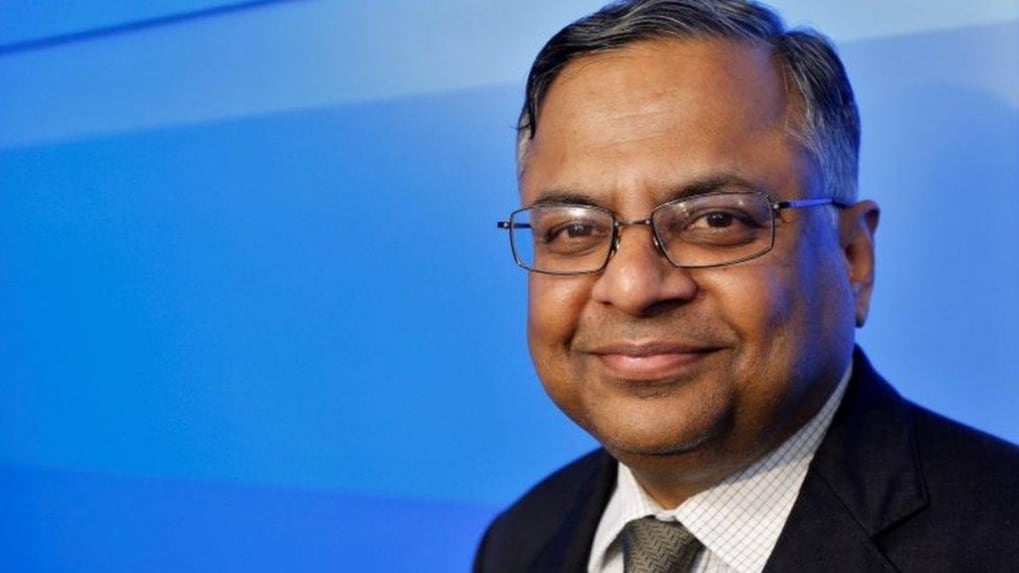
In his first annual letter to shareholders since the demerger of the commercial vehicles business, Chairman N. Chandrasekaran presents Tata Motors Passenger Vehicles not as a manufacturer of cars alone, but as a focused personal mobility company seeking leadership across conventional vehicles, electric vehicles and modern luxury automobiles.
The message comes at a pivotal time for the automotive industry. Global growth has been unsettled by tariffs, geopolitical uncertainty and shifting trade arrangements. Yet Chandrasekaran argues that the forces reshaping mobility — electrification, digital technologies, artificial intelligence and changing consumer expectations — are creating opportunities for companies capable of balancing innovation with resilience.
The clearest evidence of that ambition can be found in India, where Tata Motors Passenger Vehicles delivered what the chairman describes as its strongest performance yet.
The company recorded its highest-ever sales of approximately 642,000 cars and sport utility vehicles during fiscal 2026, growing 15.3 percent year-on-year — nearly twice the industry’s average growth rate. In the second half of the year, Tata emerged as the country’s second-largest passenger vehicle player with a market share of 14.1 percent.
For Chandrasekaran, those numbers are not simply a measure of scale. They are validation of a strategy that has increasingly relied on offering customers multiple powertrain choices rather than forcing a transition toward any single technology.
The company points to strong performances from models such as Nexon and Punch, which became the first- and third-highest-selling vehicles in the industry during the second half of the fiscal year. The launch of the Sierra, one of India’s most iconic automotive nameplates, is presented as another symbol of Tata’s attempt to blend nostalgia, design and future-facing technology into a broader consumer proposition.
Nowhere is that strategy more visible than in electric vehicles.
While India’s EV market remains intensely competitive, Tata retained its leadership position, surpassing 250,000 cumulative EV sales and selling more than 92,000 electric vehicles during fiscal 2026, representing growth of more than 43 percent over the previous year. The company says it has held the top position in the market for seven consecutive years and currently commands about 40 percent market share.
Read more: Dentsu India wins Tata Group’s integrated IPL media mandate across key brands
Yet the chairman’s message is notably less about electric vehicles as a standalone category than about customer choice. He repeatedly emphasizes a “multi-powertrain” approach, arguing that demand for internal combustion engines remains strong even as electric mobility gains momentum. That balancing act reflects a broader reality confronting automakers worldwide: consumers are embracing cleaner technologies, but not all at the same pace.
The letter also reveals how dramatically Tata’s domestic business has evolved over the past few years. Chandrasekaran notes that revenues have expanded nearly six-fold while volumes have increased almost five-fold, alongside a doubling of the company’s sales and service network. The implication is clear: Tata sees its future not merely in selling more vehicles but in expanding customer access and engagement.
Financially, the passenger vehicle business ended the year on a stronger footing than many expected. Revenue rose 20.7 percent to ₹58,465 crore, while profit before tax increased 32.6 percent to ₹1,436 crore. The business also closed the year with a net cash position of ₹6,710 crore, giving it flexibility to continue investing in product development and future technologies.
The global picture, however, was more complicated.
Jaguar Land Rover, the company’s luxury vehicle business, faced a difficult year. New tariff regimes, a cyber incident that forced a five-week production halt and broader economic uncertainty weighed on performance. Revenue fell 20.9 percent to GBP 22.9 billion. The year also marked the end of Adrian Mardell’s tenure and the appointment of P. B. Balaji as chief executive, ushering in another period of transition.
Also read: Tata Motors turns to product discipline, fleet economics and electrification to navigate an uncertain commercial vehicle market
Still, Chandrasekaran’s letter avoids dwelling on near-term setbacks. Instead, it frames JLR’s future around its “House of Brands” strategy, which seeks to sharpen the identities of Range Rover, Defender, Discovery and Jaguar while strengthening profitability and reducing breakeven levels. New launches, including the Range Rover Electric and Jaguar Type 01, are positioned as central to that effort.
Perhaps the most revealing aspect of the letter is its emphasis on brand building.
For Tata Motors Passenger Vehicles, growth is increasingly linked to aspiration, trust and customer centricity. The chairman writes of building “distinctive, trusted and aspirational brands” and describes a more purposeful brand proposition aimed at forging deeper emotional connections with customers. The language reflects a shift from manufacturing-led thinking toward a consumer-focused model more commonly associated with technology and lifestyle companies.
The same philosophy extends to technology. Artificial intelligence, connected vehicles, advanced analytics and software-defined architectures are described not as future experiments but as essential tools for improving customer engagement and personalising the ownership experience.
Underlying the entire message is a belief that the future of mobility will be shaped by three forces simultaneously: electrification, digitalisation and sustainability.
The company has committed to achieving net-zero emissions by 2040 for its passenger vehicles business and intends to continue investing in cleaner technologies while improving conventional powertrains. Sustainability, Chandrasekaran argues, is no longer a parallel agenda but a core business strategy.
By the end of the letter, the demerger itself begins to feel less like the story and more like the starting point.
The separation has given Tata Motors Passenger Vehicles a clearer identity and a narrower mandate. The challenge now is whether it can transform that focus into durable leadership in a market where consumer preferences, technologies and competitors are changing faster than ever.
For Chandrasekaran, the answer appears to lie in a simple proposition: build products people aspire to own, give them multiple paths into the future, and remain agile enough to navigate whatever comes next.
Read more: Tata Motors targets 20% passenger vehicle market share by 2030, says N Chandrasekaran
First Published on


