As someone who was raised in the ’90s, although I don’t have extensive knowledge about Michael Jackson’s history or discography, he was a name that opened the window for many people of my generation to pop music and breakdancing. If someone was dancing on a stage in the classic Michael Jackson costume, we all gave that performance our undivided attention to see those signature moves on stage. So a movie about the making of such an iconic star in that pre-Internet era was a major deal. However, since the last days of Michael Jackson were embroiled in controversies, there were many questions about whether this movie, written by John Logan, would dare to address them. And sadly, Michael, directed by Antoine Fuqua, becomes a very polished narrative that ignores all the flaws of its protagonist by choosing the easiest bit of his story.
In 1966, Joseph Jackson created a band named Jackson 5, using all his sons, and he was a very strict and abusive father. Little Michael got the attention of the prominent names of that time, who told him that he was a unique talent. What we see here is the journey of Michael from being constrained by his father and the family band to finally being on his own terms.
The life of Michael Jackson has been an extremely dramatic one. His rise to fame, his decision to leave Jackson 5, his prime years as a solo artist, the accidents, the surgeries, and, towards the end, the kind of sexual exploitation allegations, they all made his real life fully dramatic. From all the biopics that are out there, we all know the syntax of certain biopics that want to project the main characters as misunderstood ones. Out of all the hurdles in Michael Jackson’s life, John Logan has chosen the easiest and cliched one, and he pampers it with a glorified tone. Michael is almost like a staged concert movie that tries to show us the behind-the-scenes drama of some of his iconic creations.
The phase of his life they have chosen and the conflict between Michael and his father are perhaps what really exposes the lack of guts of the filmmakers. What happened to Michael Jackson after he reached the pinnacle of success is not there in this movie. What a filmmaker chooses to film is their creative liberty. However, even in the parts that we see in the movie, there is a deliberate attempt to project him as a very naive and selfless soul. There are multiple instances of Michael visiting hospitals to console people. There are scenes that show Michael directing the director in music videos. He is shown as this guy who unites black people who are involved in gang wars. There is even a cliched meeting sequence that shows how John Branca was hired by Michael as his manager. And John Branca is one of the producers of this movie. The writing of all these moments that depict Michael Jackson as this misunderstood empath has the emotional depth of a corporate film.
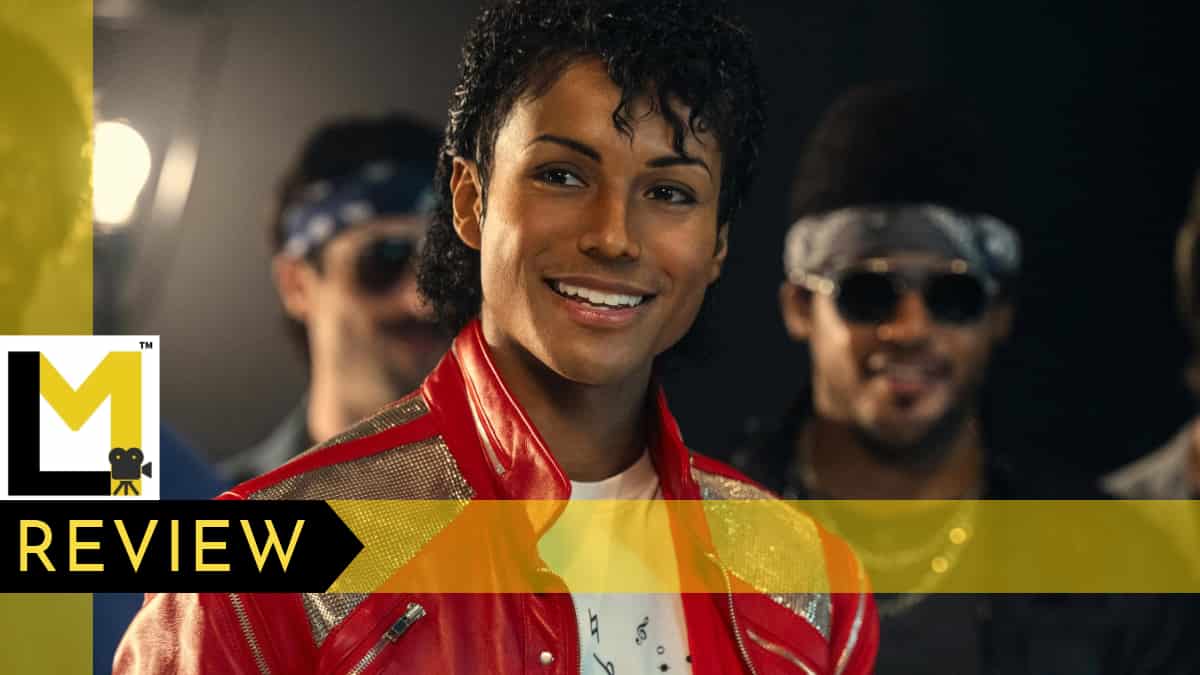
The best thing about the movie is the performance of the actors who have played the part of Michael Jackson. Juliano Krue Valdi plays the young version of Michael Jackson, and the boy was terrific in depicting that innocent energy of the future legend. The nephew of Michael Jackson, Jaafar Jackson, plays the part of the adult version of Michael. Jaafar carries the body language of the character beautifully, and he makes sure the voice modulation never becomes a mockery of Michael Jackson. Colman Domingo was able to add some layers of nuance that the writing failed to give to the character of Joseph Jackson. Nia Long was fine as Jackson’s mother, Katherine. Miles Teller gets to play the role of Jackson’s manager, John Branca.
The chapter-wise narration of this script gives it the feeling of a concert movie. In fact, because they have included a musical performance at regular intervals, the mere documentation that happens in the script without adding any depth doesn’t become a major issue. The intercut heavy editing, which shows the long and tedious song-making process, enhanced the movie to an extent. The sound design of the movie also plays a key role in taking us backstage as it shuttles between how things sound on a scratch level and how they sound after the final mix. The cinematography tries to recreate the visual texture of that era, and since the movie shows some of the visuals that we all have seen already, that approach makes sense.
The technical aspects and the performance of Jaafar Jackson are definitely making Michael a non-boring watch. But the writing of the movie fails to explore the character beyond the bullet points of information we already know about him. If you are an ardent fan of Michael Jackson, the visuals of fans drooling over him, and the way it recreates some of his iconic dancing moments might well be enough to satisfy you. But if you are someone going into the theater with an expectation of seeing a quality biopic that dares to explore a character fully or differently, you are in for a major disappointment.


