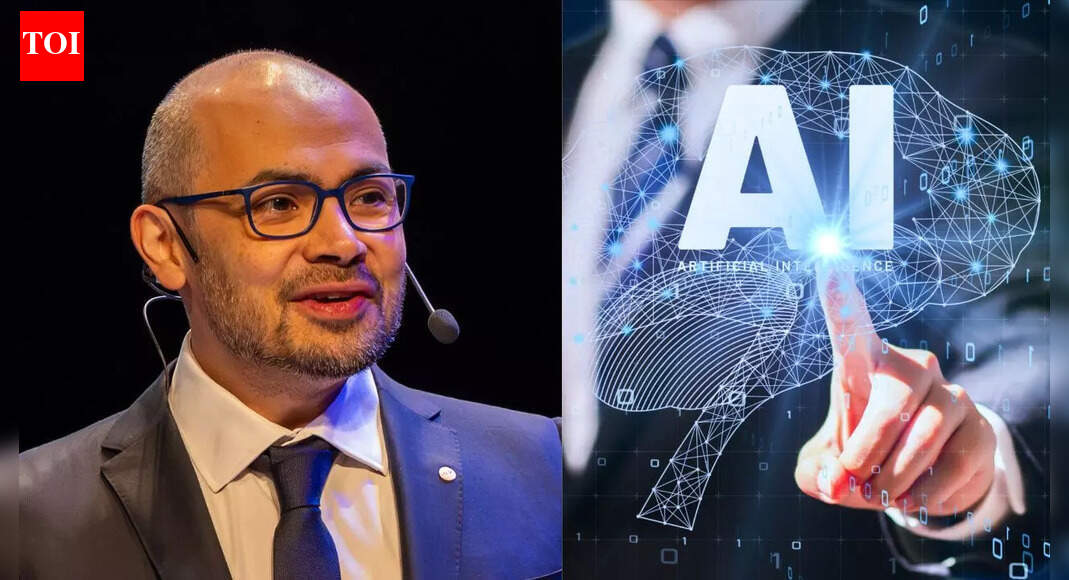
Google DeepMind CEO Demis Hassabis is an ardent chess fan and he continues to prove his lobe for the the game. Having previously celebrated D Gukesh’s upset win over Magnus Carlsen in Norway earlier this year, Hassabis recently shared his admiration for Carlsen as the grandmaster claimed his milestone 20th World Title.“Congrats to Magnus on his phenomenal 20th World title, he is the greatest mental athlete of all time imo,” posted Hassabis, who was a child chess prodigy and even achieved master status in his teens.“Congrats also to Nodirbek Abdusattorov, he had a fantastic tournament and put up a great fight in the final, was a great tournament to watch! Magnus is just too insanely good at endgames,” he added.Earlier this year, the Google DeepMind CEO responded to D Gukesh’s win, saying, “Chess is a much more intense game than people realise. I feel for Magnus here (he was winning earlier), but congrats also to Gukesh!”.
Chess pushed Demis Hassabis into AI world
Long before receiving the 2024 Nobel Prize in Chemistry for his work on protein-folding AI, Hassabis competed for England’s junior national teams. Speaking at the University of Cambridge earlier this year, Hassabis revealed that his early mastery of the game proved to be a catalyst for AI.In a lecture at the University of Cambridge, Hassabis said that his experience with chess led him, albeit indirectly, to dedicate himself to the advancement of AI.“My journey on AI started with games and specifically chess. You know, how does our mind come up with these plans, with these ideas, how do we problem solve, and how can we improve?” Hassabis said.“Obviously when you’re playing chess at a young age and you’re trying to play competitively, you’re trying to improve that process. And it was fascinating to me, perhaps more fascinating than even the games I was playing, was the actual mental processes behind it,” he added.Hassabis later went on to invent AlphaZero, an AI system that taught itself to master chess after learning it from scratch.“We were supposed to be using these chess computers to train opening theory and learn more about chess, but I remember being fascinated by the fact that someone had programmed this lump of inanimate plastic to actually play chess really well against you,” Hassabis noted.


