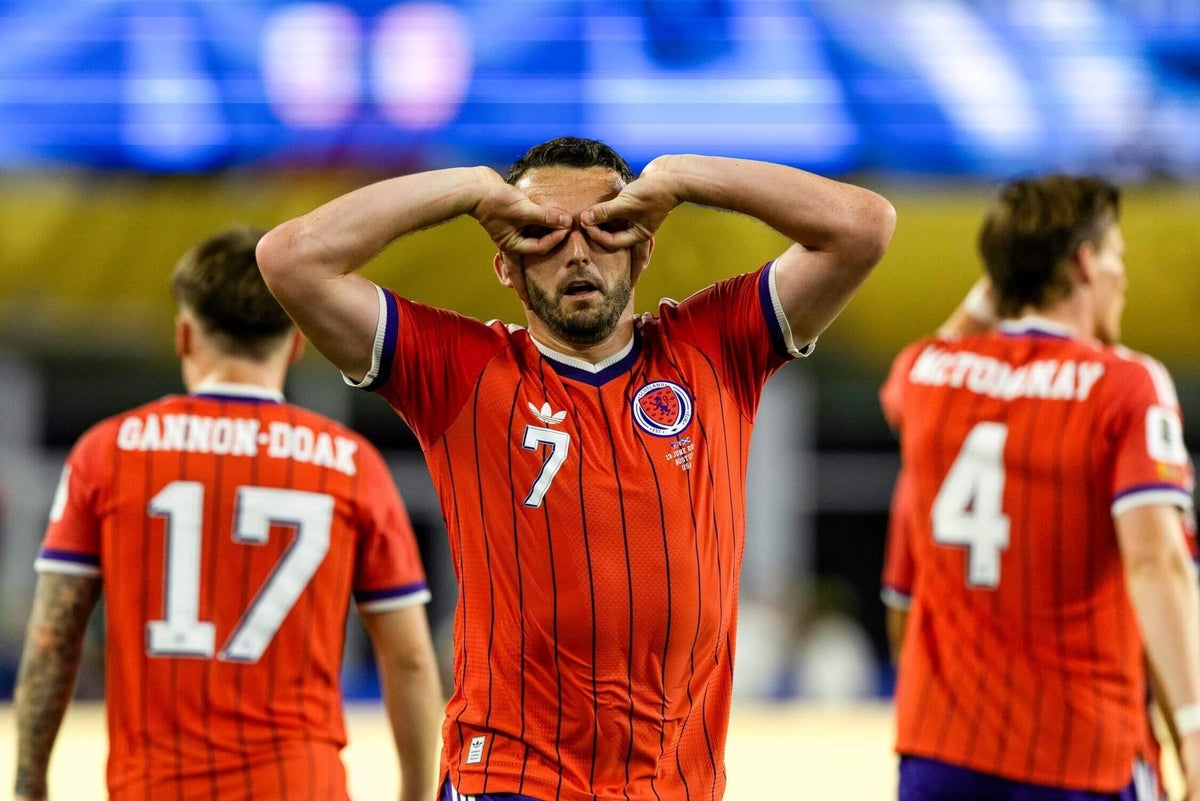
Scotland claimed their first World Cup win in 36 years thanks to John McGinn’s deflected strike that took them to the top of Group C with a 1-0 win over Haiti.
This was Scotland’s first appearance at a men’s World Cup since 1998, where they didn’t win a game, and backed by a huge crowd of travelling fans they took the lead on 28 minutes through McGinn’s goal.
It was far from comfortable with Haiti missing chances to equalise, but victory leaves Scotland with an 88 per cent chance of reaching the knockout stage at this point according to The Athletic’s World Cup projection tool. The win led to scenes of celebration at 4am back home but Steve Clarke’s side must still face Brazil and Morocco.
Here The Athletic’s Phil Hay and Jordan Campbell break down the key talking points.
Where does this leave Scotland’s World Cup chances?
You can cut this game to pieces tactically if you like but the result at Boston Stadium was paramount. A defeat for either side probably meant World Cup over, because Morocco and Brazil are still to come. A draw in Foxboro most likely meant World Cup over for both.
Victory, on the other hand, means Scotland are already well placed to advance from Group C. The Athletic’s results tracker gives them an 88 per cent shot at making the knockouts, and a 31 per cent chance of finishing second in the section. It’s the nature of FIFA’s 48-team World Cup: edge your opening match and you’re sitting pretty.
It’s a bad idea to count chickens because Scotland have never, in eight previous appearances, got beyond the group stage of a World Cup. To use 1978 as an example, they beat the Netherlands 3-2 and went out on goal difference. Had they maintained a 3-1 lead with 19 minutes to go, they’d have gone through. Snatching defeat from the jaws of victory is a bit of a Scottish trait.
At both of their last two major tournament appearances — Euro 2020 and Euro 2024 — Scotland failed to win a single match. Prior to tonight, they had only won four World Cup fixtures full stop. So while repeated performances like this won’t take them far, the scoreline alone might be enough to clear the first hurdle.
Phil Hay
Did Gannon-Doak just go global?
One of the joys of a World Cup — one of the genuine joys — is being introduced to players you knew little or nothing about. There’s no better stage on which to break out than a tournament watched by billions of people.
Ben Gannon-Doak, the Scotland winger, isn’t exactly off the radar. He was well thought of as he rose through Liverpool’s academy, and he’s had a touch of Premier League exposure at Bournemouth. But it’s unlikely that large pockets of South America, North America, Asia or Africa have seen him before, and his 90 minutes against Haiti suggest he’ll exit these finals with his reputation enhanced.
Tonight, the 20-year-old also demonstrated the high value of members of the Scotland squad who come up with big moments; or to put that another way, players who can compensate individually for a collective display as patchy as this one against Haiti.
An early shot from Scott Tominay (big player alert) off the post was down to Gannon-Doak making something of an aimless hoof forward. And the only goal from John McGinn came from his driving run into space out wide. Gannon-Doak’s little trick to mug the wonderfully-named Martin Experience just after half-time — flicking the ball around Experience on the touchline — had his fiddly spirit shining through.
For U.S. viewers on Fox, for example, he lit up a fairly low-quality contest, and his name should register next time. That’s partly what a World Cup is about: showcasing those who deserve a wider audience. Fingers crossed the injury which forced him off towards the end isn’t much to worry about.
Phil Hay
Did 4-4-2 work?
No, is the short answer. This was a pivotal victory but the performance was disjointed.
Scotland really struggled to control Haiti’s possession and even after the break did not seem to have their distances right.
Lewis Ferguson, trusted with plugging the centre of the pitch, was acting as a third centre-back at times he was so deep. It meant the midfield was almost on top of the defence, making it hard for Scotland to get pressure on the ball.
Aaron Hickey had to do much more 1 v 1 defending than he would have liked and struggled to deal with Ruben Providence in the first-half.
The logic behind the shape made sense as it got an extra goal threat on the pitch and enabled Gannon-Doak, Scotland’s only real direct threat, to get in the team. McGinn tucking in centrally also created some nice combinations with Andy Robertson able to exploit the space down the left flank.
But these out of possession issues have persisted since Steve Clarke made the decision to move on from the back-three system after a poor showing at Euro 2024.
The old shape, while having its limitations in possession, allowed Scotland to be aggressive in pressing the opposition. They would often go man-for-man and it felt like the players found it simpler to attach onto a man. It simplified the game plan.
There are few occasions, despite topping the qualifying group to make it here, while playing with a back four in which Scotland have looked as solid as a defensive unit.
Scotland looked caught in between against Haiti and it begs the question as to whether Clarke, perhaps already planning to use that shape in the next two tougher games, will now opt to revert to the wing-back system that served Scotland well for several years.
He was open to the suggestion in March’s internationals and said the players enjoyed it. It would surely provide a more solid base to build a performance on.
Jordan Campbell


