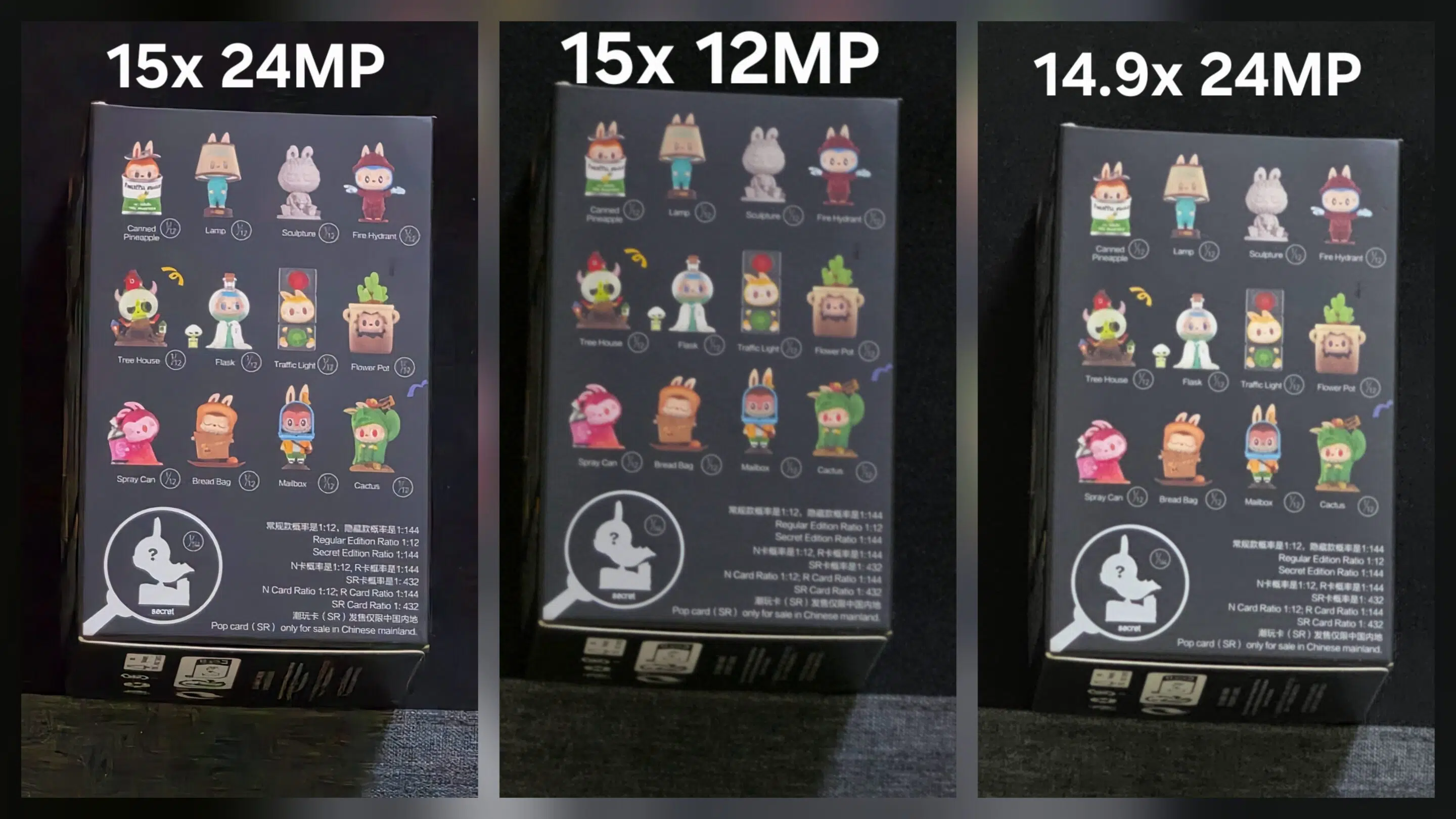
The Galaxy S26 Ultra’s (review) camera system quietly changed after the second April camera update. The difference becomes especially noticeable once you move beyond the traditional “safe” zoom ranges inside 24MP mode. 10x zoom at 24MP no longer behaves as aggressively oversharpened as before.
The original 24MP zoom behavior had a clear limitation
In my previous Galaxy S26 Ultra camera settings guide, I explained how Samsung’s 24MP processing performed best inside what I described as the “lossless zones.” The ultra-wide camera performed optimally up to around 0.9x. The main camera maintained excellent balance up to roughly 1.9x, while the 5x telephoto system stayed surprisingly strong all the way to 9.9x.
Inside these ranges, Samsung delivered the best balance between detail, texture retention, minimal computational artifacts, and full 24MP resolution output. But once the system crossed into 10x territory inside 24MP mode, the processing pipeline became much more aggressive, even when the final output still remained 12MP.
Oversharpening increased noticeably. Edge enhancement became heavier. Fine texture sometimes looked artificially reconstructed rather than naturally resolved. In difficult scenes, the image could start feeling computational before it felt optical. That behavior created a very clear recommendation previously: switch to 12MP once moving beyond 10x for more natural rendering.
Samsung quietly changed the 10x processing balance
Samsung fixed this with its second April update for the Galaxy S26 Ultra. Its 24MP processing at 10x now behaves much closer to the cleaner rendering previously associated with 12MP mode.

The excessive sharpening behavior has clearly been reduced. Texture reconstruction feels calmer. Edges look more controlled. Micro-contrast appears less artificially boosted. And the overall image now maintains a more natural balance between detail and computational cleanup. The difference is not subtle when compared side by side against older processing behavior.
Special thanks to X/@Francesco_G92 for discovering this behavior first.
The practical zoom range has now expanded
Before the update, 24MP mode felt most reliable up to around 9.9x before computational artifacts started becoming increasingly visible. Now, the practical range extends much further.
The Galaxy S26 Ultra now maintains surprisingly stable processing behavior all the way from 10x up to roughly 14.9x inside 24MP mode. The rendering remains controlled enough that many scenes now look very close to Samsung’s cleaner 12MP processing style, but with the additional detail advantage of the 24MP processing pipeline, even when the final output still remains 12MP.
That changes how the camera should actually be used in daily photography. Users no longer need to switch between 24MP and 12MP as aggressively once crossing the 10x threshold. The transition now feels more flexible and, more importantly, far more predictable. Still, 12MP remains the most natural-looking output overall, even if it appears slightly softer.
15x becomes the new turning point
Once the camera moves beyond 15x, the computational pipeline starts becoming visibly heavier again. This is where Samsung’s AI reconstruction and digital enhancement systems begin taking much stronger control over the final image output. Fine detail starts depending more heavily on sharpening reconstruction, especially in distant scenes or lower lighting conditions. And this is where 12MP once again becomes the safer option for most situations. The image simply feels less stressed computationally.
However, 24MP mode still retains an important role. For extremely distant subjects in strong lighting conditions, 24MP can sometimes preserve extra perceived detail that 12MP cannot fully retain—especially when the scene contains enough real optical information for the computational engine to work with. So the decision now becomes more scene-dependent rather than fixed.
Samsung’s processing philosophy is becoming more mature
What makes this update particularly interesting is what it reveals about Samsung’s evolving computational photography strategy. Previously, Samsung often prioritized aggressive sharpening to preserve the perception of detail at long zoom ranges. The system frequently pushed micro-contrast and edge enhancement harder than necessary, especially in 24MP mode.
Now the behavior feels more restrained. Samsung appears to be trusting the optical data more instead of forcing the image to look artificially sharp at all costs. That creates a more premium rendering style overall. Not necessarily softer. Just smarter. The camera now feels more aware of when detail actually exists, and when computational enhancement should step back instead of overcompensating.


