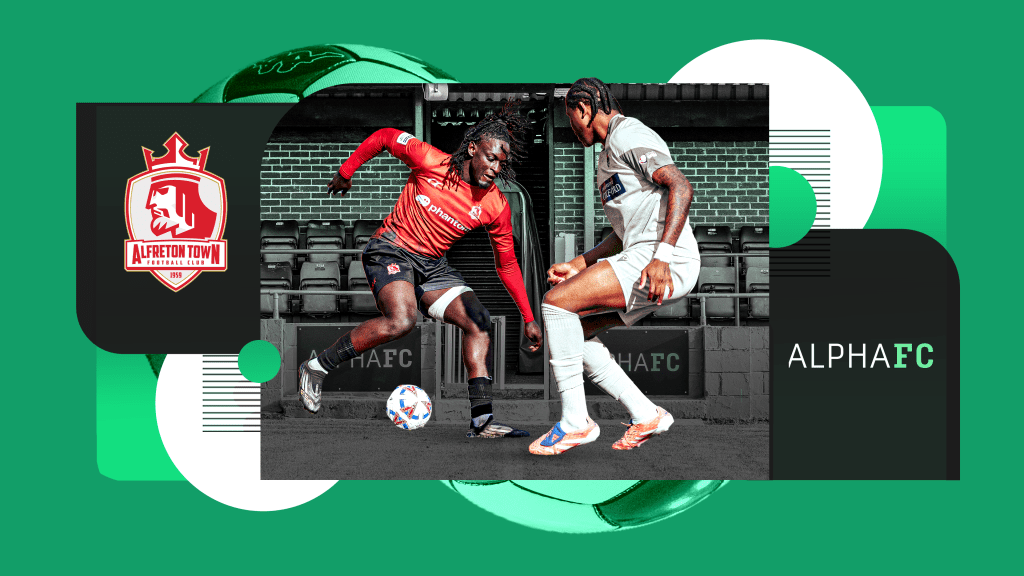
When William Rush founded Chicago-based startup AlphaFC two years ago, he did so hoping to create a means for fans to own their favorite soccer club. The founder built a platform on the Solana blockchain where buyers could purchase “ownership” rights of a team through digital tokens, functioning somewhat like shares of a publicly traded company.
To prove the concept, AlphaFC bought sixth-tier English club Alfreton Town FC in 2025 for almost $800,000 (£574,000), between the team and associated legal fees, and immediately improved revenue by bringing on a handful of crypto-focused sponsors. In a world where many investors and fans hope their club can become the next Wrexham-esque success story, Rush dreamed big. “We want that ceiling to be the Premier League,” he said in an April interview.
When the club went to market, AlphaFC’s inaugural offering didn’t go as planned.
Two weeks ago, the company prepared to sell 69 million tokens of Alfreton Town, representing 69% of the club’s voting rights. The price for each token was set to be determined by how much money was raised by the process, essentially correlating token value with buyer enthusiasm. The other 31% was divided among AlphaFC, Alfreton Town’s liquidity reserves and a giveaway fund for U.K.-based fans, who were legally barred from participating in the offering but would be allowed to buy tokens on the open market afterward.
After a five-day sale, fans contributed just shy of $169,000 in total—barely a fourth of the roughly $800,000 (£640,000) in revenue the club posted in fiscal year 2024. As a result, the price per token amounted to less than a penny. Making matters worse, Alfreton Town was relegated to the seventh level of the English soccer pyramid after drawing in its final match of the season.
“This was an early-stage launch introducing a new model to the market, and there’s a learning curve with tokenized ownership,” Rush said in an email on Monday. “We saw strong interest in the concept but converting that into participation at scale will require time and continued market development. We view this as a valuable first test that will inform how we approach future launches.”
The tepid reaction to the sale raised an important question: What actually constitutes ownership? While fans could freely trade their tokens on AlphaFC’s platform and vote on decisions like budget allocations, kit design, stadium naming preferences, chairman elections and even the in-house draft beer selection, the tokens didn’t grant the would-be owners equity in the club.
If Alfreton Town turned a profit, token holders wouldn’t receive dividends, and the funds would have been reinvested back into the club. In the event of a loss, holders weren’t responsible for capital calls. Instead, Alfreton Town would have had to issue additional tokens or take a loan against the land the club owns if its reserves run dry, which isn’t exactly an uncommon occurrence in the sport.
Outside of cryptocurrency projects, member-led models are relatively ubiquitous across Europe. Real Madrid and FC Barcelona, two of the most valuable soccer clubs in the world, are owned by their socios, or members. Germany has its “50+1 Rule,” which requires that club members own at least 50% plus one share of the voting rights in the company that operates the team. Even some English clubs, like AFC Wimbledon and FC United of Manchester, are structured as community-owned nonprofits, which Alfreton Town tried to mimic in some ways.
“I wouldn’t classify it as ownership because that’s misleading in my opinion, but it is fan-led decision-making for professional clubs,” Preston Johnson, the former owner of League Two club Crawley Town FC, said. “If you’re a CEO, owner or a chairman at a club that wants to do something unique to get fans excited and get more eyes on your team, then maybe that’s an investment you make.
“But also, if it’s a guy that’s forking up $3 or $4 million a year in losses, are they willing to let fans make decisions on actual player signings, who the chairman is or this or that? I mean, it’s pretty risky.”
Johnson would know, considering he ran a similar experiment just a few years ago. In 2022, he led Web3 group WAGMI United’s takeover of Crawley Town, which brought additional funding into the business by minting non-fungible tokens that gave fans a say in club decisions and other perks.
His tenure was largely chaotic, though: The club changed managers five times in the first 12 months and, in the aftermath of the FTX exchange collapse, WAGMI tampered down its crypto-focused sentiments. It also unexpectedly gained promotion to League One in year two amid a Bitcoin rebound before promptly getting relegated the following season. In 2025, Johnson and WAGMI exited Crawley Town’s ownership.
Still, Johnson is bullish on a model where fans call the shots, regardless of whether they truly have ownership. “There’s just so many poor decision-makers or people that say they do this, but don’t actually, at the end of the day,” he said. “If the fans are actually the ones that get to make the final decision and not the person at the top that just signs the contract or whatever like I did for three years, I think there’s a good chance that a team has a better chance, at least at lower levels.”
That’s what Rush is banking on, even if it comes with a healthy dose of skepticism. Other tokenization efforts have come and gone in the industry, which he referred to as “99.9%” being vaporware. But in the case of companies like Socios and Chiliz, Rush said those digital offerings didn’t give the fans enough ownership qualities, comparing it to buying shares in the privately traded Green Bay Packers.
In the meantime, AlphaFC is taking a hard look at its strategy. The Monday after the token sale, a representative for the company canceled a scheduled follow-up interview with Rush, who later provided a written statement over email. AlphaFC also refunded all the contributions from the Alfreton Town offering.
When AlphaFC could proceed with another launch, and whether the company needs to replenish the $740,000 it has raised in funding to date, remains unclear. But Rush reaffirmed his belief in the benefits of tokenization, adding that AlphaFC is still having “active conversations” to onboard new clubs to the platform, in line with his previously expressed aspirations to be “the rails for fan engagement for ownership.”
“Our priority right now is making sure the next launch reflects everything we learned from this one,” Rush wrote in an email. “So that the next club and its supporters get a model that’s been stress-tested and meaningfully improved.”


