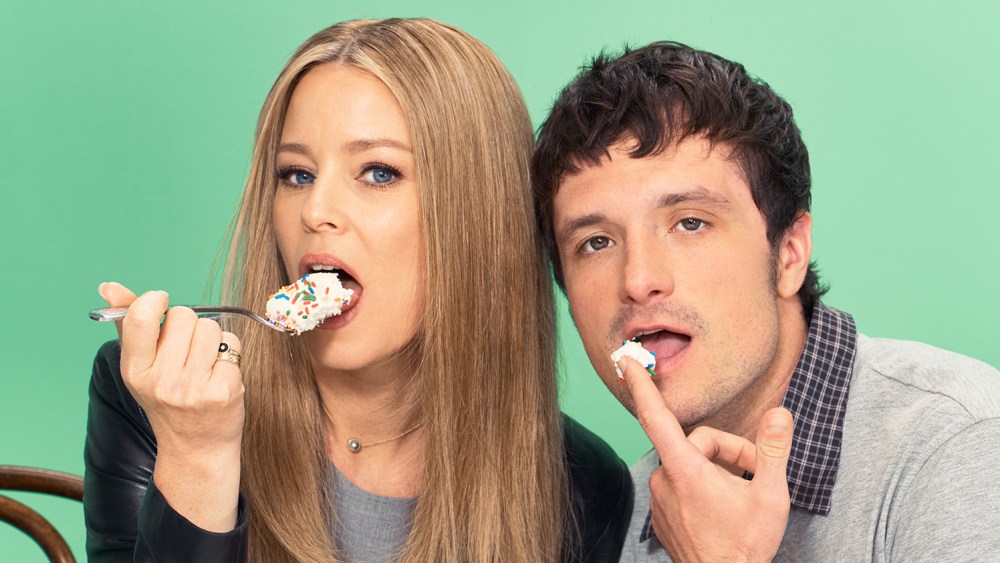
This interview is part of Variety and CNN’s Actors on Actors series. Watch the full video interview now at CNN.com/Watch (or on the CNN app) and on Variety’s YouTube channel starting at 11:59 pm ET.
Josh Hutcherson and Elizabeth Banks first met making the first four “Hunger Games” films, from 2012 to 2015. While Banks wasn’t present for the action sequences Hutcherson shot in the Hunger Games arena, they struck up a friendship. When the franchise began, Hutcherson, then 19, was a former child actor (“Zathura,” “The Kids Are All Right”), and Banks, then 37, was a well-known character actress (“Seabiscuit,” “W.”). Both also stood out this year for taking on roles as partners in complicated relationships. On “I Love L.A.,” Hutcherson is Dylan, the relatively sane, grounded boyfriend of Rachel Sennott’s zany aspiring talent manager, Maia. And on “The Miniature Wife,” Banks plays a writer who is quite literally shrunken down by her scientist husband, played by Matthew Macfadyen.
Elizabeth Banks: It’s so good to see you.
Josh Hutcherson: Good to see you. We met 43 years ago.
Banks: Do you remember how we met? I don’t totally remember either.
Hutcherson: I remember the project. It was called “The Hunger Games.”
Banks: You were Peeta Mellark; I was Effie Trinket.
Hutcherson: I live near a street named Effie. Every time I drive past it, I’m like, “Elizabeth.”
Banks: I’m excited to be on your mind. My first memories of “The Hunger Games” — I remember seeing you guys the first few days, but then I left and came back, because you guys went into the woods.
Hutcherson: Yeah, they were painting me into rocks and shit.
Banks: I remember coming back, and you guys were this feral gang of young people.
Hutcherson: I was 19. I didn’t do college, so college for me was shooting those movies and growing up with them. It’s so long ago.
Banks: I felt like your auntie. I was everyone’s auntie. And then I really got to relax on the second one, because there were a lot more adults my age. Obviously, “The Hunger Games” was life-changing for you and Jennifer Lawrence and Liam Hemsworth. What was that like? We had so much fun on the press tours.
Hutcherson: It was crazy. It was such a massive machine, and it was such a formative time of my life. We all went through so many changes together. We leaned on each other, hard-core. It was really intimidating. I’m from a small town in Kentucky. I started acting when I was a kid because I liked the idea of making movies. Fame was never on my radar — and then I was thrust into that world in such a big way. It was a lot.
Banks: It was like watching a supernova take off.
Hutcherson: For a long time, I was resentful toward it, because I didn’t want that kind of attention.
Banks: There’s a huge intrusion into your life.
Hutcherson: So I was chip-on-my-shoulder angry about it. With years of perspective, I have grown to appreciate it so much.
Banks: Are you excited for the new movies?
Hutcherson: The new book’s amazing. It’s cool to see it continue with a different generation and different stories. Unfortunately, it’s still a very timely issue with authoritarian governments, so young people need to be educated.
Banks: Hell, yeah. So you’re here to talk about this new role in “I Love L.A.” Rachel Sennott, who we both know — it came from her brain. You play the straight man of the bunch, a very grounded and grounding presence among an ensemble that’s kookadoo, right?
Mary Ellen Matthews for Variety
Hutcherson: It’s a dynamic that I’ve experienced many times. I’m drawn to crazy. I always have been. But I myself tend to be more feet-on-the-ground vibes. In a show that’s giving such a specific snapshot of a world that many people have no contact with, having a character that’s a bit of an audience sounding board is important.
Banks: The world of influencers is very specific. You play a teacher, just a nice guy. One of my favorite episodes is the game night, where you see the two worlds colliding.
Hutcherson: I was so excited when I read that episode because I don’t know how much of Dylan is me. It all blended together, because I was talking with the writers about how I have an obsession with complex board games.
Banks: Let’s get into it.
Hutcherson: They made up this whole game for the show.
Banks: We could go deep on Settlers of Catan right now, which is what I felt you guys were referencing.
Hutcherson: It was a blend of a few things. Twilight Imperium. I take games very seriously. I’m very competitive. Dylan is that way, too, but he tries to make it fun. He’s excited for his girlfriend to come into this world and to bring her into it. What’s so cool about the show was the collaboration inside it, because when I first came onboard, Dylan wasn’t funny. He was meant to only be the stick-in-the-mud boring guy.
Banks: Yeah.
Hutcherson: Which I totally get, but what me and Rachel wanted to build out was finding his own ways to be funny, and to understand why they’re together.
Banks: I believed there was a whole history.
Hutcherson: I’m excited, because we’re shooting Season 2 this summer. I haven’t read a single thing, so I don’t know what’s going to happen.

Mary Ellen Matthews for Variety
Banks: Because at the end [of Season 1], you’re not together.
Hutcherson: But I love Maia and Dylan together, and I think they can really help each other. I think some of the best couples are couples that need to be more like one another. If someone’s too controlling and someone’s too out of control, they can slowly work toward something that’s more balanced.
Banks: Grow together, rather than apart. Will this couple do that?
Hutcherson: Stay tuned! In “The Miniature Wife,” the relationship dynamic that you guys have I find very interesting. I’ve always seen you playing very powerful characters. To be shrunken by this man — I’m curious how that felt for you.
Banks: I loved the dynamic. It felt like we were going to use this metaphor to talk about some bigger issues. I felt it was very relatable, this notion of being made to feel small. I thought it was going to be really comedic and fun. My husband likes to say this was the least mentally prepared I’ve ever been to do a job because I didn’t really understand how isolated I actually was going to be when I was six inches tall. I had my own stage. I had a whole green box.
Hutcherson: That’s wild.
Banks: I had the dollhouse set, and I was alone. I was literally never with Matthew. It was so vulnerable.
Hutcherson: You’ve shown another amazing talent with directing. Do you want to do more? I really want to direct and I’ve done music videos and a short film.
Banks: That’s a great start. I do think it makes you a more patient actor, because you sort of understand everything. I really enjoy days when I don’t have to answer a lot of questions and I just get to take care of the character I’m there to play that day. I don’t have to worry about the choreography and the camera angles. But I love being surprised by something. I love collaborating. I love problem-solving. I hope I get to do more of it. I think I will. I’m constantly developing things, but I’m at [an important] moment as a mom. What’s interesting is that “The Hunger Games” is what allowed me to direct in the first place. Having the comfort of, “OK, I know I’m going to be in a few movies over a few years.”
Hutcherson: You got some sequels lined up.
Banks: The sequels are lined up; this character is working. I had my babies during it and I directed “Pitch Perfect 2” during it. I could just breathe a little bit. I wasn’t worried about what’s the next job and when am I going to work again and how am I going to pay the bills? That’s handled. They say babies also give you a lot of clarity in life.
Hutcherson: I’ve heard this. You can confirm that was your experience?
Banks: Absolutely my experience. You’re like, “What is worth time away from my kids?” It becomes more and more rare that you want to spend time away from your friends.
Hutcherson: I feel that with my dogs currently. So I can extrapolate that to a human and imagine it’s even more intense. But it is interesting, because this industry is wild. It’s so many ups and downs, and there is a feeling of uncertainty between jobs that feels infinite sometimes. I am always thinking, “Well, it was a good run. I’ve been doing it for 24 years and I guess that’s it.” I don’t have a job lined up; I don’t know what’s going to happen. And so it can be very stressful, but then you get on set again and you’re like, “Oh, OK, I’m home.” It feels right.
Banks: You’ve been doing this since you were a kid.
Hutcherson: I was 9.
Banks: Weirdly, I started when I was 25 and we’ve basically been doing it the same amount of time.
Hutcherson: I didn’t graduate high school, so I can’t do that kind of math.
Banks: I have a master’s degree, and still can’t do my kids’ algebra homework. I’m not sure you missed out.
Hutcherson: You’ve done so many different kinds of projects — is there something that you want to do?
Banks: My game plan now is “See what happens.” The industry is changing so much — I find it a really interesting time to be an artist. I’m really interested to see where it’s all headed and happy to be on the ride. I had impostor syndrome for a long time, and now I’m like — you’ll get there too — this is actually my career. This is what I do for a living and I’m making a living at it and this is my life. I’ve calmed down into a sense that I know how to do it now. And I can see things in the future. I can see being 70 and being Elaine Stritch at the Carlyle and singing the Great American Songbook and telling jokes and entertaining people. I’ve hopefully built up enough of a reputation of: If you watch me, I promise to entertain you. If you show up, I’ll show up. When you make that agreement with the audience, I now feel like my signature on that agreement means something.
Hutcherson: I know if I see you in something, you’re going to be great. That’s just a fact. I think it’s interesting because as I’ve been doing this for a long time, your objectives change and levels of ambition change and what’s important changes. There’s just a bit of perspective that comes: We’re doing things to entertain people. Some people can get a little lost in the sauce.
Banks: I don’t take it too seriously, but I do think that I am part of a long tradition of storytellers that have handed down humanity — there’s a reason we still read the Greeks and Shakespeare. When we go to museums and look at the art, it’s the art that we pass down through the generations.
Hutcherson: I rescind my comment. We are changing the world. Elizabeth just convinced me.
Banks: I don’t think “changing the world,” but people want to laugh, and they want to feel connected and they want to feel seen. I went to drama school and I remember being told the cavemen sat around the fire in the cave at night — there was a reason to tell the stories. It was for our survival. Being on the set of “The Miniature Wife,” I’ve never had to imagine harder. I had to imagine my co-star’s there, a cat’s chasing me, the floor I’m standing on is not green. Everything around me was about that sense of imagination. So I feel a deeper connection to storytelling than I ever have in my life.


