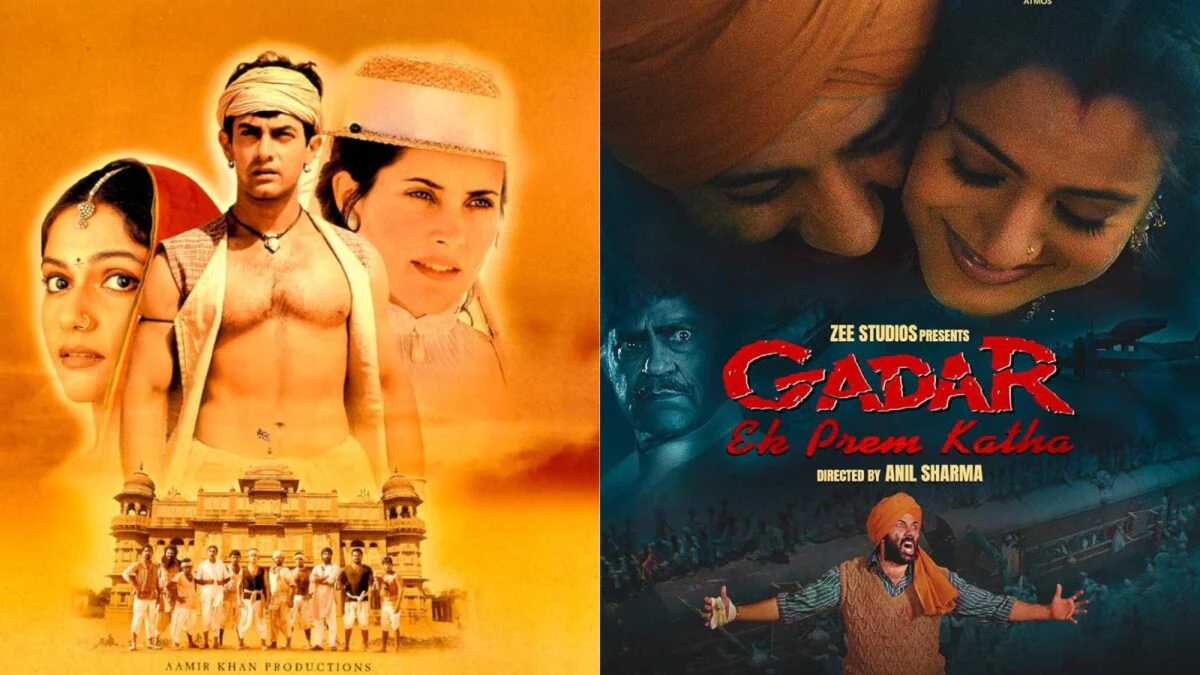
On June 15, 2001, two films with vastly different sensibilities arrived in theatres. One was a period sports drama set in colonial India, led by Aamir Khan and backed by a first-time producer taking a huge gamble. The other was an unabashedly emotional love story set against Partition, with Sunny Deol roaring his way into the hearts of millions. Twenty-five years later, Lagaan and Gadar: Ek Prem Katha remain two of Bollywood’s most beloved blockbusters, and perhaps the greatest box office clash Hindi cinema has ever witnessed. (Images: IMDb)

In today’s era, big-ticket films often avoid releasing on the same day. But in 2001, there was no such caution. Ashutosh Gowariker’s Lagaan and Anil Sharma’s Gadar went head-to-head, and instead of hurting each other, they made history together. (Images: IMDb)

At first glance, the films couldn’t have been more different. Lagaan told the story of Bhuvan, a villager who challenged British officers to a cricket match to escape oppressive taxes. With its underdog spirit, memorable music by A.R. Rahman, and a universal theme of hope, the film resonated with audiences far beyond India. (Image: IMDb)

Gadar, meanwhile, tapped into raw emotions. Set during the Partition, it followed truck driver Tara Singh’s extraordinary journey to reunite with his wife Sakina across the border. Powered by Sunny Deol’s larger-than-life presence and songs like Udja Kale Kawan, the film became a phenomenon in smaller towns and single-screen theatres. (Image: IMDb)

What happened next surprised everyone. Instead of one film crushing the other, both became massive successes. Gadar emerged as the bigger box-office winner, reportedly drawing record footfalls and becoming one of the highest-grossing Hindi films of its time. Families returned to theatres repeatedly, cheering Tara Singh’s now-iconic hand-pump scene and singing along to its soundtrack. (Image: YouTube)

Lagaan, on the other hand, carved a different legacy. It won critical acclaim, earned India an Academy Award nomination for Best Foreign Language Film, and introduced international audiences to a new kind of Bollywood storytelling. The film has since found a place on lists of the greatest Indian movies ever made. (Image: IMDb)

Their success also reflected the diversity of Indian audiences. One film spoke the language of patriotism and melodrama; the other celebrated resilience and teamwork. One dominated the masses, while the other won hearts globally. Yet both captured the imagination of a country experiencing a changing cinematic landscape. (Images: IMDb)

Twenty-five years later, their influence is still visible. Lagaan paved the way for unconventional sports dramas and content-driven cinema, while Gadar proved that emotionally charged stories rooted in Indian values could create box-office magic. Bollywood got two classics on the same day, and audiences got memories that have lasted a quarter of a century. (Images: IMDb; Prime Video)


