THE GIST
Our analysts just identified a stock with the potential to be the next Nvidia. Tell us how you invest and we’ll show you why it’s our #1 pick. Tap here.
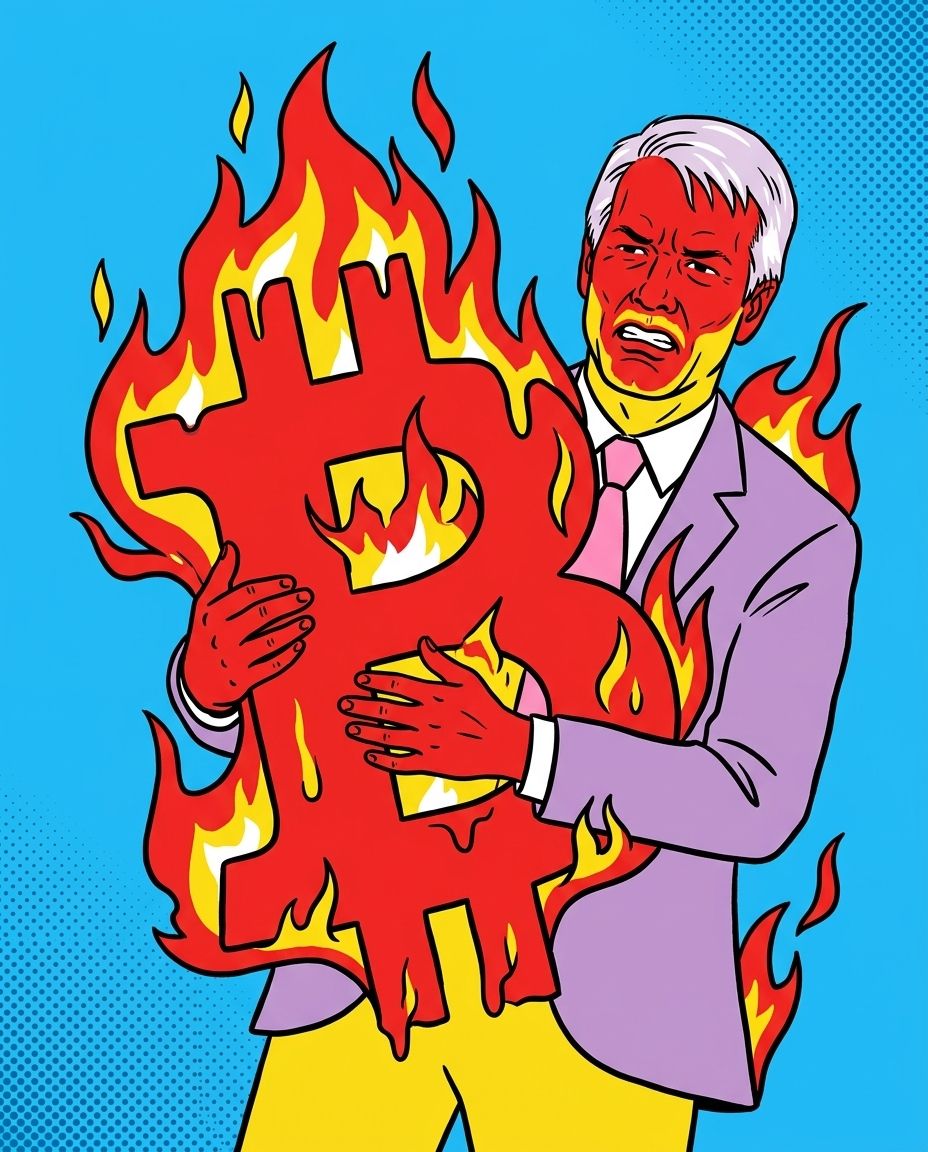
Bitcoin has been on a downward slide since October of last year. It’s the cryptocurrency’s worst market since late 2021. After hitting an all-time high of $126,000, the king of crypto has dropped over 50%, due to the “10/10” flash, President Trump’s on-again, off-again tariffs, the Iran War, and the general momentum in the AI and AI infrastructure trade, which has been siphoning liquidity.
WHAT HAPPENED
Bitcoin has a long history of front-running markets, especially when its correlation with the Nasdaq and the S&P 500 runs near-perfect. The catch is that the same is true when Bitcoin decides to dump. Rajiv Sawhney, head of international portfolio management at Wave Digital Assets, pointed CNBC toward the 30-day Pearson correlation, which showed a “near-perfect positive correlation as recently as a month ago.”
On May 5, Bitcoin was trading at $78,000. The S&P 500 had shaken off an early-month dip from May 1 to May 4, notched another all-time high, and went on to run the rest of May. Rewind one more month to April 5: Bitcoin sat around $70,000 while the index was barely clawing back from a roll-over, sliding from roughly 7,000 to lows near 6,300. The point is that Bitcoin ran faster, harder, and slightly earlier through April and mid-May…then dropped almost three weeks ahead of the major indexes. It was a momentum trade, and a good one, right up until it wasn’t. Tech stocks, as Sawhney said, “continued to reach new all-time highs” while “bitcoin failed to track the same upward price trend.” Now that same price action looks to be catching up with those tech stocks, which started to fall on May 11.
The other now-obvious tell that Bitcoin’s momentum was going to take a turn for the worse came when Michael Saylor, the most fanatical Bitcoin whale on the planet, said he was selling. The signal came at Strategy’s Q1 2026 earnings call on May 5, 2026, when Saylor said the company would “probably sell some bitcoin” to demonstrate liquidity and service preferred stock dividends. The market believed him, just not immediately. It took about ten days of distribution, but looking back, Saylor selling a mere 32 BTC appears to have been a good sign to start de-risking one of the biggest “risk-on” assets of all.
WHY IT MATTERS
Bitcoin’s drop may be tied to Friday’s job numbers and the possibility that the Federal Reserve may hike rates because inflation is still sticky.


