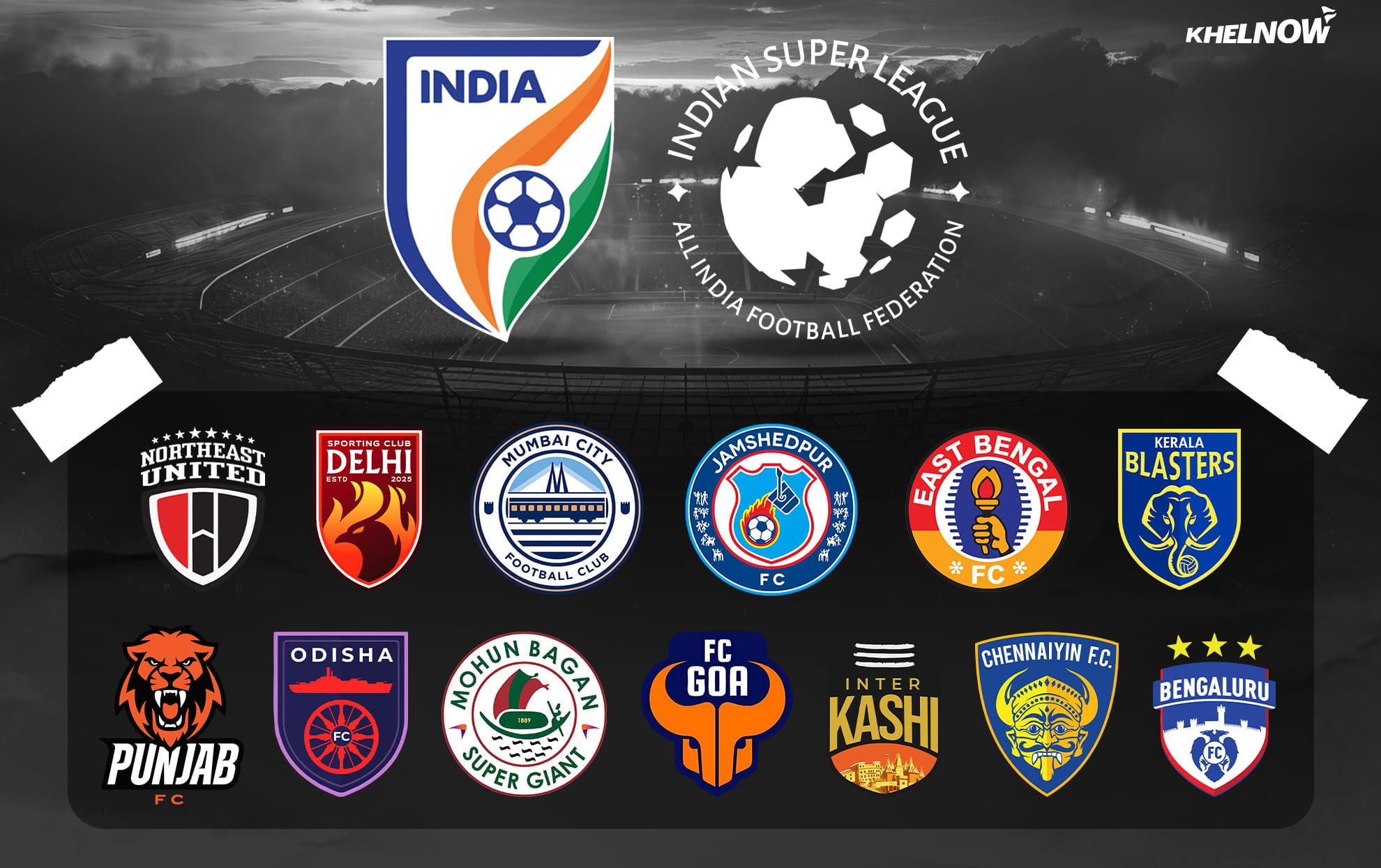
ISL clubs to pay AIFF ₹15.4 crore annually under new structure; Praful Patel plays key role in breakthrough talks
The deadlock surrounding the future of the Indian Super League (ISL) appears to have finally moved towards a resolution.
In a crucial meeting on Thursday in New Delhi, ISL club owners met Sports Minister Mansukh Mandaviya to discuss the league’s future structure amid uncertainty over commercial rights and its long-term operating model. AIFF representatives were also present during the discussions, despite the federation not being on the original invitation list.
According to sources present at the meeting, the Sports Minister assured clubs that the ISL would continue as scheduled and backed the broad contours of the club-led proposal that has been under discussion for the past few months.
The biggest outcome of the meeting was the finalisation of a new financial framework between clubs and the AIFF for the next four years.
“Club proposal has been finalised for the next four years. Going forward, each club will pay AIFF ₹1.1 crore per season as a fixed fee. If all 14 clubs participate, AIFF will receive ₹15.4 crore per season as a fixed fee,” a source who attended the meeting told Khel Now.
The figure is significant because it exceeds the guaranteed amount AIFF was expected to receive under the proposed Genius Sports framework. While the Genius Sports model was projected to provide the federation with approximately ₹12.4 crore in fixed revenue annually, the club-led proposal raises that figure to ₹15.4 crore.
Former AIFF president Praful Patel was also present during the discussions and, according to multiple sources, played an important role in helping bridge differences between stakeholders.
“Praful Patel has played a key role in solving the current deadlock situation surrounding the ISL,” a source said.
The meeting also saw clubs seek government support on stadium-related expenses, an area that has become an increasing burden for several teams amid rising operational costs.
How ISL clubs got here?
Thursday’s breakthrough did not come out of nowhere.
For months, ISL clubs have been pushing back against the structure proposed around Genius Sports, which had emerged as the preferred bidder for the league’s long-term commercial rights tender.
The clubs were not opposed to working with Genius Sports. Their disagreement centred on control.
Club owners believed Indian football was at risk of locking itself into a long-term commercial arrangement at a valuation that did not reflect the league’s true value or future potential. As a result, they began working on an alternative model that would allow clubs to take greater responsibility for both the commercial and operational sides of the competition.
That process accelerated through a series of meetings involving club owners in Mumbai before a formal proposal was submitted to the AIFF.
The proposal offered a four-year club-led structure designed to stabilise the league, improve commercial performance and create greater alignment between the federation and clubs before any long-term rights agreement is considered.
Why clubs wanted greater control
At the heart of the proposal is a simple argument.
Club owners believe they are better positioned than any external operator to maximise the ISL’s commercial value.
Their reasoning is straightforward. Clubs already maintain relationships with sponsors, local governments, broadcasters, supporters and regional businesses. They believe those networks can be used more effectively to grow sponsorship revenue, licensing opportunities, media rights value and fan engagement.
The clubs have also pointed to their experience during the 2025-26 season as evidence that they possess the operational expertise required to run the competition more efficiently.
Several club executives have privately argued that managing league operations internally would reduce costs while giving clubs greater flexibility to build commercial partnerships around the competition.
Where Genius Sports fits in
One misconception surrounding the discussions is that clubs wanted Genius Sports removed completely.
That was never the proposal.
Instead, clubs suggested that Genius Sports should continue as the league’s Data and Technology Partner, overseeing areas such as sports data, integrity monitoring and fan engagement technology.
What they opposed was the idea of an external commercial entity controlling the league’s broader commercial ecosystem.
Under the club proposal, media rights, sponsorship rights and data rights would be treated separately rather than bundled into a single long-term package.
Club owners believe that approach would create greater flexibility and ultimately generate more value.
Participation fee remains a sticking point
Another major source of friction in recent months has been the AIFF’s proposed participation fee.
Following the end of the FSDL arrangement, which provided AIFF with ₹50 crore annually, the federation explored alternative revenue sources as part of the new structure.
One option discussed was a ₹1 crore participation fee for clubs.
The clubs opposed the proposal from the outset, arguing that it had not been mutually agreed upon.
The newly agreed framework effectively replaces that debate with a fixed annual payment structure, under which each club will contribute ₹1.1 crore per season to the federation.
What happens next?
While several commercial and operational details still need to be finalised, Thursday’s meeting represents the strongest sign yet that all stakeholders are moving towards a common solution.
The clubs have consistently argued that those investing in squads, academies, infrastructure and football operations should play a bigger role in shaping the league’s future. The AIFF, meanwhile, remains responsible for governance, integrity and regulatory oversight.
For now, the immediate concern has been addressed.
The ISL is expected to continue, the clubs have secured backing for their operating model, and Indian football may finally have a path out of one of the most significant governance deadlocks it has faced in recent years. Lawyers from both sides are expected to meet in the coming days to formalise the arrangement.
This is a developing story…. more to follow…!
What was the outcome of the meeting between ISL clubs and the Sports Minister?
The Sports Minister assured clubs that the ISL would continue as scheduled and backed the broad framework of the club-led operating model proposed by the clubs.
How much will clubs pay AIFF under the new proposal?
Under the proposed structure, each club will pay AIFF ₹1.1 crore per season. If all 14 clubs participate, the federation will receive ₹15.4 crore annually in fixed revenue.
How does the club proposal compare to the Genius Sports framework?
The club-led proposal would provide AIFF with ₹15.4 crore annually in fixed income, which is higher than the approximately ₹12.4 crore expected under the proposed Genius Sports framework.
What role did Praful Patel play in the discussions?
According to sources, former AIFF president Praful Patel played a key role in helping bridge differences between stakeholders and moving discussions towards a resolution.
For more updates, follow Khel Now on Facebook, Twitter, Instagram, Youtube; download the Khel Now Android App or IOS App and join our community on Whatsapp & Telegram.


