Transiting through Cairo airport can be a disorientating experience. On one occasion I couldn’t find my gate and, believing I was going to miss my connecting flight, I asked someone who worked there if he could help me decipher the flight information screens and tell me where to go. He squinted up at them: “Gate 20, inshallah.”
The phrase, literally Arabic for “God willing”, is heard everywhere in the Arab world. Officially a Quranic instruction, it is used by Muslims and Christians alike, intended to remind oneself of one’s humility and insignificance in the face of the great mysteries and unknowns of God, the universe and the chaos of daily life. Last week, however, it stumbled out of the mouth of the actress Anne Hathaway and blew up the internet.
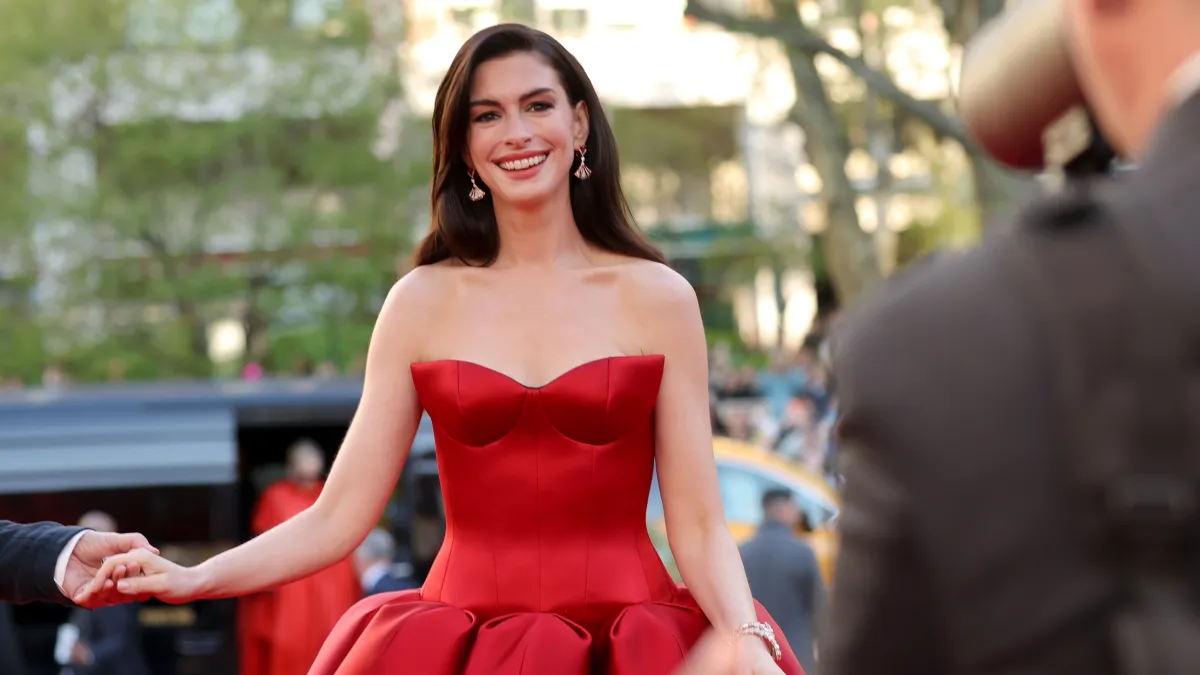
Maybe it’s because she’s white, maybe it’s because she’s American. Whatever the reason, when Hathaway said that she hoped she would go on to live “a long and healthy life, inshallah” during an interview to promote The Devil Wears Prada 2, the response was unhinged. Comments ranged from “Inshallah my princess of Genovia!” to “Mashallah sister Anne’. One user referred to her as “Anne Halalaway”. One of her London-based fans was so moved that she presented her with a copy of the Quran on Wednesday, and people are now asking whether the word now belongs to everyone.
Watch Anne Hathaway’s “inshallah” moment
If Anne Hathaway can get away with saying inshallah these days, then can anyone? And, more to the point, should they? Unless you’re a Muslim or come from a home that speaks a language that uses it, is dropping an inshallah into polite conversation just the linguistic equivalent of going to Waitrose wearing a keffiyeh?
The answer is varied and complex, just like the reasons someone might wear a keffiyeh in a supermarket. There are almost certainly more people saying inshallah these days to make a political statement or in an attempt to show a sensitivity to geopolitics. But others might be doing so simply because it’s a trend that’s catching on.
Languages change and copy each other. They are remarkably unoriginal. If one language sees another language expressing a concept better, normally it’s a matter of time before that particular word crosses over. English is not alone in lacking an equivalent for inshallah. That’s why the word has already spread to so many other languages — Persian, Turkish, Urdu and Swahili, just to name a few. That’s not forgetting Spanish, which has been using it for about a thousand years in the slightly adapted form ojala.
Language borrowings are as old as language itself. What makes us sit up when we hear a white, successful American woman such as Hathaway say inshallah in an interview, though, is that as English speakers, this phenomenon has largely passed us by. English has been the main source over recent years of borrowings into other languages. That’s why you can cross the globe and hear words such as “internet”, expressions such as “50-50” and more recently the word “bro”, which since the advent of TikTok has spread like wildfire through almost every language under the sun.
English has imported words over the years, often from colonial outposts. “Bungalow” comes from the Hindi word bangla, “bint” was an import from the Arabic word for “girl’. Then there are words such as hygge, schadenfreude and déjà vu. But comparatively, English’s exposure to foreign influence is limited. English speakers tend to speak fewer languages, which means foreign words in English have a harder time taking root.
That may be changing. Hathaway’s inshallah is far from an isolated incident. Joe Biden used it in the 2020 presidential debates.
Drake slipped it into the lyrics of his 2018 release Diplomatic Immunity. Sports stars such as Anthony Joshua and Cristiano Ronaldo have been heard using it recently. In other words, inshallah is a word we are probably about to hear a whole lot more of. New words tend to stick in a language when there’s a genuine need for them, or a gap that the language can’t concisely or elegantly fill on its own. After all, what is the English word for a smorgasbord or a souvenir?
It’s worth asking what Hathaway might have said instead. She wanted to express that she hoped to live a long life, but she’s more than aware that that’s out of her hands. “God willing”? It sounds a little too on the nose. “Hopefully”? Sounds like she doesn’t want it enough. If the only word that came to her mind was inshallah, then the matter’s decided.
Alex Rawlings is the author of How to Speak Any Language Fluently, published by Little, Brown


