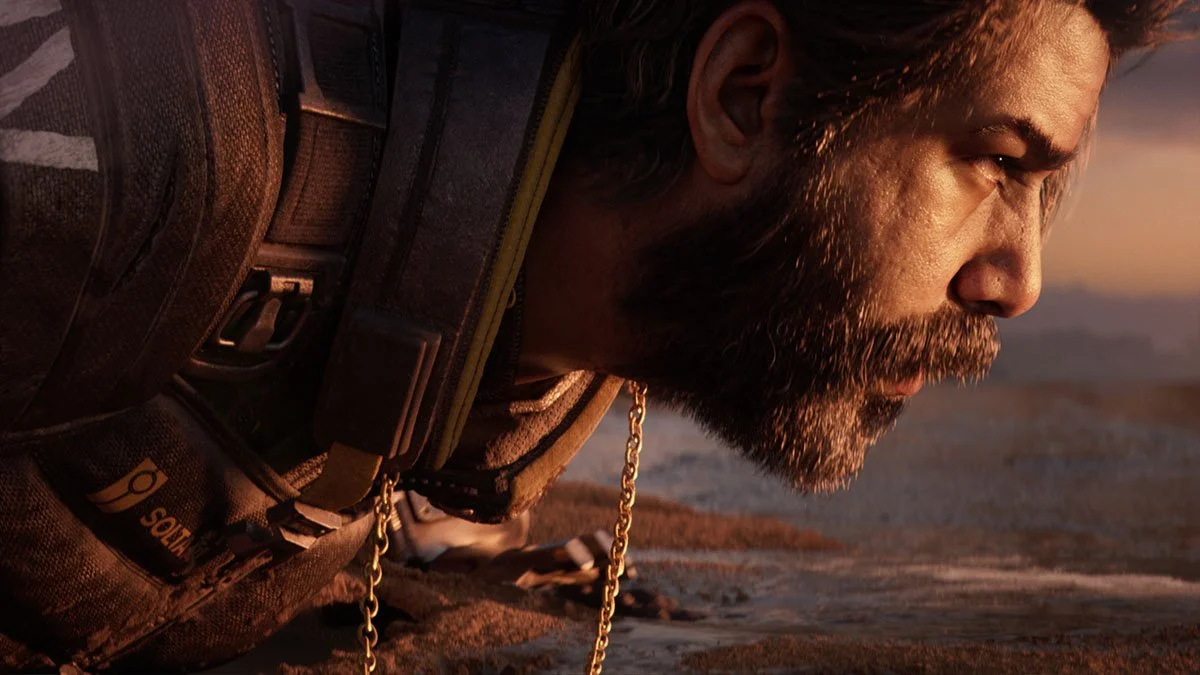
I never hated Returnal. It was a good game that played great but too often felt like a chore. Saros, a quasi-sequel (in that it’s not a sequel but might as well be), changes up a lot about the formula of Housemarque’s run-n-gun roguelite. But despite its evolved mechanics and structure, I still came away from it feeling very similar to how I felt about its predecessor.
Saros sings when you take control of the main character, Arjun Devraj (played admirably by Midnight Mass dreamboat Rahul Kohli, who I would call the least-flat actor of our time). Running around feels amazing. Using the weapons is engaging through the use of active reload, secondary firing options, and managing your energy for power weapons. That energy management aspect is the best new feature. During combat, you can throw a melee attack and if you hold it, it turns into a shield. This blue punch-shield maneuver can absorb blue enemy projectiles (or parry red enemy projectiles) to provide fuel for a more powerful special attack. This ups the challenge level and increases the skill ceiling in a really satisfying way.
But these great ideas don’t hold up Saros through its entire runtime. And the rest of its pieces don’t gel together well enough to support it either.
You get great performances from the cast, but I didn’t find them very moving because the subject matter is so familiar: interstellar explorers losing their mind in the face of a cosmic horror. Even when Saros reveals that all of the Weird Fiction is a backdrop for a more intimate and grounded story … Well, that also feels like something I’ve seen a million times. That doesn’t make Saros awful, but it did not make my time more enjoyable.
The biggest knock against the game is that it feels like it stretches 10 hours worth of fun across 20 hours. I did around 70 runs to get to credits, and I was ready to check out after about 35.
Each run feels so similar. The variety is supposed to come from getting to different biomes and using different weapons and abilities, but those variables only mix things up so much. An enemy encounter in one run is going to play out mostly the same as it does on the next run.
I never had a memorable character build. Saros has specific guns that I really enjoyed using, but I didn’t slap together some weird combination of abilities that surprised me or broke the game.
Only I do feel like I broke the game in other ways that take a lot of oomph out of the action.

Saros is a much more approachable game than Returnal, and I think that is somewhat to its detriment. Housemarque takes every opportunity to make the roguelite structure (read: run-based structure) friendlier this time around. You don’t need to go back to previous stages if you just want to keep moving forward. And the upgrade tree is massive and ensures that you will build a character that is much stronger and more durable relatively quickly.
You have three major character attributes. One determines how powerful your attacks are, another makes your HP bar bigger, and the third speeds up the process of earning the currency. This upgrading is so aggressive that it overwhelms the core run-n-gun gameplay. The viability of a run depends much more on how much you’ve upgraded than anything else.
An example of this problem is my experience with the boss fights. Early in the campaign, the bosses stood out as a highlight. They are challenging in the exact right way. Their attacks come in relentless-but-recognizable patterns that are fun to learn. And once mastered after around three to five attempts, the battles turned into this beautiful dance.

But I one-shotted the third boss and every single boss after that. I would love to chalk this up to overleveling or abusing its modifier system (which lets you make the game more or less difficult), but I wasn’t overleveled. And the Carcosan Modifiers have a built in limit that prohibits you from making the game too easy.
On top of that, the better you are, the easier the game gets. If you are surviving runs and fully exploring the levels, you’re going to bring back a massive haul of permanent upgrades and currency to buy even more permanent upgrades.
It all makes the challenge of the game feel more and more trivial, and that led me to be less and less engaged.
Saros is still a good game. I will never dislike a game that looks this good and plays this well. But the lessons that Housemarque learned from Returnal resulted in a game that is less than the sum of its parts.


