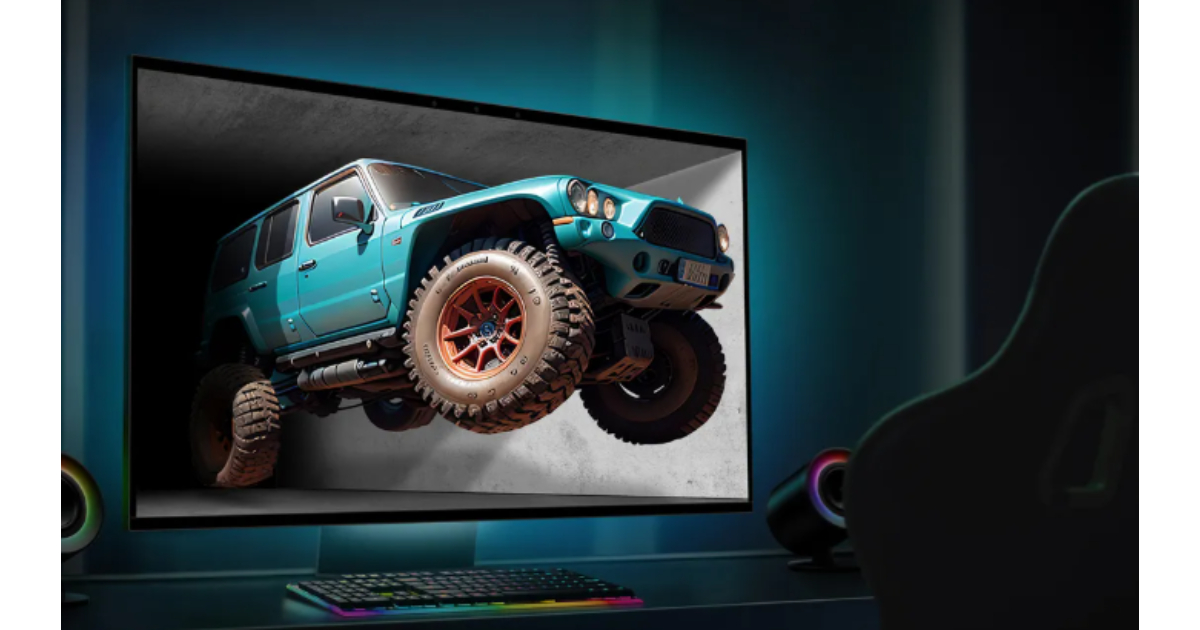
Samsung 3D display technology could soon change how people watch videos, play games and protect their privacy on smartphones.
Samsung and POSTECH unveil ultra‑thin 2D-3D screen
Samsung Electronics and South Korea’s Pohang University of Science and Technology (POSTECH) have detailed a switchable 2D-3D display in a paper published in the journal Nature, describing a metasurface lenticular lens that can dynamically control light.
The ultra‑thin metalens, no thicker than a fingernail and around 1.2mm in total lens thickness, sits on top of a regular panel and uses nanoscale structures to bend and shape light for different viewing modes.
In normal use, the Samsung 3D display behaves like a concave lens, delivering bright, distortion‑free 2D images.
Apply voltage and the lens switches to a convex mode, turning on glasses‑free 3D with a viewing angle of up to about 100 degrees – more than six times wider than many earlier autostereoscopic 3D screens.
How the Samsung 3D display could reach Galaxy phones
Samsung’s paper says the technology is aimed at future smartphones, tablets and commercial systems, allowing users to toggle instantly between high‑resolution 2D for everyday tasks and immersive multi‑view 3D for video or games.
Industry reports suggest the first commercial implementation could arrive on the rumoured Galaxy S28 Ultra around 2028, giving Samsung time to refine manufacturing and power efficiency.
The concept builds on the Galaxy S26 Ultra, which introduced a hardware‑based Privacy Display that narrows viewing angles by switching between wide and narrow pixels on its 6.9‑inch Dynamic AMOLED 2X screen.
While the current phone focuses on blocking shoulder‑surfing, the Samsung 3D display points to a next step where one panel handles privacy, 2D clarity and rich 3D depth on demand.
A promising path for 3D, but questions remain
The Samsung 3D display could revive interest in glasses‑free 3D by tackling long‑standing complaints about narrow sweet spots and compromised 2D quality.
If Samsung can mass‑produce the metalens at scale and keep battery impact low, 3D screens may finally move from niche gadgets to mainstream flagship features.
For now, the research highlights an ambitious direction rather than a finished consumer product, and Samsung has not confirmed any specific Galaxy model for launch.
But the company’s track record with OLED and privacy displays suggests its new Samsung 3D display technology is more than a lab experiment and could reshape what users expect from a smartphone screen over the next decade.


