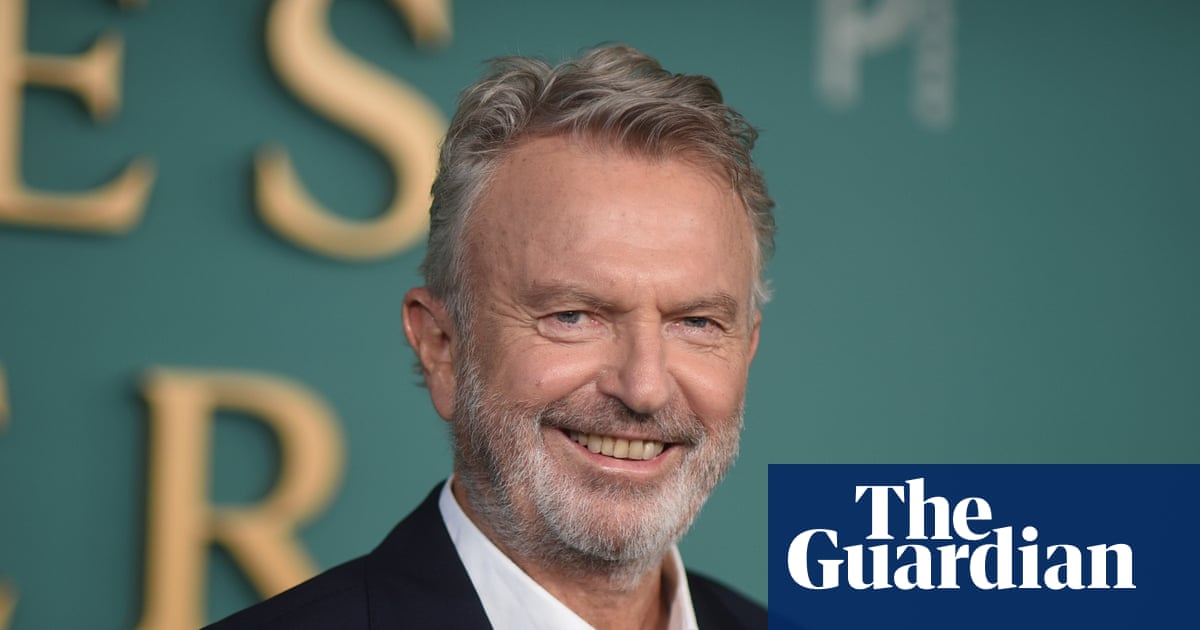
Sam Neill has announced he is now cancer-free after undergoing a new treatment when chemotherapy stopped working on his stage-three blood cancer.
The Jurassic Park actor made the announcement on Australian broadcaster 7News while advocating for CAR T-cell therapy – a form of cancer immunotherapy which he underwent as part of a clinical trial – to be rolled out for blood cancer patients across Australia.
Neill first revealed that he was being treated for stage-three angioimmunoblastic T-cell lymphoma in his 2023 memoir, Did I Ever Tell You This? When the book was published, the actor was taking a new chemotherapy drug monthly to keep the cancer at bay, telling the Guardian: “I’m not afraid to die, but it would annoy me.”
“I’ve been living with a particular type of lymphoma for about five years and I was on chemotherapy, [which is] pretty miserable business but it was keeping me alive,” Neill told 7News.
But when chemotherapy stopped working, he said: “I was at a loss and it looked like I was on the way out – which wasn’t ideal obviously.”
Neill then took part in a CAR T-cell therapy clinical trial that is focused on his type of lymphoma in Australia.
“I’ve just had a scan just now and there is no cancer in my body, that’s an extraordinary thing,” Neill said. “I’m very, very excited that this can happen.”
He added: “It’s time I did another movie.”
CAR T-cell therapy is currently only available under Australia’s public health system for certain cancers at certain hospitals; privately, the treatment currently costs upwards of A$600,000 (£320,000, US$430,000) per patient in Australia.
The 78-year-old actor was speaking as part of a campaign to ask Australia’s state and federal governments to expand the availability of CAR T-cell therapy for more cancer patients, with the help of not-for-profit blood cancer foundation Snowdome.
Known as CAR (chimeric antigen receptor) T-cell therapy, the treatment involves taking T-cells, a type of white blood cell, from a patient and genetically engineering them to target and kill cancer cells. These modified T-cells are grown in a laboratory and then infused back into the patient.
CAR T-cell therapy has proved particularly successful in treating certain types of blood cancers. Response rates have been less encouraging in solid tumours, with long-term outcomes unclear. However, in 2025, US researchers revealed a woman who had been treated with CAR T-cell therapy as a child for neuroblastoma, a type of solid tumour, had remained cancer-free for 18 years.
Neill thanked the scientists who helped him, writing on social media, “I am still processing this miraculous information. But of course it is not a miracle, it is science at its best. And a lot of people who care deeply about their work and their patients. I am immensely grateful.
“Treatments like this – CAR-T therapies and others coming through in a rapidly changing medical world – I hope to be available to everyone who needs them in Australia and NZ (and worldwide).
“This is what I am advocating, along with The Snowdome Foundation, to push for exactly that.”


