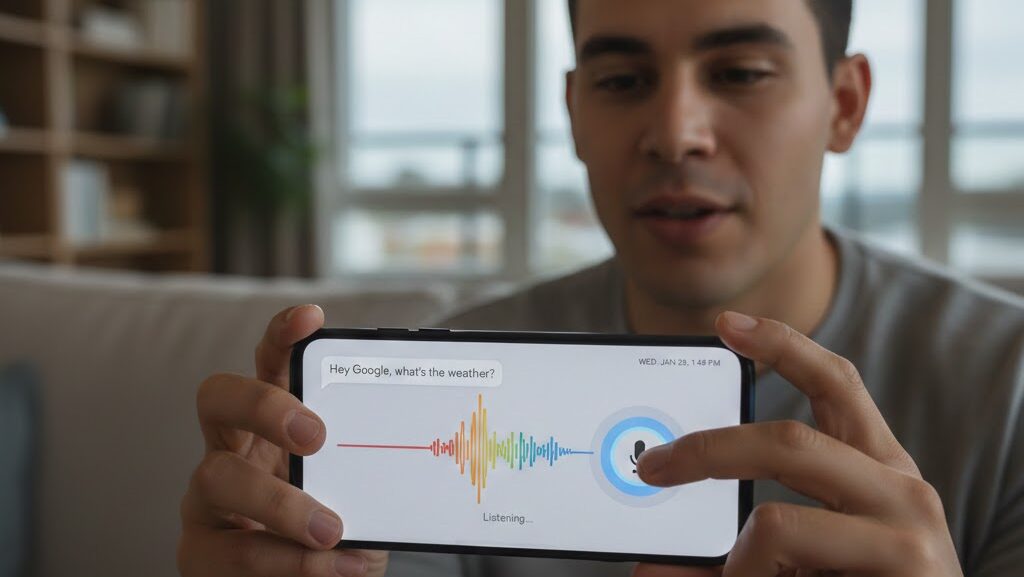
Google has agreed to pay $68 million to settle a class-action lawsuit that accused the company of illegally recording private conversations through its voice assistant, Google Assistant, according to a Reuters report.
The settlement was filed in a federal court in San Jose, California, and still requires approval from U.S. District Judge Beth Labson Freeman.
The lawsuit alleged that Google Assistant recorded users’ conversations without their knowledge when the system was triggered by mistake. These unintended activations, known as “false accepts,” occurred when the software incorrectly detected wake phrases such as “Hey Google” or “Okay Google.” Plaintiffs claimed that some of these recordings were later used to deliver targeted advertising, raising concerns over user privacy.
The tech giant denied wrongdoing but said it chose to settle to avoid the cost, risk, and uncertainty of prolonged litigation. The company declined to comment publicly on the settlement.
Background of the Google Voice Assistant case
According to court filings, the settlement covers people in the United States who bought Google Assistant–enabled devices or experienced false activations starting May 18, 2016. If approved, the $68 million fund will cover consumer payouts, legal fees, and other court-approved costs. Lawyers representing the plaintiffs may seek up to one-third of the settlement, or about $22.7 million, as legal fees.
The case stems from a lawsuit filed in 2019, in which users accused the tech giant and its parent company, Alphabet, of violating California privacy laws, parts of federal privacy law, and contractual commitments to users. In a 2021 ruling, Judge Freeman allowed key claims to proceed, finding that users could reasonably expect privacy during everyday conversations around their devices.
In that decision, Freeman said that while Google disclosed in its privacy policy how it collected information for advertising, “it does not sufficiently apprise users that it will use recordings made in the absence of manual activation or a hot word utterance.”
The tech giant had argued that the plaintiffs failed to show harm and that it never promised the assistant would activate only when users intended it to. The judge rejected those arguments at the early stage of the case.
Similar lawsuits and wider regulatory scrutiny
The Google settlement follows a similar class-action case against Apple, which agreed in January 2025 to pay $95 million to resolve allegations related to its voice assistant, Siri. That lawsuit also focused on claims that unintended activations led to the recording of private conversations without user consent. Apple denied the allegations and said it did not use Siri data for advertising or sell it to third parties, but it agreed to a settlement to avoid the uncertainty of a trial.
Beyond privacy litigation, Google Assistant has also been under regulatory scrutiny on competition grounds. In 2021, European Union regulators began examining whether the tech giant unfairly promoted Google Assistant as the default voice assistant on Android-based devices, including smartphones, smart TVs, connected cars, and other consumer Internet of Things products. That inquiry focused on whether Google used licensing terms or commercial incentives to prioritise its assistant over rivals and whether the assistant’s central role on devices allowed the company privileged access to user data that could reinforce its market power.
Both the privacy lawsuits and competition probes place Google Assistant at the centre of broader regulatory concerns around voice assistants, particularly their access to user data and their influence over device ecosystems.
Read More:
Support our journalism by subscribing
For You


