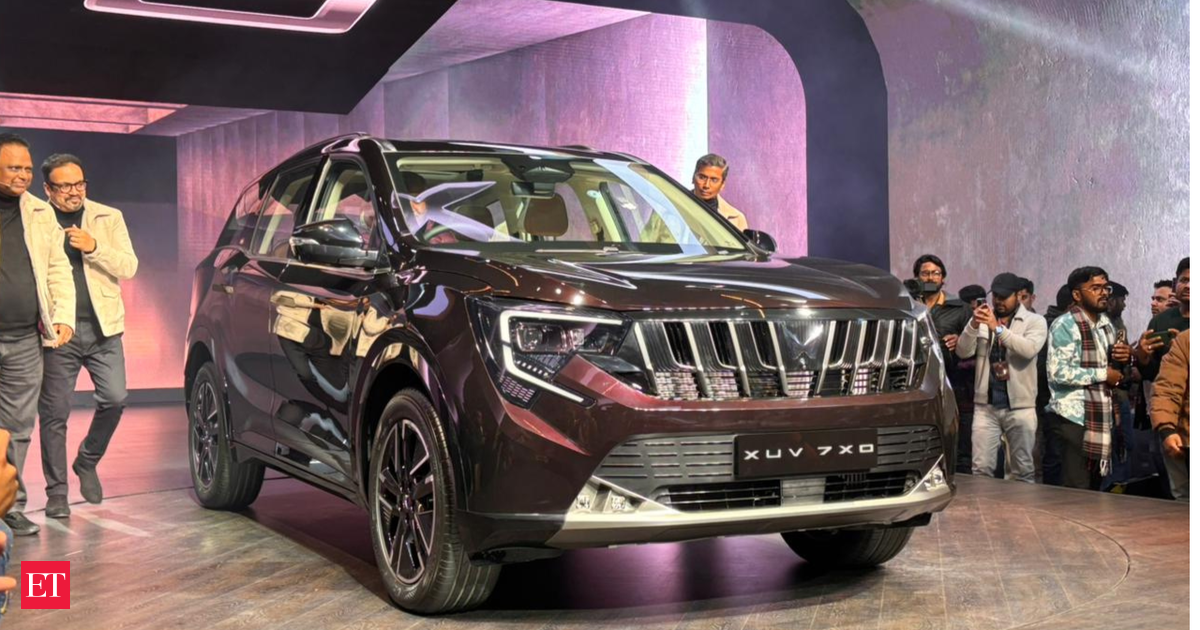
The biggest disruption for Mahindra stems from a 20-25% supply shortage at a major vendor, affecting factory operations at the manufacturer of XUV 7XO and Thar SUVs.
The automaker has an installed capacity of up to 57,000 petrol and diesel vehicles per month.
Mahindra did not respond to ET’s queries.
The operational woes at the Mumbai-based automaker underscore a broader labour shortage gripping manufacturing hubs across India, especially in the West. Industry executives attributed it to higher minimum wages in northern states such as Haryana and Uttar Pradesh, making local jobs more attractive for migrant workers.
Welfare schemes and growing self-employment opportunities, including e-rickshaws, have further tempered migration to traditional industrial hubs.

Better Economic Opportunities
Sudhir Mehta, founder and chairman of Pune-based electric truck bus maker EKA Mobility, said automotive clusters around Pune and Aurangabad are experiencing a clear demand-supply mismatch in labour availability. Some contractual workers returned to their home states ahead of the harvest season and elections in West Bengal, while improving economic opportunities in UP and Bihar are curbing migration to manufacturing centres in western India.
“This has created constraints in the availability of semi-skilled and unskilled workers for activities such as welding and shop-floor operations,” Mehta said, while highlighting that EKA Mobility’s high automation levels are helping insulate its production schedules and deliveries from significant disruption. “We were mindful of the workforce shortage in our labour-intensive functions and planned proactively.”
Pan-India challenge
“Labour shortage is no longer a Maharashtra-specific issue — it is a pan-India manufacturing challenge,” said Rajesh Soni, CEO of Neolite ZKW Lightings, a supplier of rear lamps and headlamps to carmakers. “Whether in Haryana, Gujarat, Maharashtra, or any other industrial hub, companies across sectors are facing similar pressures. The traditional flow of migrant labour has changed, supported by government welfare schemes and growing self-employment opportunities.”
Soni said Neolite ZKW is responding to the challenge through greater automation, workforce retention initiatives such as attendance and continuity incentives, and stronger engagement with ITIs and technical institutes. “The challenge is real, but the industry must adapt and keep moving forward,” he said.
The strain is evident across the automotive supply chain. At least one large Tier 1 parts supplier with operations in both western India and the National Capital Region reportedly transported contract workers from its plants in north India to its Chakan unit near Pune to sustain operations. Industry executives echoed similar challenges faced by manufacturers across western and southern parts of the country.
“One of the key trigger points is the sharp increase in minimum labour rates in Haryana and Uttar Pradesh,” said a person familiar with the situation. “Workers from these regions are increasingly choosing to stay closer to home.”
The labour shortage extends beyond automobiles. Ahead of its recent monetary policy review, the Reserve Bank of India held consultations with representatives from sectors, including automobiles, construction, textiles, gems and jewellery, steel and information technology.
“Construction industry participants reportedly highlighted that fewer migrant workers returning to urban centres had weakened demand for affordable housing,” said an industry executive who attended the meeting.
Robust demand
Sustained robust demand for new automobiles has compounded the challenges. “No one expected vehicle sales to remain this robust, even in May, when demand typically softens,” said an executive at an auto component manufacturer.
A senior auto industry executive described the current scenario as a blend of multiple pressures. Automakers underestimated the strength of the fiscal first quarter demand, while geopolitical tensions in West Asia have added supply constraints and cost pressures.
At the same time, many workers who returned to their villages before elections and the harvest season are reluctant to return due to rising living costs in major cities.
For Mahindra, the timing is particularly difficult. The company has been riding on strong demand for its SUVs. Total SUV sales rose 19% to more than 660,000 units in FY26. Momentum continued into the current fiscal year, with sales growing 8% in April and 11% in May.
The sustained demand trend, which gained pace following the goods and services tax (GST) cuts last September, has remained resilient despite geopolitical uncertainties and higher fuel prices. Local passenger vehicle sales expanded for at least eight consecutive months through May.


