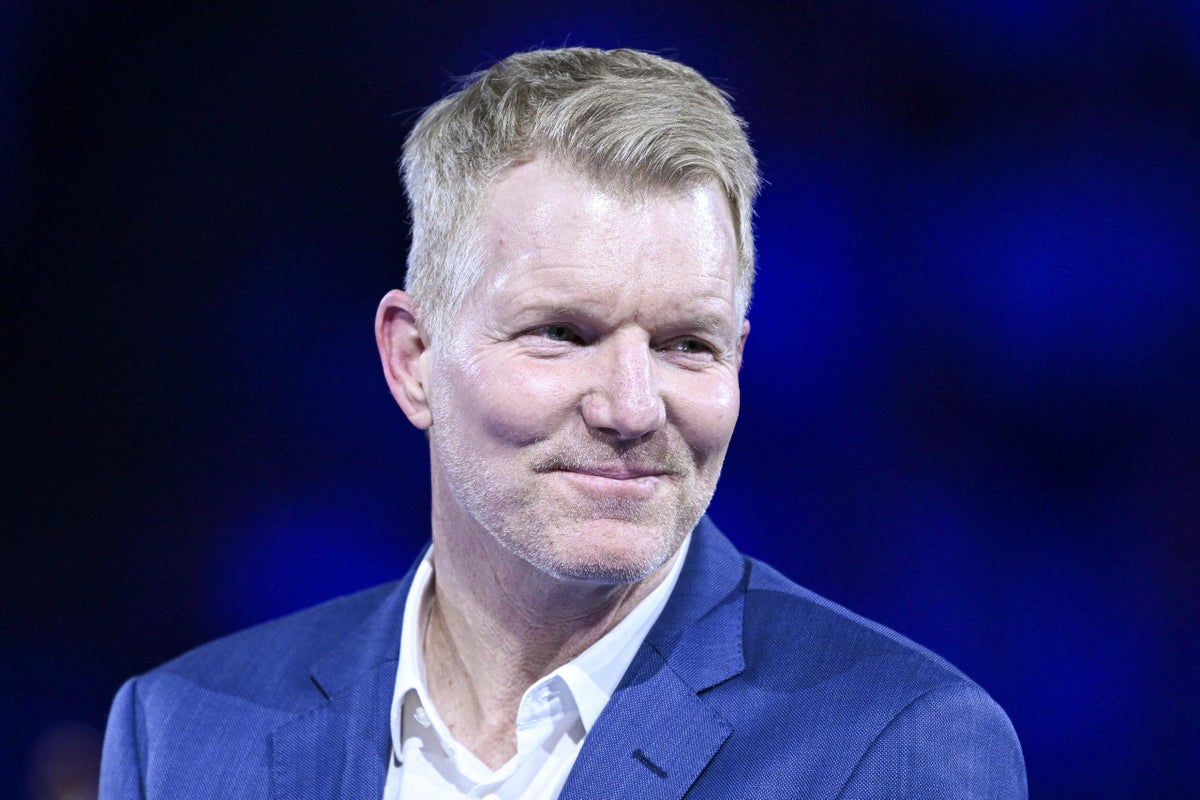
PARIS — On a dreary Paris afternoon in 1991, Jim Courier is petrified.
He shouldn’t be, because he has done this many times before. He is about to walk onto a court and play tennis against a guy he basically grew up with: a 21-year-old Andre Agassi. As teenagers, they roomed together at the Nick Bollettieri Tennis Academy in Florida. They have looked at each other across the net countless times.
But this is Agassi’s third Grand Slam final. The 1991 French Open is Courier’s first, and he has never been so scared of a match in his life.
He is only 20, but Courier somehow senses that this is a now-or-never moment, the day that will decide whether he ends up as another talented but forgettable guy who could swing a racket better than most, or someone who exists in living rooms for decades, a champion who would go on to explain the sport to millions for much of his working life.
“It was like an out-of-body experience, where I know how to play tennis, but I’ve never played tennis when it’s a life-changing moment,” Courier said during a recent interview, a couple of hours before he commentated on two players going through their own mental wringer, the latest call in a television career that is more than a quarter-of-a-century old.
“That’s what I love about seeing these players, when they have their first experience in a final. How they react to that energy, that moment,” he said.
“Can you grab it? Can you take it? Can you fight off that external force? And not just your opponent, but that other force that’s arguably as big, if not bigger, and you don’t know until you know, right? There’s no way to know how you’re going to feel until you get out there.”
Courier, 55, said these words with the sort of clarity and precision that tennis fans who pay attention have come to expect. Thirty-five years on from that first Roland Garros final, Courier has settled into his late style, mixing passionate personal experience with a kind of academic, even wonky approach that has turned him into the voice of the sport for a new generation of devoted fans.
For decades, the outer-borough bellows of John McEnroe, the irascible seven-time Grand Slam champion, have been the sound of the biggest matches in tennis for American audiences. McEnroe is to tennis what John Madden was for the NFL.
It’s entirely possible that the best analyst in the game — a Hall of Famer, four-time Grand Slam champion and world No. 1 himself — isn’t working the biggest matches.
“Best analyst in sports,” Chris Eubanks, a fellow player-turned-analyst, said of Courier on social media last week.
Courier came by his terror honestly that day in June 1991. Agassi was the chosen one, the one Bollettieri chose to bet his coaching future on. This was supposed to be his coronation. Courier wanted to write a different script.
“None of this matters, any of it, if you pull far enough back from frame, but we don’t live up here,” Courier said, raising his hand above his eyes before lowering it.
“We live down here feeling everything every day, feeling the adrenaline rush when you win. You win or you lose, and it’s every day you get a report card. You know if it’s working or not very quickly.”
He has friends who work on a big project for years without getting a grade. That’s not how tennis works.
“I had a life-changing moment that changed my pathway. That’s why I’m sitting here with you, and I would be doing something else somewhere else if things had gone the other direction, if I’d have been a finalist at a few majors instead of a champion at one major. It puts you in a different lane. I knew that, and that’s why I was very anxious once I walked on the court.
“That’s why the rain delays allowed me to exhale.”
Jim Courier’s 1991 French Open win over Andre Agassi was a launchpad for his career. (Heinz Kluetmeier / Sports Illustrated via Getty Images)
Those rain delays. They’ve become the stuff of legend.
Agassi won the first set in 37 minutes. He was a break up early in the second. It was all getting away from Courier very quickly.
Then came the rain.
Courier’s coach, José Higueras, the Spanish tennis Yoda, met him in the locker room. Take a few steps back, Higueras told him. Stop rushing and trying to jump into balls. Make it slow and physical. The rain eased. Courier went back on the court, drew even and ground out a five-set win.
Courier would play another nine years. He would win the French Open again in 1992, and the Australian Open in 1992 and 1993. He retired in 2000. The next year, he landed in the broadcast booth at Wimbledon.
Then, the rest of his life began.
“Jim was our first call when we got the rights,” Craig Barry, the chief content officer of TNT Sports, said in an interview this month, as he and the network prepared for their second go-round televising the French Open in the United States and United Kingdom.
Courier, he said, ticked every box. Full of passion. Knows the players. Can nerd out on analytics. Understands tennis fans of all demographics. Oh, and he won the tournament twice.
Courier has worked for Australian, British and American networks. TNT, BBC, ABC, ITV, Amazon Prime. In Australia, where he remains a massive star and has hosted the Australian Ninja Warrior game show, he does the on-court interviews after big matches for Tennis Australia.
McEnroe, an ESPN mainstay, used to fill that role. One year, he had a conflict and could not make the tournament. Tennis Australia asked Courier to fill in. He has been doing it ever since.
Barry said his conversations with Courier became about far more than match and studio assignments. Courier quickly began to serve as a guide and consultant.
“He has continued to be a student of tennis, from the standpoint of how the game has evolved, how the players have evolved and how the athleticism has evolved,” Barry said.
Jeff Blackburn had never met Courier before taking over as chief executive of Tennis Channel in April 2025. Courier had his best years shortly after Blackburn graduated from college. Blackburn said he was a big fan then, but that fandom evolved into something else, as Blackburn became a sports media executive who happened to be a huge tennis guy.
“His ability to break down matches at key times, and in very simple terms, and in the fewest amount of words, but exactly the right words … I thought he was the best analyst, and this was years ago, well before I came here,” Blackburn said of Courier in a recent interview.
Then he got to watch Courier work up close. This wasn’t just a former jock who also happened to be good with words. Courier would spend hours talking tennis with co-workers and producers.

Jim Courier is widely respected by the best players in the men’s and women’s game. (Quinn Rooney / Getty Images)
During broadcasts, he has running conversations with Hawk-Eye, the electronic line calling system that tracks every ball and player through every match, forming the basis of the data that can determine whether eye-test hunches are fact or farce. Courier is constantly asking for numbers and suggesting graphics to help tell the story, something that analysts rarely do during a match.
Blackburn’s experience is not unique. Prakash Amritraj, a Tennis Channel colleague, met Courier when he was about 9 years old, in the early 1990s. His father, Vijay, had recently ended his playing career but was still around the sport. Courier was one of Prakash’s childhood heroes.
As he got older and became a top junior and collegiate player, Amritraj trained with Ken Matsuda, a renowned fitness coach who had trained Courier and other top players. Matsuda would regale him with tales of Courier’s work ethic.
“He was the bar,” Amritraj said one afternoon on the Tennis Channel set at the Madrid Open in April. Then Amritraj saw it for himself, in a very different context.
“He puts that same work ethic into all he does now,” he said of Courier. “I know it comes off easy, and he knows tennis, but this man puts in a lot of work, daily. He’s so prepared.”
Then, after working on the stats he’s gleaned from doing his homework, Courier will riff about playing Stefan Edberg in the Australian Open final — but not too much, and not very often.
“He says everyone’s tuning in to watch these stars out there,” Amritraj said. “He doesn’t make it about him.”
As Courier’s career wound down in the late 1990s — top players rarely competed into their mid-30s in the way they do now — he increasingly saw television work as the best way to stay in the sport.
Coaching didn’t appeal to him, not on an individual basis, though he did captain the U.S. Davis Cup team during the 2010s. But tennis was always going to be his home. He believed he could push the ball forward in tennis commentary, with a combination of truth, empathy and humility.
“I try not to get on players unless they’re doing something that’s really deserving of it,” he said. “We’re trying to build these players up for the people, we’re trying to help grow the sport, but we do have a responsibility to tell the truth if something bad is happening on the court, too.”
He doesn’t recall a player approaching him after hearing about something he said to complain.
“I hope that doesn’t mean that I’m not being soft on them,” he said. “I don’t want to come across as if I’m too soft on them, but I think I just tell it straight.”
The season after he retired, Courier’s broadcast career began. He had little training and spent the next decade working intermittently, mostly at major tournaments, picking up what he could from far more experienced pros, including Mary Carillo, Barry MacKay, Ernie Johnson Jr., and others. The television work supplemented his day job, running a company that operated a senior tennis tour and exhibitions.
Everything changed in 2011, when Tennis Channel ramped up its operations. That allowed him to work scores of matches every year.
“It’s hard to get refined at anything if you’re only doing it three times a year,” he said. “You need reps.”
An NFL fan, Courier began listening closely to ex-players Troy Aikman and Greg Olsen, searching for clues about how they combined their experience with an informed and analytical approach. He also got to know Pete Irwin, an engineer at Hawk-Eye.
Irwin, Courier said, helped him understand how tennis would experience the information and analytics revolution that every sport was undergoing at the time. Suddenly, all the information Courier wished he had when he was playing was going to arrive at his fingertips.
“Simple things, like changing equipment and the ability to test exactly what the equipment is giving you, rather than guessing,” he said of how data might have helped him as a nervous 20-year-old in the 1990s.
“What a different string is doing to your RPMs. What a racket is doing for the net clearance on your forehand, when you hit out of a basket of balls with two different rackets and you’re swinging the same speeds. It just takes so much of the guesswork out of it.”
During a recent match between Rafael Jódar, the 19-year-old upstart from Spain, and another 19-year-old, Brazil’s João Fonseca, Courier was sure he was experiencing an optical illusion. The way Fonseca smacked his forehands, with grunting swings, made it appear he was more powerful than Jódar, who hits with longer and more languid strokes.
Courier asked for velocity and RPM numbers, the markers of speed and spin, the two attributes players chase above all these days. Sure enough, Jódar was out-hitting Fonseca, known as one of the biggest hitters in the game. He wanted a graphic that could tell that story to viewers.
Speed and spin are his starting points for analyzing players. That determines what they can do, and how they approach the court and their opponent. He also realizes that data overload can be a hazard for both players and fans. The numbers and analysis should take a backseat when a great match is underway — until they can explain the key to its greatness.
Courier is also good with improvisation. In a walkabout with 2024 Australian Open finalist Daniil Medvedev during that tournament, Courier asked the former world No. 1 to explain how he decides where to stand when returning serve.
“I figured if I’m curious, there are probably some other people that are curious,” he said.
He is certain that tennis is having a moment. He will put up the current version of the game against anything he has seen. All these matches later, data aside, the sport that he conquered on a dreary Paris afternoon in 1991 still wows him.
“The game has never been more attractive to watch than now. Some people will argue that. I will die on that hill. I’ve watched a lot of tennis in my life and I see things from players, who aren’t even the top players, that blow my mind.”


