We may earn compensation from reviewed products. Learn about our editorial policies.
Need-to-knows
- Expected to be a book-style opening to a 7.76-inch inner display
- Likely featuring the A20 chip with Touch ID instead of Face ID and no telephoto camera
- Expected September 2026 alongside the iPhone 18 Pro
- Starting price rumoured at around $1,999/£1,599
Apple has been watching the foldable phone market from the sidelines for years. Samsung, Google, OnePlus, Motorola — they’ve all had a crack at it. Some might argue that was a smart call considering how much research and development went into perfecting the form factor, but that’s about to change.
Now, all the signs point to 2026 being the year Apple actually does it. We’ve had years of false starts. Foldable iPhone rumours go as far back as 2018, with confident predictions of a 2020 launch that obviously never materialised. But we’re at the point where dummy models are floating around in the wild with various firm leaks pointing towards something at the end of 2026.
So here’s everything we currently know about the iPhone Fold, with the caveat that Apple has confirmed precisely nothing, and some of these details will undoubtedly change before we see it officially.
What is it, exactly?
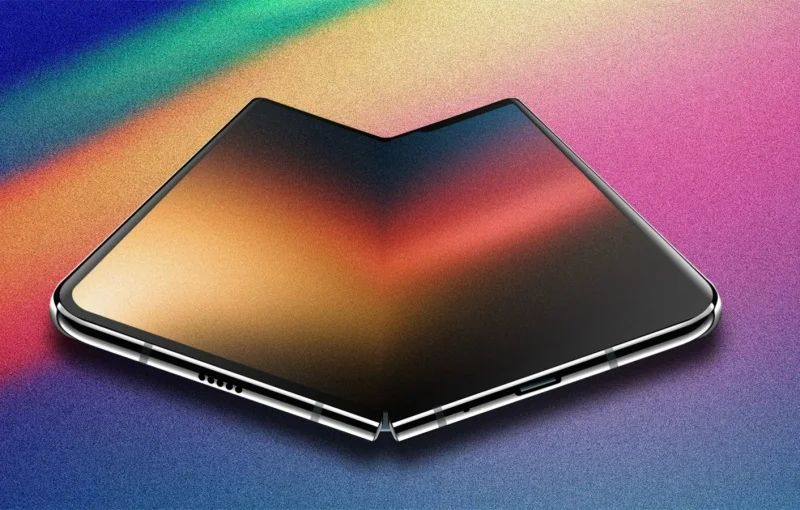
The iPhone Fold will be a book-style foldable smartphone, meaning it opens horizontally like a book rather than vertically like a flip phone. Apple apparently did test a clamshell design in 2024 before firmly landing on this format.
Apple’s current flagship: iPhone 17 Pro Max review
When open, we’re expecting something close to a a 7.76-inch inner OLED display with a 4:3 aspect ratio, not unlike the existing competitors on the market like the Samsung Z Fold 7 and Honor Magic V5. When closed, there’s a cover display rumoured at around 5.49 inches for quick access to notifications and the camera.
One note on naming: while everyone calls it the iPhone Fold, Bloomberg’s Mark Gurman has reported that Apple may launch it under the iPhone Ultra banner, as part of a broader push to align its most premium products under a single “Ultra” label. Don’t be surprised if the official name is different when it lands.
Design
The chassis is expected to combine titanium and aluminium, with titanium handling the structural areas most prone to stress (around the hinge) and aluminium elsewhere for heat dissipation and to keep weight manageable.
Folded, it’ll sit at around 9 to 9.5mm thick. Unfolded, it reportedly drops to under 5mm, which would make it the thinnest iOS device Apple has ever made but not the thinnest foldable on the market. The volume buttons are moving to the top-right side of the device, a result of the motherboard sitting on the right and Apple not wanting to run cables across the hinge.
Best phone camera ever? Oppo Find X9 Ultra review
One notable absence seems to be set in stone: Face ID. The device is simply too thin to fit the required sensors, so Apple is going with Touch ID in the side power button, similar to how it works on the iPad Air. Colour options aren’t confirmed, but leaks point to at least two at launch with white confirmed as one of them.
Display
The inner display is expected to be a 7.76-inch OLED panel supplied by Samsung, and Apple has reportedly been working obsessively on solving the crease that foldables still sort of have (albeit not on the Oppo Find N6).
Gurman, who tends toward caution on Apple rumours, has described the crease as “reduced” rather than eliminated. More optimistic leaks call it practically invisible in normal use. What we do know is that Apple has developed a redesigned adhesive layer that spreads fold stress across the display stack rather than concentrating it at the bend point.
The OLED panels use the same M14 OLED material as the iPhone 17 Pro Max.
Performance
The A20 chip is expected inside, the same processor coming to the iPhone 18 Pro lineup. Based on TSMC’s 2nm architecture, analyst estimates put it at around 15% faster and 30% more efficient than the A19 in the current iPhone 17 range. RAM is expected to sit at 12GB.
Apple is pairing the A20 with its second-generation C2 modem for 5G, along with Wi-Fi 6E (possibly Wi-Fi 7), Bluetooth 5.4, and eSIM only. There’s no physical SIM tray.
Camera
This is the area where the most obvious trade-off lands. Reports consistently point to dual rear cameras (a main wide and an ultrawide) with no telephoto lens. Given the device’s thinness, fitting a periscope telephoto system likely isn’t possible.
Best tablet for notetaking? reMarkable Paper Pro Move review
Both cameras are expected to be 48MP. There will also be two front-facing cameras: one for use when folded, one for when the device is open.
Battery
The iPhone Fold is expected to pack Apple’s largest-ever iPhone battery, somewhere between 5,000 and 5,500mAh. The unusual internal layout created by relocating those volume buttons reportedly freed up significant space for a larger cell.
Whether that translates into exceptional real-world battery life will depend on how hard two displays hit it in practice.
Software
The device will run iOS 27, not iPadOS. That means no Stage Manager and no windowed multitasking in the iPadOS sense, but it will likely support split-screen for two apps side by side, iPad-like app layouts with sidebars when unfolded, and smooth transitions between the outer and inner display.
Apple software latest: macOS Tahoe features
Developers will get tools to adapt existing iPhone apps for the 4:3 canvas. How many are properly optimised at launch is the big unknown. Android has had seven years to build a foldable app ecosystem, and iOS 27 is effectively starting from scratch.
Price and availability
The iPhone Fold is expected to be announced at Apple’s autumn event in September 2026, alongside the iPhone 18 Pro and Pro Max. Some analysts have floated a December on-sale date, suggesting supply may be tight even after the announcement.
Pricing estimates have settled around $1,999 for the base 256GB model, going up for 512GB and 1TB configurations. UK pricing is unconfirmed, but analyst estimates start around £1,599. Either way, it will be the most expensive iPhone ever made by a significant margin.
The big picture
Apple being last into the foldable market isn’t a disadvantage if the product is actually good. The company has a long history of watching a category mature, identifying what everyone else got wrong, and then releasing something that sets a new standard.
What’s clear is that Apple has been working on this for a long time. The crease engineering, the titanium hinge work, the exclusive display supplier deal with Samsung shows that this isn’t a product thrown together quickly.
Whether the compromises (no Face ID, no telephoto, a price tag that’ll make your eyes water) are worth it depends entirely on what you want from a phone. Add to that the already stellar competition and this will be a testing release for Apple.
We’ll keep this page updated as new information emerges.


