The program would span a decade and target India’s largely privately owned commercial vehicle fleet, with the biggest share likely earmarked for inter-city bus operators, the people said, asking not to be identified because the deliberations are private. Meetings with the Prime Minister’s Office and industry stakeholders are expected this month to refine the plan, they said.
The final budget allocation, vehicles eligible for incentives and subsidy structure are still being worked out and may change, the people said.
India’s government is accelerating efforts to cut fossil-fuel dependence after supply disruptions linked to the Middle East crisis revived concerns about energy security and imported inflation. India relies on imports for nearly 90% of its crude oil needs, making it vulnerable to geopolitical shocks and price volatility.
Electrifying commercial transport would also help tackle India’s severe air-pollution problem. In cities such as New Delhi, vehicular emissions can account for as much as 40% of fine particulate matter pollution annually, according to studies cited by the International Council on Clean Transportation.
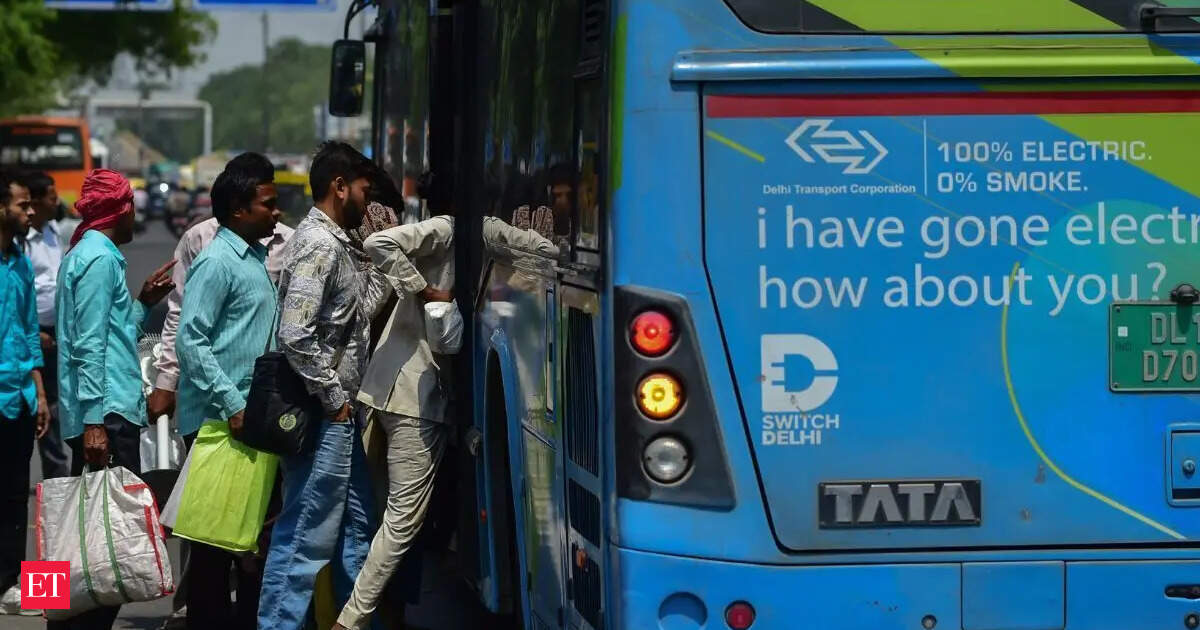
Electric bus adoption has grown rapidly over the past five years, driven largely by state-run transportation companies. Yet most newly registered buses in India still run on diesel.
While diesel dependence is not unique to India, other regions are moving faster on commercial-fleet electrification. China already runs hundreds of thousands of electric trucks and buses, and the US and Europe are rapidly electrifying urban logistics and public-transport fleets.India has more than 2 million buses on the road, but the government controls only about 5% of the fleet, according to estimates cited in the discussions. Nearly all trucks — the country’s biggest diesel users — are privately operated.
Vehicle Lifetime
Officials are looking at ways to spur adoption among smaller commercial fleet operators, who have struggled with the high upfront costs and limited financing, the people said.
The incentives being considered include interest subvention benefits worth as much as 1.5 million rupees ($17,500) per vehicle over its lifetime, with support tapering over time, the people said. The government is also evaluating a partial credit guarantee mechanism to encourage lenders to finance private companies’ purchase of electric commercial vehicles.
Consultations have involved lenders, guarantee providers, vehicle manufacturers and fleet operators, the people said.
Early discussions have centered on support that could cover 10,000 buses, eventually expanding to 40,000 to 50,000 vehicles, the people said. The industry has also sought charging parks, toll and tax waivers, and electricity concessions to cut operating costs, they added.
The Ministry of Heavy Industries, which oversees India’s electric mobility incentive programs, didn’t immediately respond to a request for comment.


