When Ebuka Obi-Uchendu first entered the “Big Brother Naija” house in 2006, he was a shy law graduate with no intention of seeking fame. “Anyone who knew me at the time would have been shocked that I even considered it,” he joked in an interview with CNN’s Larry Madowo.
“I was a painfully shy kid. I couldn’t even hold a stare.” His motivation back then was practical and straightforward: “It was $100,000 at the end,” he recalls. “I had this bright idea of going on the show, winning, and then going to pursue my master’s degree. That was the plan.”
Although he did not win, what Obi-Uchendu discovered inside that house would reshape his future. During weekly tasks in which housemates had to present plays or debate topics, he naturally took on the role of moderator. “Everyone kept saying, ‘You have a great voice; you should explore media.’”
After leaving the show, he followed that advice by auditioning for radio and television gigs. “I came out of the show famous and broke,” he chuckles.
“So, I had to do something with that fame. And then I fell in love with TV.”
This unexpected leap turned into one of Africa’s most successful media careers. Today, Obi-Uchendu is the face of “Big Brother Naija,” a show watched across the continent, from Kenya to Ghana to South Africa.
“I feel like I have a complete view of the show,” he explains. “Even the producers haven’t been in there. I sympathize with the housemates, but I also know how to trigger them or make the next week more interesting.”
Hosting a show of this magnitude comes with constant pressure. He admits that the Sunday night eviction shows are pure adrenaline. “The energy on Sundays is a different beast,” he says.
“The audience has expectations, and they become so passionate about these housemates. My first season, I was acutely aware that 44 countries were watching — I still haven’t rewatched those first few episodes.” Over time, though, he learned to embrace the chaos.
Ebuka Obi-Uchendu’s rise from Big Brother housemate to Africa’s most famous host

“Now I just enjoy the energy and use it as fuel,” he says. “It’s a few hours of pure craziness that the continent thankfully enjoys.”
It’s easy to forget that television was never his original plan.
“Maybe because the lawyer wasn’t even sure he wanted to be a lawyer,” he joked.
“I just knew I hated math and wanted to do something that didn’t involve one plus one. Law sounded prestigious, and with African parents, it was an easy sell.”
This path led him to Washington, DC, where he earned a master’s degree in entertainment law and intellectual property — training that has proven valuable in his media career.

“For almost 15 years, I didn’t have any management,” he says. “I ran my business myself because I knew what to look for in contracts. Now, even when I have people helping me, it’s hard to hide anything from me.”
Obi-Uchendu’s journey also reflects the evolution of reality TV in Africa. “When I participated in ‘Big Brother Naija’ in 2006, reality shows weren’t what they are now,” he notes. “It wasn’t necessarily a launchpad for anything. But today, we’re creating stars. Contestants are transitioning to actors, musicians, and even award winners. It’s nice to see how much good has come from it.”
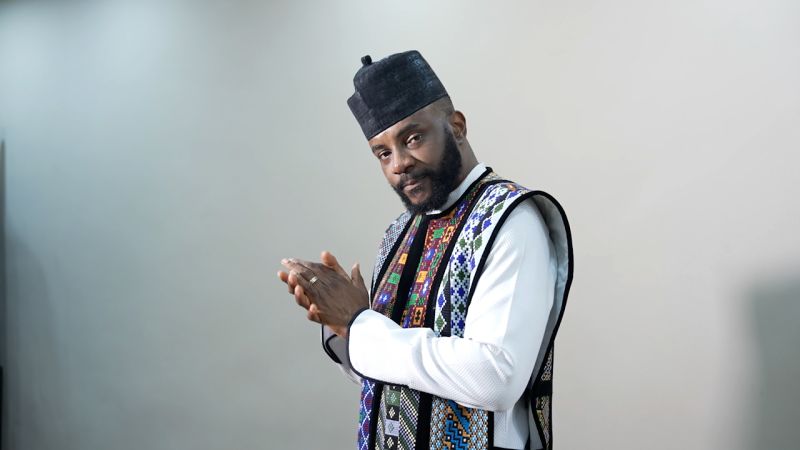
Part of his legacy is his role in helping redefine what it means to look African on screen. “I take fashion seriously, but I don’t take it too seriously,” he explains.
“When I got on TV, I thought, ‘Why not look Nigerian on air?’ We love our colors, and I wanted that to reflect on stage.” It worked.
His red-carpet looks and eviction-night outfits now trend online as much as the show’s twists. But beneath the glamour is someone still driven by curiosity and a genuine love for storytelling. “I really fell in love with TV,” he states simply.
Nearly two decades after his first appearance on “Big Brother Naija,” Obi-Uchendu has evolved from contestant to cultural touchstone, hosting presidential debates, talk shows, and some of the most-watched moments on African television.
“It’s been 10 seasons now, and it still blows my mind,” he reflects on his journey. “But I guess I was preparing myself for this moment all along.”


