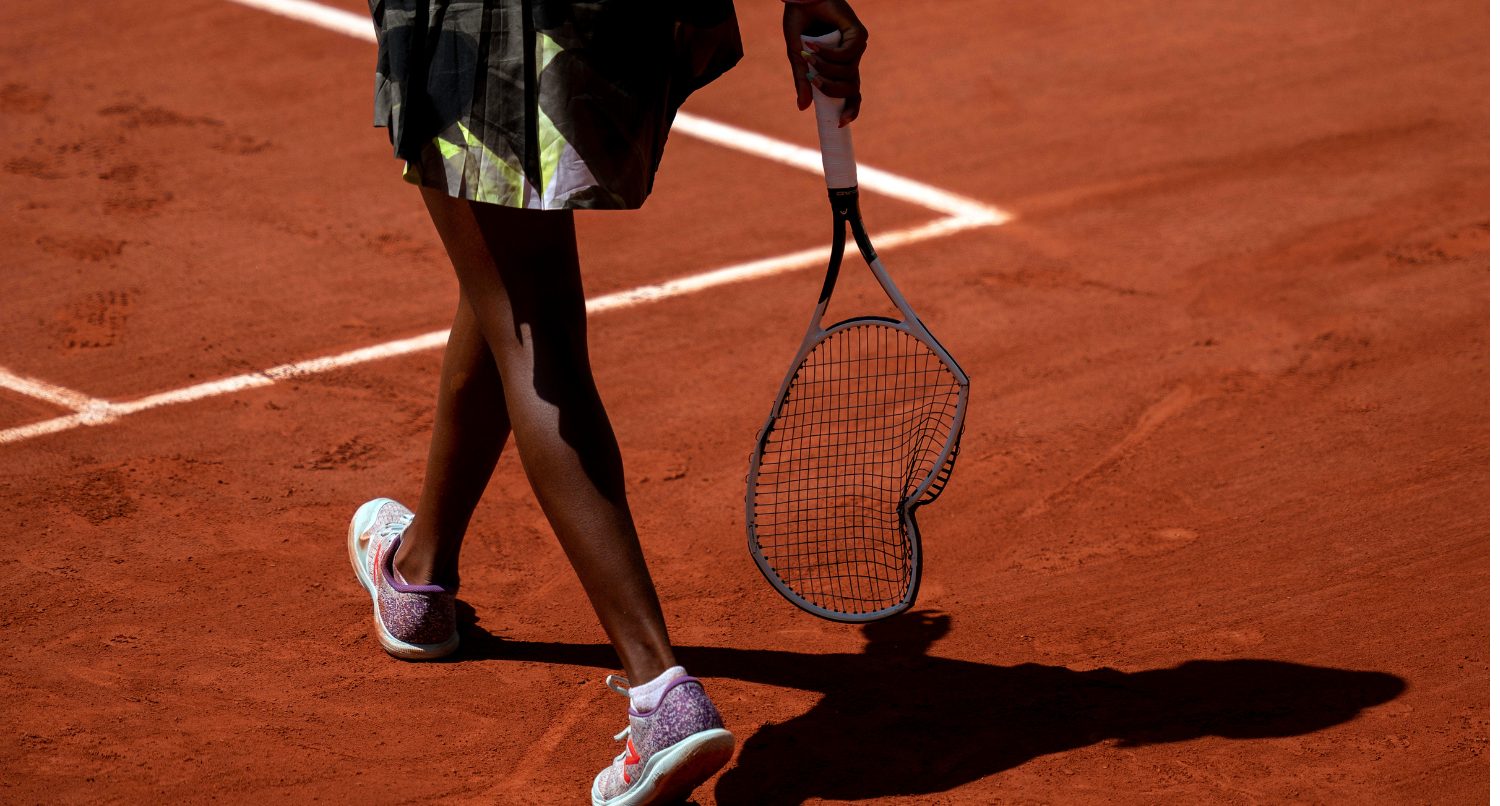
Coco Gauff thought she had found somewhere private to fall apart.
After losing to Elina Svitolina in the Australian Open quarterfinals in January, she walked into a corridor at Melbourne Park, away from the court, away from the crowd, and smashed her racket into the ground until the frustration had somewhere to go.
“I tried to go somewhere where I thought there wasn’t a camera because I don’t necessarily like breaking rackets,” she said.
Three months later, the sport is still working out how to rectify those privacy concerns. And according to The Athletic, French Open tournament director Amélie Mauresmo announced last week that Roland Garros will not be adding any backstage cameras ahead of this year’s tournament, maintaining designated camera-free areas where players can exist without being filmed.
“We really want to maintain respect for the players’ privacy,” Mauresmo said. “It’s something we will not change this year in terms of any cameras that we can add.”
It’s a notably different posture than Wimbledon’s, which announced in February that it would keep its backstage camera setup intact despite the player backlash. The All England Club told players in a letter that backstage access has a direct positive impact on the broadcast product, offering only that an in-house team would review behind-the-scenes footage before it went to air, rather than giving producers the ability to broadcast whatever they wanted in real time.
Where Wimbledon drew a line and held it, the ATX Open actually listened.
After Jessica Pegula and Madison Keys floated the idea on their podcast The Player’s Box, the WTA 250 event in Austin installed a dedicated “Rage Room,” which is essentially a camera-free space where players could break rackets, scream, or do whatever else they needed to do to get the frustration out without any of it making it onto a broadcast or a social media timeline.
It was a small thing, practically speaking, but it was also the first concrete acknowledgment from any tournament that the players’ complaints about backstage cameras would require more than a letter reassuring them that someone was watching the footage before it aired.
The French Open is not going as far as the ATX Open, but Mauresmo’s comments make clear the tournament is not Wimbledon either. Broadcasters will always push for more access because it makes for better television, and players will always push back because they are human beings who occasionally need to fall apart in private. The question every tournament has to answer is whose interests they are serving when those two things are in conflict.
Roland Garros, at least for now, has given its answer.


