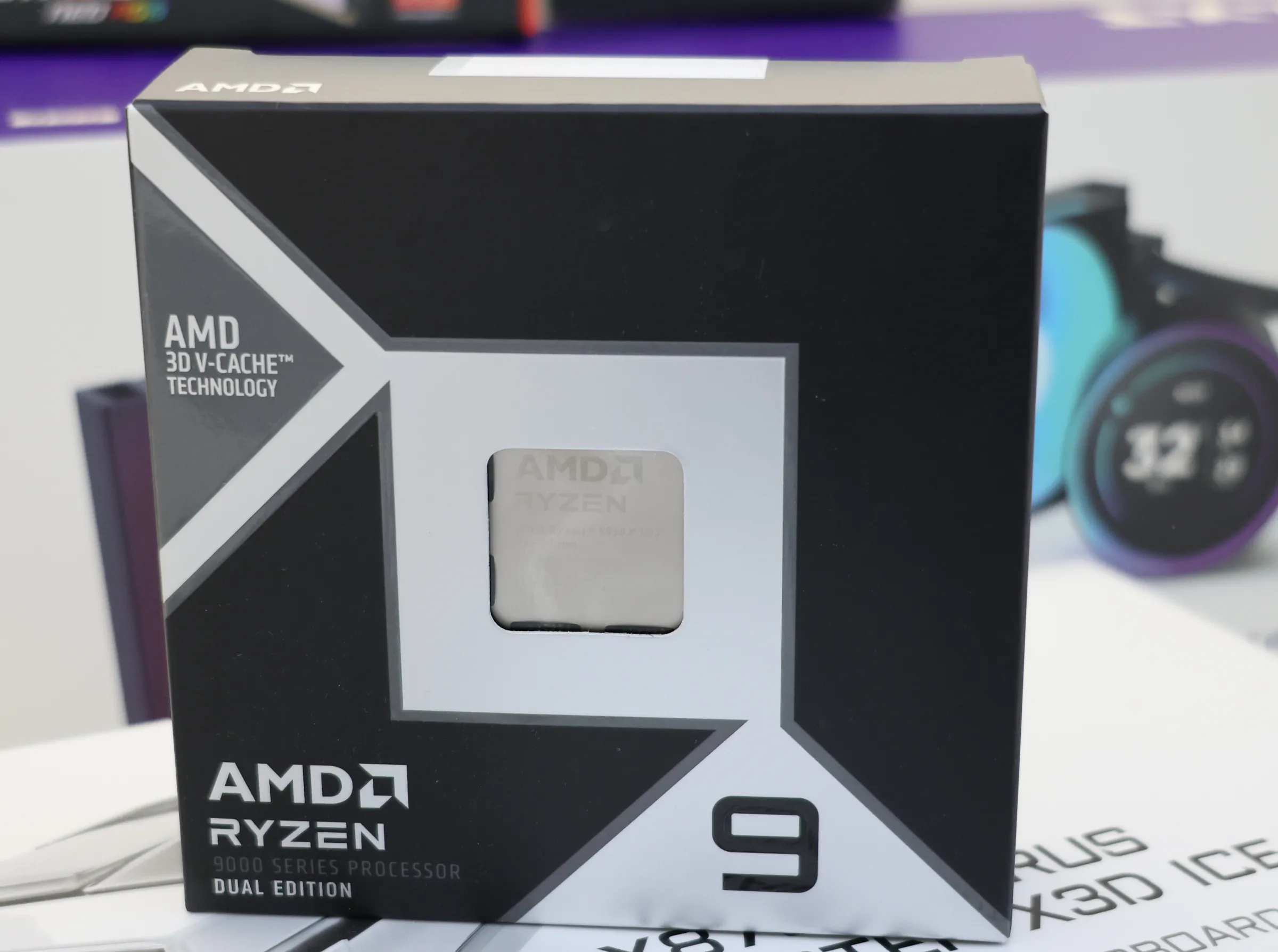
With this week’s launch of the AMD Ryzen 9 9950X3D2 Dual Edition I’ve found some of the commentary quite surprising among those arguing it’s really not a competitive or interesting product. While the cost may be hard to justify at $899 USD compared to the existing Ryzen 9000 series products or Intel’s new Core Plus CPUs, particularly for developers, technical computing, etc the performance of the Ryzen 9 9950X3D2 is quite interesting. I’ve had much enjoyment benchmarking the Ryzen 9 9950X3D2 for technical use-cases. In this article is a complementary look to my launch day AMD Ryzen 9 9950X3D2 review to better condense the 300+ benchmarks I’ve run to date on this flagship processor.
My AMD Ryzen 9 9950X3D2 review earlier this week featured ten pages of benchmarks and more than 300 benchmarks in total as shown in the result file at the end of the article. Heading to the OpenBenchmarking.org result page has those 300+ benchmarks in full for those wanting to meticulously go through all the data points. But for helping readers more easily assess where the Ryzen 9 9950X3D2 provides interesting opportunities, here is the condensed version with showing geometric means per workload area / problem domains against the other desktop CPUs tested.

For developers, technical computing, databases, and more there is a lot of potential for the Ryzen 9 9950X3D2 like for students, open-source maintainers, and hobbyists who might not have the budget for an AMD EPYC server or a Threadripper workstation, especially when factoring in the platform and memory costs. With the AMD Ryzen 9 9950X3D2 you can gain some meaningful advantages, especially for those that may already have an AM5 platform and running the AMD Ryzen 7000 series at present.
As shown in the AMD Ryzen 9 9950X3D2 Linux review, the overall geo mean for the 300+ benchmarks was putting the Dual Edition CPU around 10% faster than the existing Ryzen 9 9950X/9950X3D models.
For code compilation workloads the Ryzen 9 9950X3D2 came out to being around 7% faster than the Ryzen 9 9950X3D for compiling open-source programs like Eigen, the Linux kernel, ImageMagick, GDB, LLVM, Python, Godot, Erlang, and Rust’s Wasmer. For some workloads the gains were more. If you are upgrading an existing AM5 platform from the Ryzen 7000 series or assembling a new box for CI/CD type purposes and wanting to avoid the total costs of going for Threadripper/EPYC, the Ryzen 9 9950X3D2 is an interesting option. The $899 USD price is more easy to handle if considering the time savings if frequently compiling from scratch.
For those running large Fortran applications, the Ryzen 9 9950X3D2 does very well and was one of the areas where Intel Arrow Lake held a lead until now. The geo mean for that 36% advantage over the Ryzen 9 9950X3D came down to Incompact3D, SPECFEM3D, Cloverleaf, Petsc, and NWChem.
With HPC workloads at large, the Ryzen 9 9950X3D2 was 12% faster than the Ryzen 9 9950X3D. If you can afford it, going for Threadripper or EPYC can provide much greater performance. But for students, hobbyists, open-source maintainers or other budget-constrained users, the Ryzen 9 9950X3D2 is the best you can get out of a sub-$1000 desktop class CPU at the moment for dealing with HPC like NAMD, GNU Octave, GROMACS, OpenFOAM CFD, Kripke, Numpy, RELION, OpenRadioss, and others.
If wanting to dig into the HPC workloads further, the Ryzen 9 9950X3D2 is a killer for molecular dynamics workloads.
Or if breaking it down to workloads that use OpenMPI, the Ryzen 9 9950X3D2 is typically very well positioned.
For machine learning workloads on the CPU, the Ryzen 9 9950X3D2 was around 10% faster than the 9950X3D but for some of the AI inferencing benchmarks the gains were greater. Those tests included the likes of Microsoft ONNX, OpenVINO, Whisper,cpp, Llama.cpp, and PyTorch.
For those serious into chess simulations, the Ryzen 9 9950X3D2 was 23% faster than the Ryzen 9 9900X3D for LCzero and Stockfish.
When taking the geo mean of the workloads able to make use of Advanced Vector Extensions 512 (AVX-512) is where it’s a landslide win for the Ryzen 9000 series. With the Core Ultra Series 2 CPUs lacking AVX-512, for the many software packages these days able to leverage AVX-512, the Ryzen 9000 series as a whole does excellent. It will be interesting to see where Intel Nova Lake places with its AVX10.2.
When looking at the server benchmarks, there was around 5% better performance than the Ryzen 9 9950X if trying to maximize the potential for a SOHO server, edge server, or other similar type setup for Node.js, PHP, PostgreSQL, Memcached, ClickHouse, CockroachDB, etc. At least as of now there is no Dual Edition in the AMD EPYC 4005 family so for those not seeking a more costly EPYC server, the Ryzen 9 9950X3D2 at $899 may be justified.
For those wanting to dig in deeper for trying to better analyze the performance, value, and power efficiency of the Ryzen 9 9950X3D2 Dual Edition, there is also all the data via this experimental result viewer that I had been working on as time allows. Via that page you can also dive in to different workload areas (left side columns) as well as having more concise views of the performance / performance-per-Watt / performance-per-dollar metrics via the buttons at the top of the page. Here is also the ability to to form your own dynamic comparison against other past Phoronix and crowd-sourced benchmark data of many CPUs.
So for those trying to evaluate the merits of the Ryzen 9 9950X3D2 across different domains, hopefully this complementary look of the performance data proves helpful. Enjoy and back to more benchmarking.
Thanks to AMD for supplying the AMD Ryzen 9 9950X3D2 processor for launch-day Linux testing at Phoronix.
If you enjoyed this article consider joining Phoronix Premium to view this site ad-free, multi-page articles on a single page, and other benefits. PayPal or Stripe tips are also graciously accepted. Thanks for your support.


