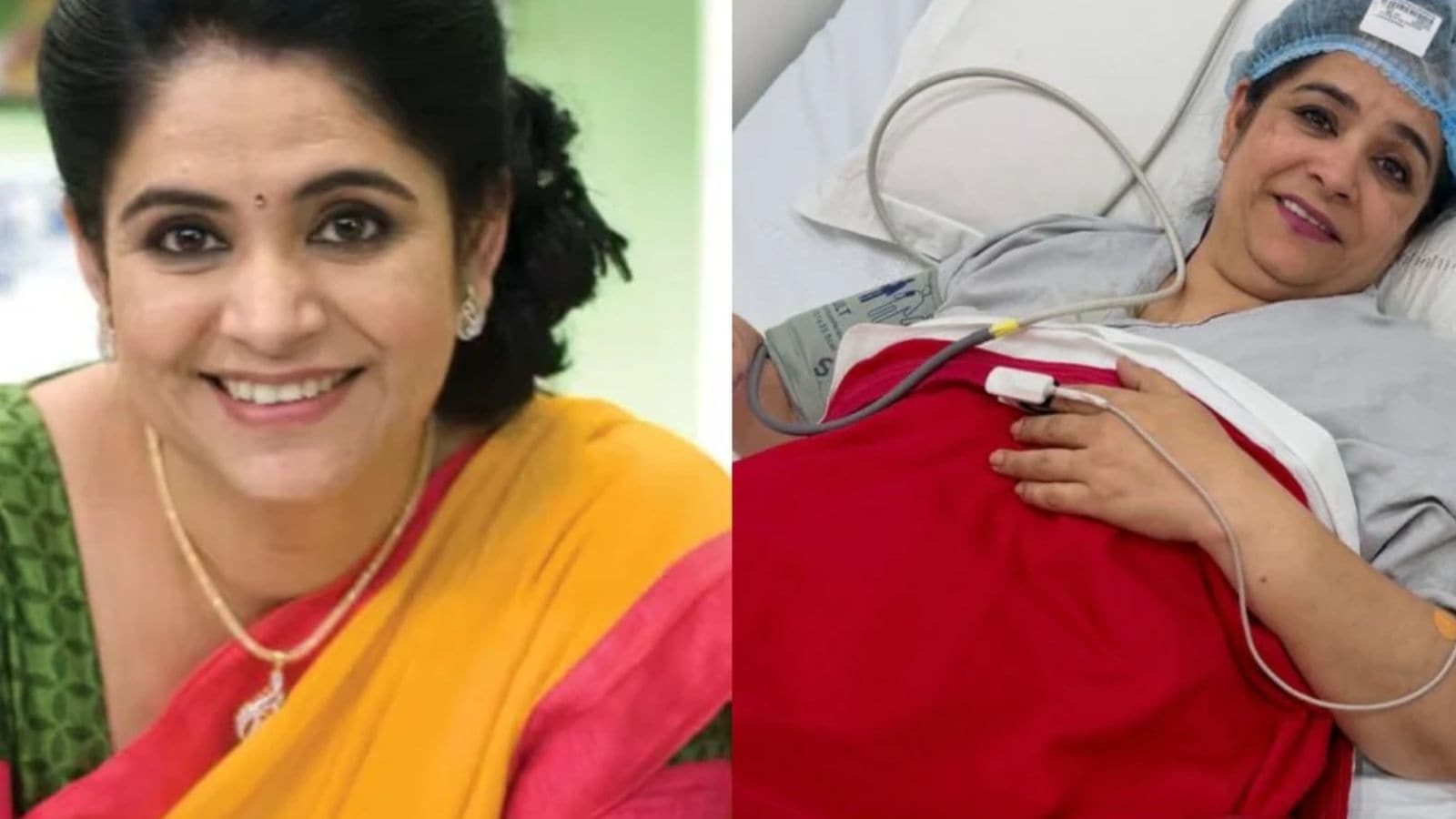
When celebrity chef Pankaj Bhadouria recently revealed that she had been diagnosed with breast cancer, the disclosure struck a chord with many urban Indian women balancing careers, caregiving and relentless schedules through their 40s and 50s.
For oncologists, however, the trend has been visible for years. “A decade ago, cervical cancer was India’s leading cancer among women. Today, breast cancer has overtaken it as the most common cancer among women, particularly in urban and upper-income populations. And it is lifestyle-linked, driven not by a single cause but is multifactorial,” says Dr Kanchan Kaur, senior director, Breast Cancer Care, Medanta, Gurugram.
The worrying part is not just the rise in cases. It is the age profile. India is seeing a disproportionately high burden of breast cancer in women in their fourth and fifth decades whereas women in the West see it in their fifth and sixth decades. Nearly 16–20 per cent of breast cancer cases in India occur in younger women, whose dense breast tissue makes diagnosis more complicated. “Routine mammograms are generally not recommended for women under 40 at average risk because the breasts of younger women are dense, making tumours harder to detect. Besides, false positives from early screenings often cause more harm than benefit,” Dr Kaur told The Indian Express.
For working women between 40 and 55, this is the decade where risk factors converge. Listen in:
Why do you say that breast cancer is a result of an urban lifestyle trap?
Breast cancer is multifactorial but urban lifestyles are amplifying the risk. Late childbearing, obesity, sedentary work patterns, fatty diets, stress, lack of exercise and disrupted sleep cycles are emerging as recurring patterns among patients.
Late child-bearing is associated with a higher breast cancer risk because pregnancy and breastfeeding at a younger age are believed to offer a protective hormonal effect on breast tissue. Women who have their first child later, have fewer pregnancies, or do not breastfeed for long durations experience prolonged exposure to estrogen and progesterone over their lifetime. These hormones stimulate breast cell growth, increasing the chances of abnormal cellular changes over time. Urban professional lifestyles, delayed marriages, fertility pressures and demanding careers have collectively shifted reproductive patterns in India, particularly among middle- and upper-income women.
Obesity, especially after menopause, is another major risk factor because excess fat tissue becomes an active source of estrogen production once ovarian hormone production declines. Higher insulin levels and chronic low-grade inflammation associated with obesity create conditions that can promote tumour growth. Sedentary work patterns compound this risk. Long hours at desks, minimal physical activity, commuting stress and screen-heavy lifestyles reduce metabolic health and contribute to weight gain, poor immunity, and hormonal imbalance. Multiple studies globally have shown that regular exercise helps lower breast cancer risk by regulating hormones, reducing inflammation and improving immune surveillance. Dietary patterns are changing rapidly in urban India. High consumption of processed foods, refined carbohydrates, sugary beverages and fatty diets contributes not only to obesity but also to chronic inflammation and metabolic dysfunction.
Story continues below this ad
We are increasingly seeing lifestyle-linked metabolic disorders as part of the broader cancer-risk ecosystem. Stress further complicates the picture. Chronic stress elevates cortisol levels, disrupts sleep quality, alters immune responses, and often triggers unhealthy coping behaviours such as overeating, inactivity, smoking, or alcohol consumption — all of which indirectly increase cancer risk over time.
Among all modern lifestyle factors, sleep disruption is the worst. Poor sleep affects the body’s circadian rhythm — the internal clock that regulates hormones, metabolism and cellular repair. Reduced sleep and late-night screen exposure suppress melatonin production, a hormone with protective anti-cancer properties. Women working long hours, using social media late into the night or constantly exposed to artificial light may experience long-term hormonal disruption. Over years, this chronic circadian imbalance is increasingly being linked to higher risks of breast and other hormone-sensitive cancers.
Why family history is a myth
Many women still assume that breast cancer matters only if there is a strong family history. That assumption is misleading. Hereditary cancers account for only around 10 per cent of total breast cancer cases. Yet family history acts as a major accelerator when present — and doctors warn that even women with clear family histories often fail to get screened on time. Importantly, inheritance patterns are not limited to the mother’s side. Both maternal and paternal family histories matter.
A grandmother, aunt, or even a father carrying cancer-linked mutations can significantly increase risk. This is where awareness around BRCA1 and BRCA2 genes remains poor and often misunderstood. Experts caution against indiscriminate genetic testing driven by fear or social media information. Genetic testing should ideally happen only after counselling by a trained genetic counsellor. In most cases, the family member already diagnosed with cancer should be tested first.
Story continues below this ad
A positive BRCA mutation does not guarantee cancer, but it signals significantly higher risk and the need for vigilant screening. It also has implications beyond breast cancer, including ovarian and pancreatic cancers.
I had a woman patient who tested positive for a mutation. Her daughters tested negative while a son tested positive, highlighting why hereditary risk cannot be reduced to simplistic assumptions.
What about screening?
Nearly 80 per cent of Indian women with breast cancer are diagnosed only in Stage 3 or Stage 4. In Western countries, population-based screening programmes detect cancers much earlier. India still lacks widespread organised screening infrastructure. Even where mammography exists, quality varies enormously, be it in imaging technology or the expertise of radiologists interpreting scans.
A standalone mammogram report is often not enough. It needs clinical interpretation and follow-up planning by a breast specialist or clinician. We recommend annual mammograms for Indian women aged 40 as they might miss abnormalities in younger women who tend to have dense breasts. That is why doctors are strongly advocating breast self-examination from late adolescence itself, for three minutes every month, just after periods, when hormonal changes are minimal.
Story continues below this ad
The idea is not paranoia but familiarity. Women who regularly examine themselves are more likely to notice subtle changes — a lump, skin thickening, nipple changes, or asymmetry — far earlier than those who never do. By the time many women seek help, the cancer has already progressed.


