3 min readUpdated: May 2, 2026 06:35 PM IST
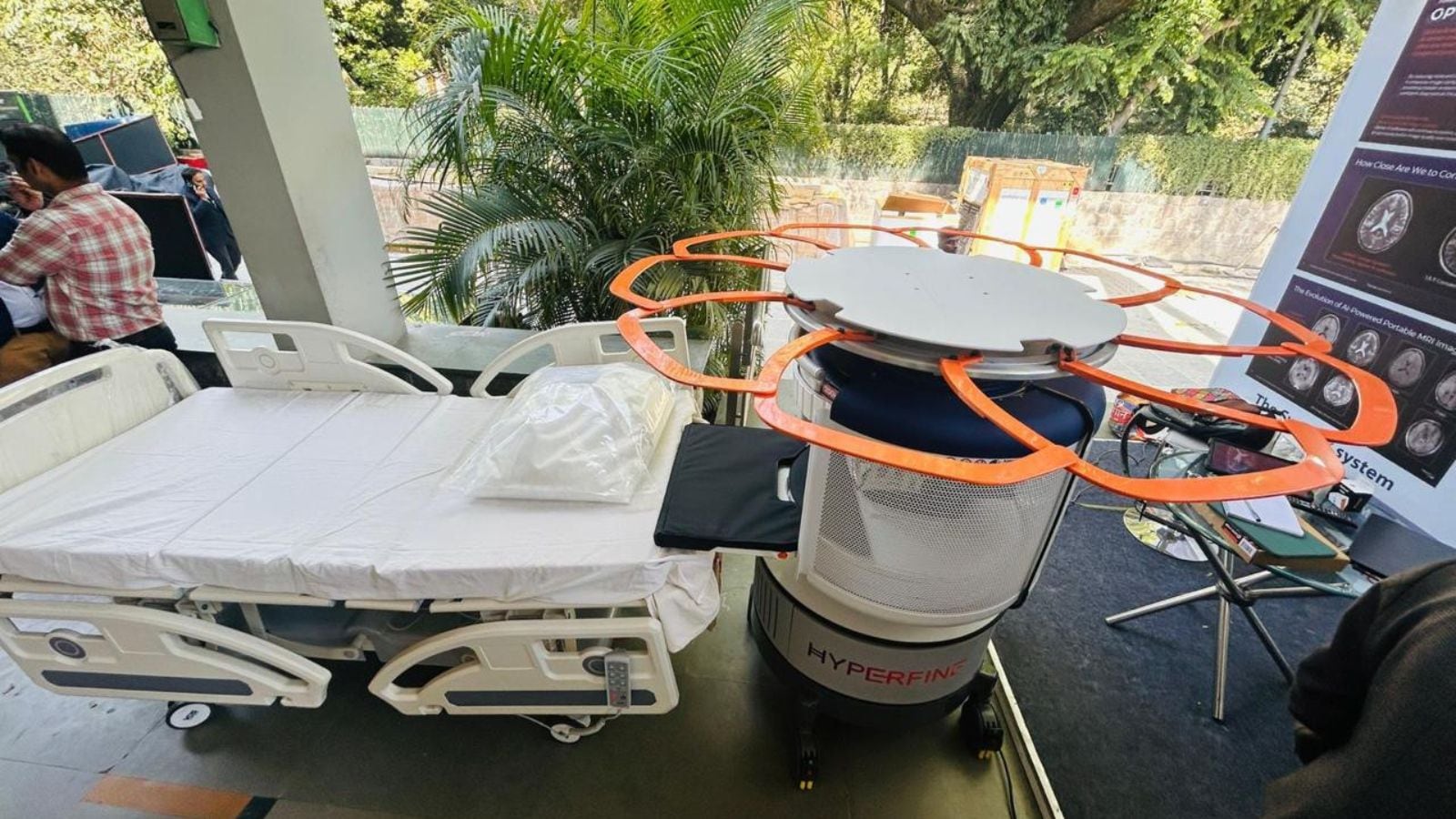
In a first, AIIMS New Delhi has introduced India’s first portable bedside MRI system, marking a significant step in critical care and neurodiagnostics. The ultra–low-field device can be wheeled directly to a patient’s bedside, enabling rapid brain imaging for critically ill patients in ICUs, emergency settings, and neurosurgical care.
Unlike conventional MRI machines that require dedicated suites and patient transport, this system eliminates the risks associated with moving unstable patients and allows imaging to be performed within the safety of the ICU environment.
Across the world, portable bedside MRI systems are being used in hospitals in the US, Canada, Australia, the UK, New Zealand, and various EU countries.
The system is already in use at the Center for Neurological Conditions under Dr Shailesh Gaikwad, and is expected to aid in the diagnosis and monitoring of stroke, trauma, pediatric neurological conditions, and post-operative neurosurgical cases. Clinicians say the technology will improve response times in emergencies where conventional imaging may be delayed or unsafe.
Supported by Radiosurgery Global Ltd and introduced following regulatory approval in India, the development is also expected to expand access to brain imaging and strengthen research in point-of-care neurodiagnostics.
Explaining the technology, Dr Gaikwad emphasized that the portable MRI is not designed to replace conventional systems but to complement them in critical scenarios. “It is an ultra–low-field system with lower resolution compared to regular MRI machines,” he said. “But it serves an important purpose, we can see the brain well enough to make bedside decisions when time is critical.” He added that while stable patients will continue to be taken to full-scale MRI machines, the portable unit is particularly useful when moving a patient could pose risks.
Highlighting its clinical importance, Dr. Gaikwad noted, “This is meant for critically ill patients in the ICU. If a patient is unstable, there is no need to take them out of that environment, we can bring the MRI to them.” He stressed that the focus should remain on its practical value rather than overstating its capabilities. “The idea is simple: for very sick patients, bedside imaging is safer and faster,” he said.
Story continues below this ad
Dr Gaikwad said in cases such as stroke, traumatic brain injury, or other neurological emergencies, delays in obtaining imaging can slow diagnosis and treatment, directly affecting patient outcomes. Traditional high-field MRI machines depend on complex infrastructure, including shielded rooms and specialized setups, and typically require patients to be transported to the imaging suite. For those who are critically ill, such as patients in ICUs, emergency units, neonatal care, or neurosurgical wards, this movement can be difficult, risky, or sometimes not possible at all. As a result, essential imaging is often postponed, limiting the speed and effectiveness of medical intervention.
Portable bedside MRI addresses this gap by taking imaging directly to the patient. It does not require a dedicated room, specialized power setup, or the need to move patients. Instead, clinicians can wheel the system to the bedside, whether in the ICU, trauma center, stroke unit, or neonatal ward, and capture brain images precisely when and where they are needed most.
© The Indian Express Pvt Ltd


