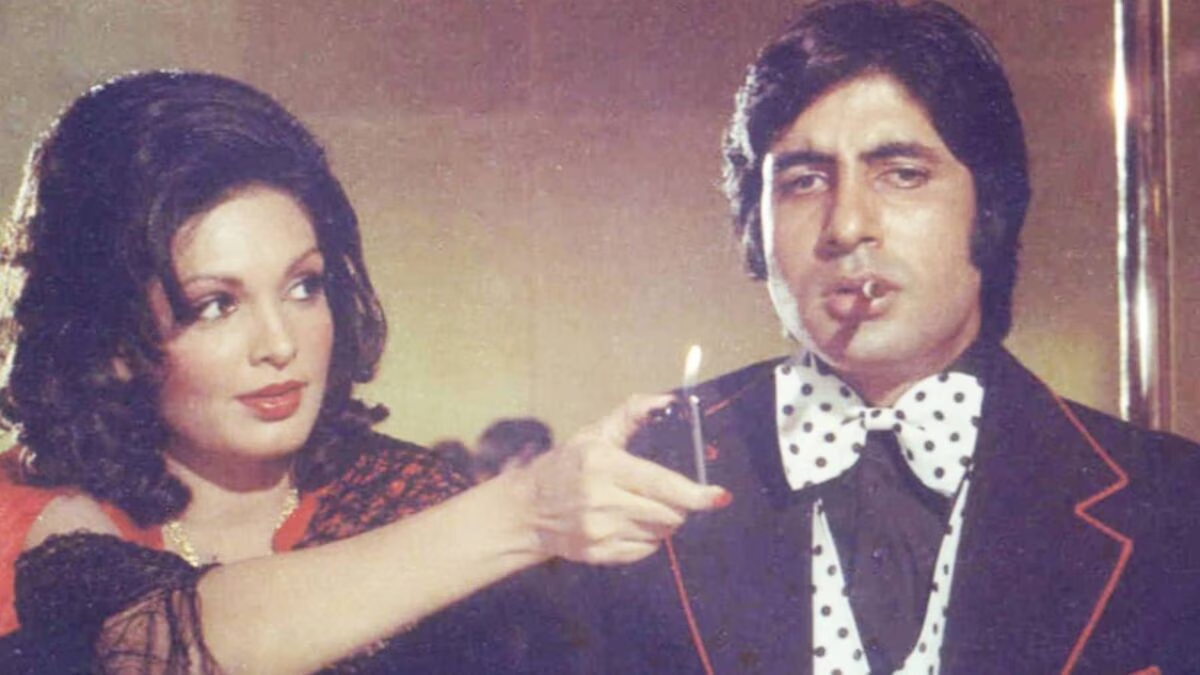
Before Amitabh Bachchan became the undisputed “Shahenshah” of Bollywood, one film changed the course of his career, and Hindi cinema itself. Released in 1975, Deewaar was more than just a blockbuster. It gave audiences one of Indian cinema’s most iconic anti-heroes and cemented Amitabh Bachchan’s image as the “Angry Young Man.” What many movie lovers may not know, however, is that the film’s central character, Vijay Verma, was reportedly inspired in part by a real-life underworld figure, Haji Mastan. (Image: IMDb)

Directed by Yash Chopra and written by the legendary Salim-Javed duo, Deewaar told the story of two brothers who choose dramatically different paths in life. While Ravi, played by Shashi Kapoor, becomes an honest police officer, Vijay rises from poverty to become a powerful smuggler. (Image: IMDb)

The character struck a chord with audiences across India. Vijay wasn’t a conventional hero. He was angry, ambitious, flawed, and shaped by the injustices he had experienced. His struggle against poverty and social prejudice reflected the frustrations of many Indians during the turbulent 1970s. (Image: IMDb)

According to several accounts over the years, Vijay’s rise in the world of smuggling bore similarities to the life of Haji Mastan, one of Mumbai’s most famous underworld figures. Mastan was known for building a vast smuggling empire during a time when imported goods were heavily restricted in India. Unlike the stereotypical gangster, he cultivated an image of sophistication and influence, becoming a larger-than-life figure in Mumbai’s social and business circles. (Image: Instagram/@bollywoodtriviapc)

While Deewaar was not a biopic and its story drew from multiple influences, film historians have often pointed to Mastan as one of the inspirations behind Vijay’s character. The parallels were hard to miss: both men came from humble backgrounds, rose to prominence through smuggling, and acquired wealth, power, and public fascination. (Image: IMDb)

Yet Deewaar was about much more than crime. At its heart, it was a story about morality, family, and the choices people make when faced with hardship. The film’s emotional core came from the conflict between Vijay and Ravi, culminating in one of Bollywood’s most memorable confrontations. The movie also gave Hindi cinema some of its most enduring dialogues. Lines such as “Aaj mere paas gaadi hai, bangla hai, daulat hai…” remain part of popular culture even five decades later. (Image: IMDb)

Released in the same year as Sholay, Deewaar could easily have been overshadowed. Instead, it emerged as one of the defining films of the decade. Critics praised its writing, performances, and social commentary, while audiences embraced Vijay as a symbol of rebellion against an unfair system. (Images: IMDb)

Interestingly, Haji Mastan was also the inspiration behind Ajay Devgn’s character Sultan Mirza in the hit film, Once Upon a Time in Mumbaai (2010). (Image: IMDb)


