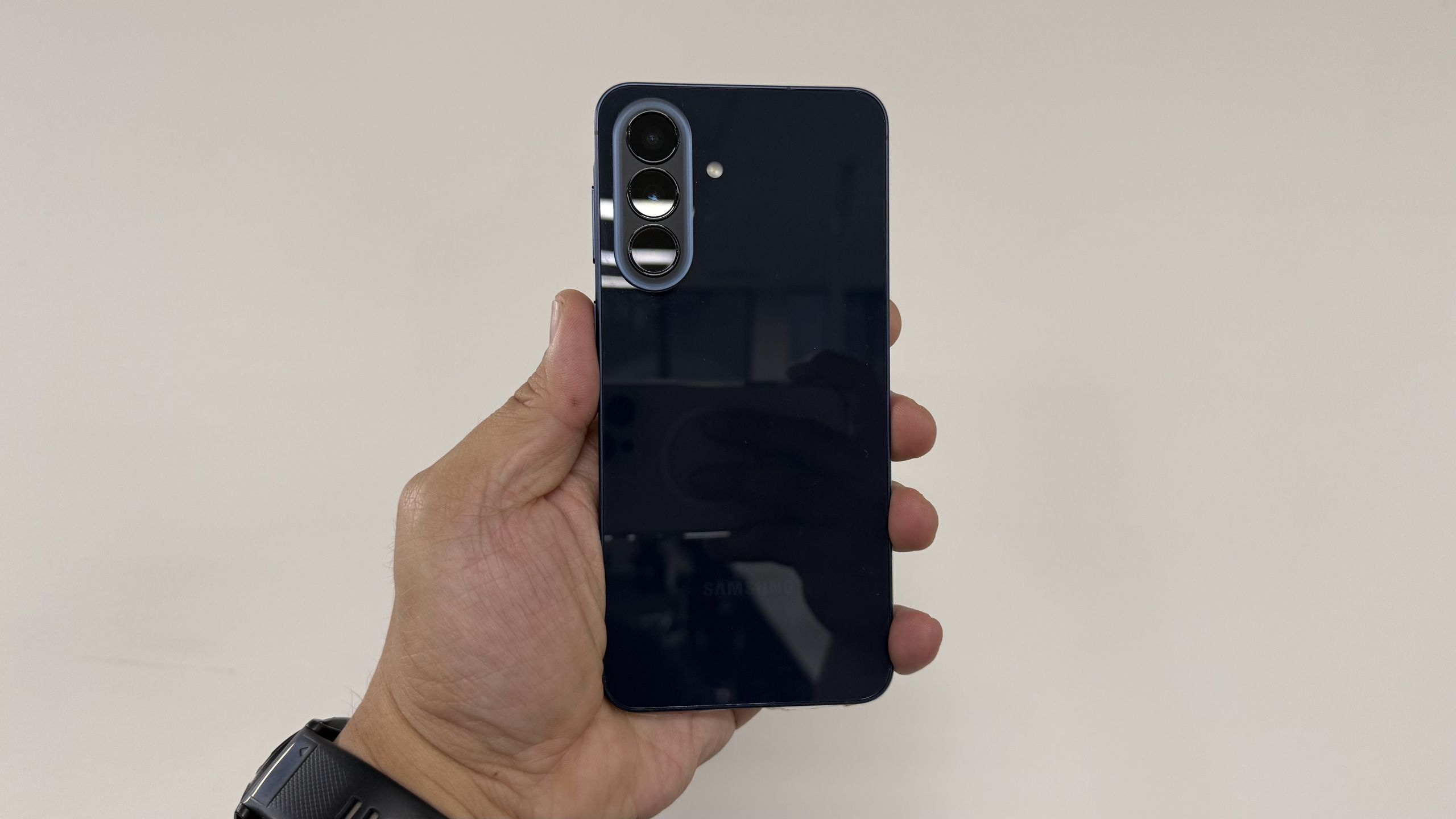
With a slim and light build, plus a stylish glass-and-metal chassis, Samsung’s affordable new Galaxy A57 is undeniably a great-looking phone — and not just compared to other budget handsets, but even when it’s up against other flagships, including its Galaxy S26 siblings.
Combined with some notable hardware and software upgrades over its excellent A56 predecessor, that was enough for me to seriously consider adopting the Galaxy A57 as my main Android phone — and as TechRadar AU’s main phones editor, that’s something I honestly never thought I’d be saying about a budget handset.
Article continues below
However, with Google opting to focus on retaining the same $499 / £499 / AU$849 price point with its new Pixel 10a (a feat achieved by adding very few upgrades over the Pixel 9a, including retaining the same core hardware), the tech giant has delivered a fairly underwhelming entrant in the contest for best budget Android handset of 2026 — so that crown is now very much up for grabs.
Sure, the Pixel 10a now has a completely flat back and improved battery life (thanks to software tweaks rather than a higher capacity), but otherwise the phone is virtually identical to the 9a. It doesn’t even have the Qi2 magnets found in the Pixel 10 lineup (aka PixelSnap), which could have been a notable differentiator over the Pixel 9a. Those reasons were enough for me to rule out the Pixel 10a as a real contender for best cheap phone of 2026.
Samsung, on the other hand, has taken a slightly controversial approach with the A57 by increasing the price slightly to $549 / £529 / AU$749 (from $499 / £499 / AU$699 for last year’s Galaxy A56). However, it’s also packed the device with plenty of upgrades over the A56 — while also making it thinner and lighter.
The 2026 budget Android race isn’t just Galaxy vs Pixel. There’s a dark horse in the form of British phone maker Nothing, a company that has always excelled in the budget space and whose compelling Nothing Phone (4a) Pro offers a striking fresh design, some genuinely unique features and, for good measure, a slew of hardware upgrades over its forebear.
With just two real contenders then, I compared the A57 and the (4a) Pro to see which would win me over — especially since the uber-flagship Samsung Galaxy S26 Ultra didn’t.
A thin and light wonder
The Samsung Galaxy A57 measures an impressive 6.9mm thick and weighs 179g, compared to the Galaxy A56’s 7.4mm depth and 198g weight. That thickness difference is starker versus the Pixel 10a, which measures 9mm.
The A57’s glass back and aluminum chassis make it genuinely feel like a flagship phone, especially compared to the plastic-backed Pixel 10a. Adding to the flagship look is the A57’s thin bezels, which stand out when the phone is next to the Pixel 10a and the Nothing Phone (4a) Pro.

While it still doesn’t have the full Galaxy AI suite, the Galaxy A57 supports more AI features than its predecessor thanks to a beefier Exynos 1680 chipset. Some previous S-series exclusive features, like Live Transcription and enhanced Circle to Search, are now fully supported by the budget Samsung. Personally, I count the fewer AI features as a positive, as both are practical and potentially useful, unlike the flagships that have so many more AI features that I would likely never use.
Even with the thinner chassis, Samsung still managed to stuff a 5,000mAh battery in the A57, giving it the same capacity as the Galaxy S26 Ultra. I can also quickly charge it up, thanks to 45W fast charging, which is actually better than the base Galaxy S26 (25W). There still isn’t wireless charging here, which admittedly might turn some users off, but isn’t a deal breaker for me.
In Australia (where I’m based), the Galaxy A57 is also cheaper than its competitors, starting at AU$749 for the 128GB model, compared to AU$849 for the Pixel 10a and AU$949 for the Nothing Phone (4a) Pro (albeit for 256GB storage and 12GB RAM). A mid-ranger with premium materials that’s priced lower than a phone with comparatively cheaper parts like plastic is a no-brainer for me. If you’re in the US and the UK, however, the A57 isn’t as much of a slam dunk thanks to being slightly more expensive at $549 / £529 compared to $499 / £499 for the Pixel 10a.
More than just a pretty (inter)face
While I adore what Samsung has done to upgrade and improve the Galaxy A57 compared to its predecessor, somewhat surprisingly, it was the Nothing Phone (4a) Pro that ultimately won me over — and it did so because it brought together some of the things I liked about the Galaxy A57 and the Pixel 10a, and wrapped it all in a whimsical and fun package.
The (4a) Pro’s all-metal industrial design doesn’t just look good, it also feels more premium than the A57’s glass sandwich, even if it’s not as thin or light (8mm deep and weighs 210g). The Glyph Matrix display on the camera island adds to its distinctive looks, but is also useful as a second display for a clock, alerts, and even as a guide for taking photos.

NothingOS reminds me a lot of the Google Pixel’s clean software experience, but it takes it to another level of minimalism by using monochrome logos, menus and custom widgets. While Samsung’s One UI makes the Galaxy A57 more customizable, it’s still comparatively more cluttered with bloatware, which can be laborious to remove app by app after setup.
Admittedly, the (4a) Pro is the first Nothing device I’ve ever used, so I’ll admit that a novelty factor is in play here. However, I’ve also been on an ongoing quest to cut down my phone screen time, and NothingOS’s minimal UI and the (4a) Pro’s Glyph Matrix are features that I’ve been looking at to help achieve that goal. Sure, I could manually go about setting up a similar monochrome theme with the Samsung, but it’s already implemented — and looks great — on the Nothing phone out of the box.
Price wise, the (4a) Pro makes for a better option than either its Samsung or Google counterpart — particularly in Australia — despite it being the most expensive of the three ($599 / £549 / AU$949 for the 256GB flavor, the only option available Down Under). The equivalent 256GB models for the Pixel 10a and the Galaxy A57 cost $599 / £598 / AU$999 and $609.99 / £529 / AU$849 respectively, while having just 8GB of RAM.
Honestly, if the (4a) Pro had better cameras, I think it would even have a good chance of replacing my iPhone 16 Pro Max as my daily driver. Balancing specs, features, looks and price remarkably well, I think the Nothing just tips the balance in its favor in the battle of the budget phones.
My biggest takeaway while comparing the three mid-range phones, however, was that no matter which handset you might personally prefer, it’s pleasantly surprising to see how capable they all are compared to their flagship brethren.

Follow TechRadar on Google News and add us as a preferred source to get our expert news, reviews, and opinion in your feeds.


