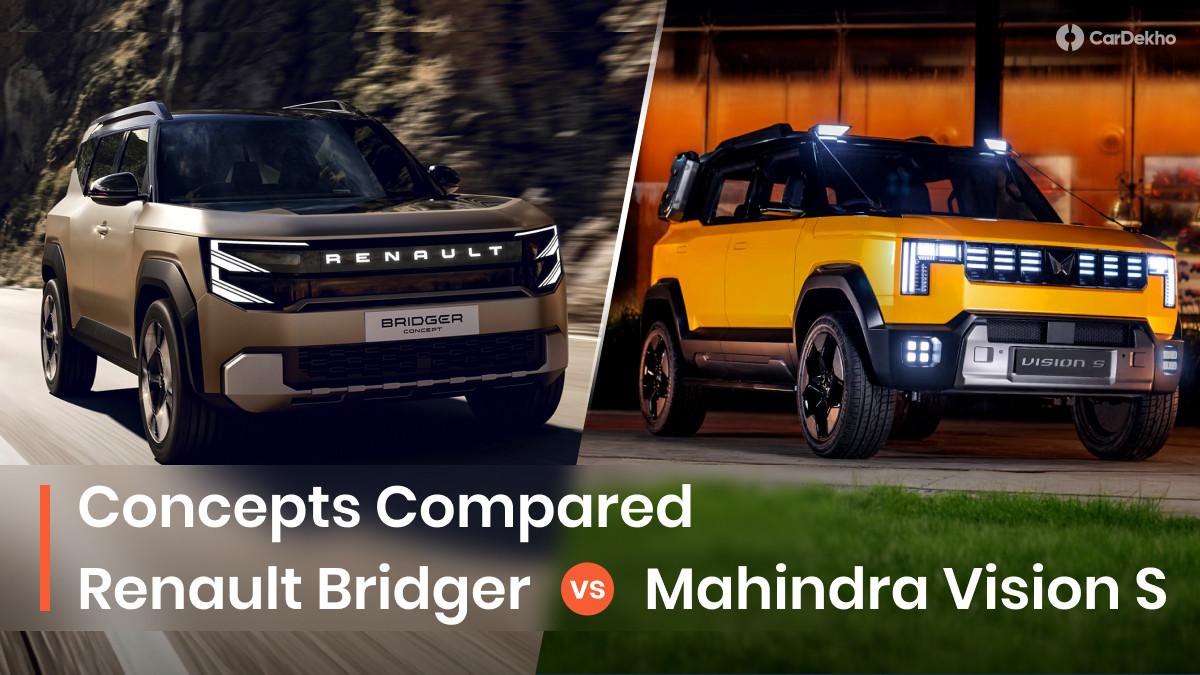
Automakers have increasingly started exploring sub-compact SUVs with strong off-road character, and both Renault and Mahindra are keen to tap into this space. The recently unveiled Renault Bridger concept previews a rugged, Duster-inspired sub-compact SUV, while the Mahindra Vision S concept showcases the brand’s futuristic interpretation of a modern lifestyle off-roader.
While both concepts share a boxy stance and SUV-inspired proportions, their design language clearly shows different flavours. In this report, we take a closer look at how the Renault Bridger concept and the Mahindra Vision S differ in terms of exterior design and what makes them fall into the same segment.
Renault Bridger Vs Mahindra Vision S: Front Design
Starting with the Renault Bridger concept, the SUV follows a bold and off-road-focused design theme. The front fascia is dominated by a gloss-black grille with illuminated ‘RENAULT’ lettering, giving it a modern and distinctive look. Flanking the grille are large headlamps with a unique LED DRL signature that adds a touch of character to the otherwise rugged front end.

The bumper is equally aggressive, featuring a silver skid plate and a large lower air dam integrated into the design. Overall, the front design communicates the SUV’s durability and goes well with its off-road-inspired personality.
The Mahindra Vision S, on the other hand, adopts a more futuristic and concept-like design approach. While it retains the upright stance and boxy proportions, the body panels feature smoother edges that make the concept look closer to a production-ready model.

Up front, the Vision S gets striking dual-pod LED headlights along with vertical LED DRL strips that immediately grab attention. Another distinctive element is the illuminated light strips integrated into the grille, which are expected to create a dramatic lighting signature at night.
The rugged theme continues in the bumper design as well, which features an all-black finish with a silver skid plate and pixel-shaped LED fog lamps. Together, these elements give the Vision S a bold and aggressive appearance that feels both futuristic and rugged.
Overall, the fascia of the Vision S looks more butch, while that of the Bridger looks more premium.
Renault Bridger Vs Mahindra Vision S: Side Design
From the side, the Renault Bridger concept continues its muscular design language. The profile is defined by flared fenders, strong character lines, and thick body cladding that reinforces its rugged appeal. Large 18-inch alloy wheels further enhance the SUV’s stance, making it look capable of tackling rough terrain.

|
Interesting Detail: The rear door handles are cleverly mounted behind the windows. This design trick creates a cleaner look and gives the Bridger the visual impression of a two-door SUV, something enthusiasts will appreciate. |
The Mahindra Vision S concept, meanwhile, showcases its traditional SUV boxiness most prominently in the side profile. Squared-off wheel arches wrapped in thick black cladding emphasise its off-road credentials, while the cladding extends onto the doors to further highlight the rugged theme.

At the same time, Mahindra has added several premium touches to elevate the concept’s appeal. These include flush-type door handles and camera-based ORVMs, both of which add a modern and high-tech feel. The concept rides on stylish dual-tone alloy wheels wrapped in road-biased tyres, suggesting that the production version could be more road-focused than hardcore off-road oriented.
The side profile also features blacked-out A, B, and C pillars, giving the SUV a sporty effect. A particularly interesting design touch is the rear quarter glass, which houses a jerry can on the right side and a ladder on the left. Chunky roof rails and black side steps further contribute to the Vision S’s tall and adventurous stance.
Silhouette-wise, both SUVs appear to be similar, but there seems to be more drama and visual flair going on in the Mahindra SUV, thanks to elements like a jerry can and ladder.
Renault Bridger Vs Mahindra Vision S: Rear Design
At the rear, the Renault Bridger concept continues to complement the tough personality. The design is relatively flat and upright, reinforcing its rugged SUV stance. A tailgate-mounted spare wheel takes centre stage, giving the SUV a classic off-roader vibe while also enhancing its practicality.

The LED taillamps feature a sleek design and are positioned neatly within the rear section, adding a modern touch to the otherwise rugged styling. A silver applique on the bumper further complements the silver skid plate seen at the front.

The Mahindra Vision S, again, takes a slightly more dramatic approach at the rear. The tail lamps mirror the design of the front headlights and are placed within black housings, creating a striking contrast with the bodywork. The bumper also features pixel-shaped fog lamps and a silver skid plate, maintaining consistency with the front design language.
Even the Vision S features a tailgate-mounted spare wheel, which gives the concept a strong SUV identity. The spare wheel is covered with a grey casing that features ‘Vision S’ branding, ensuring that the concept remains unmistakable even from a distance.
Overall, while both the Renault Bridger concept and the Mahindra Vision S concept embrace rugged SUV proportions, they interpret the theme in different ways. The Bridger focuses on blending rugged design elements with premium finishes and goes for a cleaner look. On the other hand, the Vision S looks equal parts funky and rugged, offering traditional
SUV cues with futuristic design elements and concept-style detailing.
Renault Bridger Vs Mahindra Vision S: Interior
Moving to the interior, Renault has not yet officially revealed the cabin of the Bridger concept. However, based on the brand’s recent design direction, the SUV is expected to feature a minimalistic dashboard layout with a mix of distinct materials and textures to give the cabin a rugged yet modern feel. It could also get an all-black interior theme to further complement its off-road-inspired personality.
What Renault has confirmed, however, are some key practicality figures. The Bridger concept is said to offer an impressive 200 mm of rear-seat knee room, which could make it one of the most spacious SUVs in its segment. In addition, it is expected to provide a 400-litre boot capacity, ensuring strong practicality credentials for everyday use and long-distance travel.
The good thing is that Mahindra has already showcased the interior of the Vision S, which looks very premium for an off-road-focused SUV. The cabin follows a dual-tone navy blue and grey theme and features a dual-screen setup integrated into the dashboard. A three-spoke steering wheel with ‘Vision S’ branding, which appears to be inspired by the unit seen in the Land Rover Defender, can also be spotted. The dashboard design is further enhanced by triangular AC vents with silver surrounds that protrude outward, giving the cabin a quirky and aggressive appearance.

The centre console is finished in a gloss-black material. It houses two cupholders, a wireless phone charger, a gear selector stalk, and an electronic parking brake with an auto-hold function. Ahead of the console are physical buttons for functions such as ventilated front seats and hazard lamps, similar to what we have seen on the current Mahindra Thar Roxx. Above these sits a sleek, touch-enabled climate control panel that adds to the cabin’s modern appeal. The seats follow the same navy blue and black theme and feature leatherette upholstery with contrasting white stitching, giving the concept a premium yet sporty look.
Overall, we like the interior styling of the Vision S, and expect Renault to follow a similar route and offer an equal parts sporty and premium interior for the upcoming Bridger.
Launch, Price, and Rivals
We expect both these SUVs to go into production by 2027, and we could see them on the roads by Q3 of 2027. One can expect pricing of both these SUVs to range anywhere from Rs 7 lakh to Rs 15 lakh (ex-showroom). They will compete with lifestyle-oriented SUVs like the Maruti Jimny, Mahindra Thar (3-door), and Force Gurkha 3-door. One can also consider these SUVs to be alternatives to subcompact SUVs like the Maruti Brezza, Kia Sonet, Skoda Kylaq, Tata Nexon and Hyundai Venue.
Here’s a detailed report on the Renault Bridger, if you want more details about its expected features and powertrain. Those who are interested in the Vision S can check out this story.
Which SUV’s design did you like more? Let us know in the comments section below.


