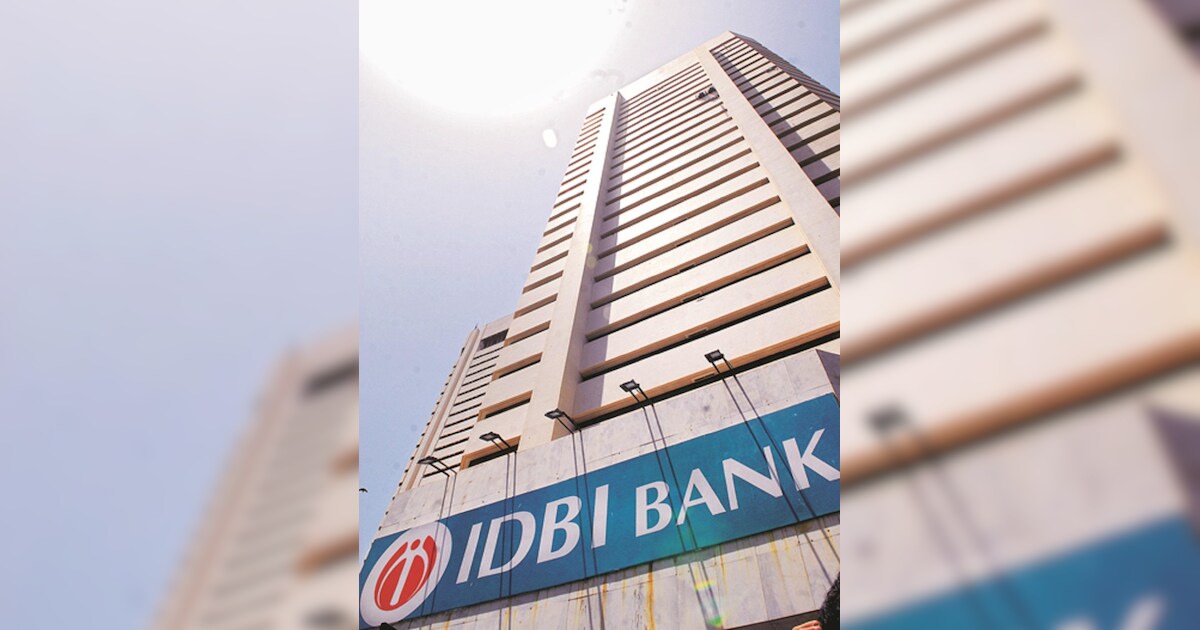
“The stake sale is likely to be scrapped because the bids came in below the reserved price set by the government. It appears that prevailing global uncertainties and continuously changing market conditions may have affected investor appetite and valuations,” a government official said.
The government and state-run Life Insurance Corporation of India (LIC) had been planning to sell a 60.7 per cent stake in IDBI Bank as part of the Centre’s broader privatisation programme aimed at reducing state ownership in the banking sector.
The government holds 45.48 per cent in the lender while LIC owns 49.24 per cent.
In the government’s original strategic-sale pipeline, with companies such as Bharat Petroleum Corporation Ltd, Container Corporation of India, BEML, Shipping Corporation of India, and IDBI Bank, only Air India has been privatised so far, sold to the Tata group in 2022 for ₹18,000 crore.
Experts say the difficulty lies not merely in execution but in the inherent tensions within the government’s objectives.
“Disinvestment becomes difficult primarily because the government wants to realise a good valuation for public-sector enterprises. These assets are often seen as ‘family silver’, so selling them at a low price is politically and economically difficult,” said Kavita Rao, director, National Institute of Public Finance and Policy.
According to Rao, when public-sector companies are reasonably profitable, governments often prefer partial stake sales through the market rather than outright privatisation.
“Full privatisation requires finding buyers willing to pay a high valuation, which is not always easy,” she said.
The complexity of the process itself often contributes to delays and reversals, said former finance secretary Ajay Narayan Jha.
“Privatising public-sector enterprises is often difficult because the process itself is long and complex. By the time the government completes valuation, approvals and the bidding process, market conditions may change significantly,” said Jha, who also served as member of the Fifteenth Finance Commission.
“If the government expects a certain valuation and the market is willing to offer less than that, it becomes difficult to proceed. Market sentiment plays a critical role. Even private companies withdraw from initial public offerings when market conditions are not favourable,” he said.
He also noted the improved financial performance of public-sector banks (PSBs) in recent years could strengthen their valuations if market conditions became more favourable.
However, some former policymakers argue that the slowdown reflects deeper structural problems within the government’s privatisation machinery.
Subhash Chandra Garg, former finance secretary, said the government had initially announced an ambitious privatisation policy but soon backed out.
“The government brought a policy in the 2020-21 Budget and promised a roaring privatisation and disinvestment programme. It said it would sell all saleable public-sector enterprises except those in the strategic sectors. That was abandoned because of two reasons in my judgement. First, the government concluded, as it did in the case of farm laws, it was not politically worth it. Second, its managers of disinvestment and privatisation did not have a clue as to how to effect these transactions, especially privatisation, successfully and professionally,” Garg said.
On the stalled IDBI Bank transaction, Garg said the absence of a clear institutional driver contributed to the delay.
“IDBI privatisation has been on the table for the past four years. Again, it seems to me that there was no real owner or driver of this transaction with all important regulators and ministries pulling in different directions. I guess the IDBI Bank transaction has collapsed because the risk-averse managers fixed the reserve price too high.”
Garg dismissed the possibility of PSB privatisation moving ahead anytime soon.
“PSB privatisation was shut out the day the government decided not to bring in promised amendments to the nationalisation law to enable privatisation. The second confirmation was received when despite the insurance law having been amended, no transactions were initiated for the less political general insurance sector.”
Employee unions too have opposed the move.
Vitthal K Rao, general secretary, All India IDBI Bank Officers Association, said employee groups had repeatedly urged the government to reconsider the plan.
“We have consistently urged the government to reconsider the proposal to sell a majority stake in IDBI Bank to private or foreign entities. Handing over a large controlling stake raises concerns about governance and financial stability. PSBs have historically played a crucial role in serving segments that private banks often avoid, such as small borrowers, students seeking unsecured education loans, and farmers needing affordable crop credit. Beyond employment concerns, our primary worry is that excessive privatisation could weaken the banking system’s ability to support the common citizen and priority sectors,” he said.
The broader fiscal context also reflects the pressures shaping disinvestment policy. Successive Union Budgets have often set ambitious targets, but the government has struggled to meet them, increasingly relying on dividends and minority stake sales rather than large strategic transactions.
According to the data from the Department of Investment and Public Asset Management (DIPAM), the government has raised about ₹15,562.79 crore through disinvestment in FY26 so far, largely through market-based stake sales such as offer-for-sale transactions in companies including Mazagon Dock Shipbuilders Ltd, Bharat Heavy Electricals Ltd, Indian Railways Finance Corporation, Bank of Maharashtra and Indian Overseas Bank.
The Union Budget this year has set a target of ₹80,000 crore from disinvestment and asset monetisation under miscellaneous capital receipts, signalling continued reliance on public asset sales to support non-tax revenues.


