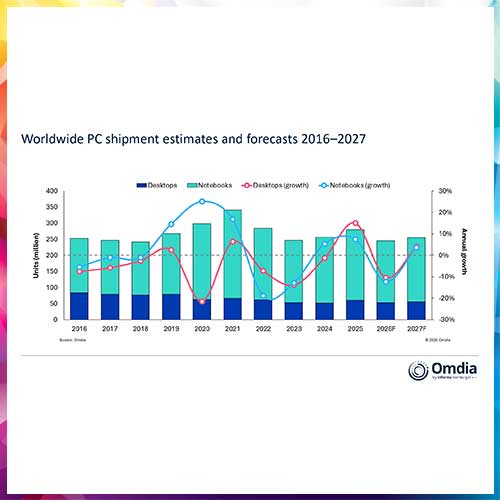
The research firm said steep increases in memory and storage prices—particularly a minimum 60% rise in the first quarter of 2026—are pushing up manufacturing costs for PC makers and forcing vendors to raise prices, scale back promotions and adjust device configurations.
Since early 2025, the cost of mainstream memory and storage configurations used in PCs has increased by between $90 and $165, creating significant pressure on manufacturers’ margins.
Under Omdia’s forecast, desktop shipments will decline about 10% to 53.2 million units, while laptop shipments are expected to fall 12% to around 192.2 million units.
Analysts warned the market could face an even sharper downturn if component shortages worsen. Omdia said the decline could approach 15% or more if memory and storage supply tightens further and prices continue rising through the year.
Geopolitical tensions, including the ongoing conflict in the Middle East, may also add uncertainty by disrupting transportation networks and weakening demand in some markets.
Ben Yeh said lower-priced PCs will be hit hardest because vendors have less room to absorb rising component costs in those segments.
PCs priced below $500 are forecast to see shipments fall 28% to around 62.1 million units as vendors reduce production of low-margin devices and prioritize higher-end products that offer better profitability.
In contrast, premium PCs priced above $900 may hold up better, supported by stronger consumer demand and greater pricing flexibility.
Kieren Jessop said the downturn will affect PC operating systems differently. Windows-based PCs—which account for the vast majority of shipments—are projected to decline about 12% due to supply constraints.
Devices running Google’s ChromeOS are expected to face the steepest drop of about 28%, reflecting the platform’s heavy exposure to the education market and low-margin hardware.
Apple’s Mac lineup is forecast to see a more modest 5% decline, supported by the company’s vertically integrated supply chain and focus on premium devices.
Meanwhile, PCs based on HarmonyOS are expected to grow rapidly from a small base as Huawei expands its PC ecosystem in China.


