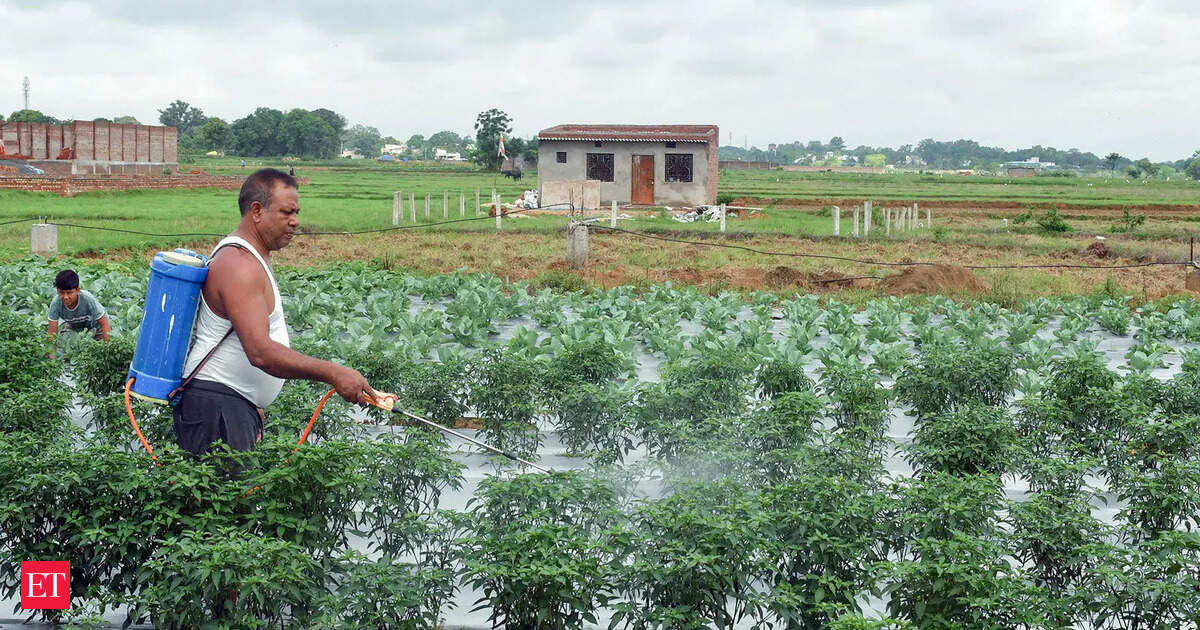
A tender for 1.7 million tonnes of urea, issued by National Fertilizers Ltd on May 27, received bids in the range of $444-605 per tonne, a sharp decline from the earlier purchase price of $959 per tonne, said people aware of the matter. More than three dozen bidders participated in the tender.
Also read: Fertiliser Ministry seeks to double subsidy from Rs 1.71 lakh crore budgeted for FY27 as Iran war hits costs
The lower bids reflect an easing of global urea prices in May after a sharp spike triggered by the start of the Iran war on February 28. Several importing countries had deferred urea purchases after prices surged and shifted to cheaper nitrogen fertiliser alternatives, helping stabilise demand.
China, which had earlier restricted fertiliser exports, also issued some export quotas in recent weeks. This helped improve global availability and temper prices of nitrogenous fertiliser, said industry executives.
 ET Bureau
Sharp decline in bids as China eases supplies; to help in lowering India’s subsidy bill
Softer fertiliser prices are crucial for India-the world’s largest urea importer. Urea is also the most widely used soil nutrient in the country, accounting for about 45% of total fertiliser consumption. It is generally applied soon after sowing, around the end of June, making timely availability critical for the kharif season.
India has procured around 40% of its annual urea import requirement at nearly double the pre-crisis price. Any further purchases at lower rates could help prevent a sharper increase in the fertiliser subsidy bill, which is already expected to exceed the budgeted estimate of ₹1.77 lakh crore.
Also read: El Niño clouds loom over kharif crops, farm pay
The government sells urea to farmers at heavily subsidised rates, with farmers paying only a small fraction of the actual cost. As a result, any rise in global prices directly increases the subsidy burden on the exchequer.
The West Asia crisis had disrupted supplies of liquefied natural gas, a key input for domestic urea production. This affected output in March, just ahead of the main planting season, raising concerns over availability during peak demand.
The government has since revised its kharif requirement estimates. Urea requirement for the season has been reduced to 19 million tonnes from 19.4 million tonnes, while the requirement for di-ammonium phosphate has been lowered to 6 million tonnes from 6.6 million tonnes.
The agriculture ministry has also started a campaign to encourage farmers to reduce the use of bulk fertilisers from June, citing the need to protect soil health and lower dependence on imports. The move follows PM Narendra Modi’s appeal to farmers to cut chemical fertiliser use by 50% to improve soil health and curb import dependence amid elevated global prices and concerns over possible supply tightness ahead of the kharif sowing season.


