I thought I knew what I liked in the best gym shoes. As someone who tests fitness kit for a living, I really liked shoes like Under Armour’s Tribase Reign or Adidas’ Dropset Control series, both of which helped lock my feet down during big lifts such as squats and deadlifts, and have enough cushion and grip to support high-impact exercises like plyometric jumps. This sort of shoe, along with my trusty quiver of the best running shoes, have supported me throughout my training (which I document now and again as part of our regular Fit List series).
But I recently had the opportunity to test the VivoBarefoot Motus Strength II shoe, which is very different from those mentioned above. If you’re not familiar, barefoot shoes are effectively made with your foot’s natural movement in mind: they tend to be thin, zero-drop, flexible shoes designed to keep your feet as close to the ground as possible, with wide toe boxes to promote spreading feet.

|
Component |
VivoBarefoot Motus Strength II |
|
Weight |
Around 318g (Men’s Size 8) |
|
Upper |
Breathable mesh |
|
Midsole |
Ortholite Performance insole (98% recycled foam) |
|
Outsole |
Motus Strength outsole |
|
Heel-to-toe drop |
0mm |
I was very surprised to learn that the very minimalist VivoBarefoot shoes were actually heavier than some of the best running shoes I’ve tried, as they look like they should weigh a pittance. For example, the Saucony Endorphin Speed 5 have a listing weight of 249g, far less than the Motus at 318g despite being far bigger.
They’re almost polar opposites, with the strength shoe packing a lot of engineering in a condensed, flexible size — whereas top running shoes need to be light on the foot, yet supersized for cushioning for joint protection and speed. I suppose it’s like comparing cotton candy to a piece of chocolate — both contain the same amount of sugar.

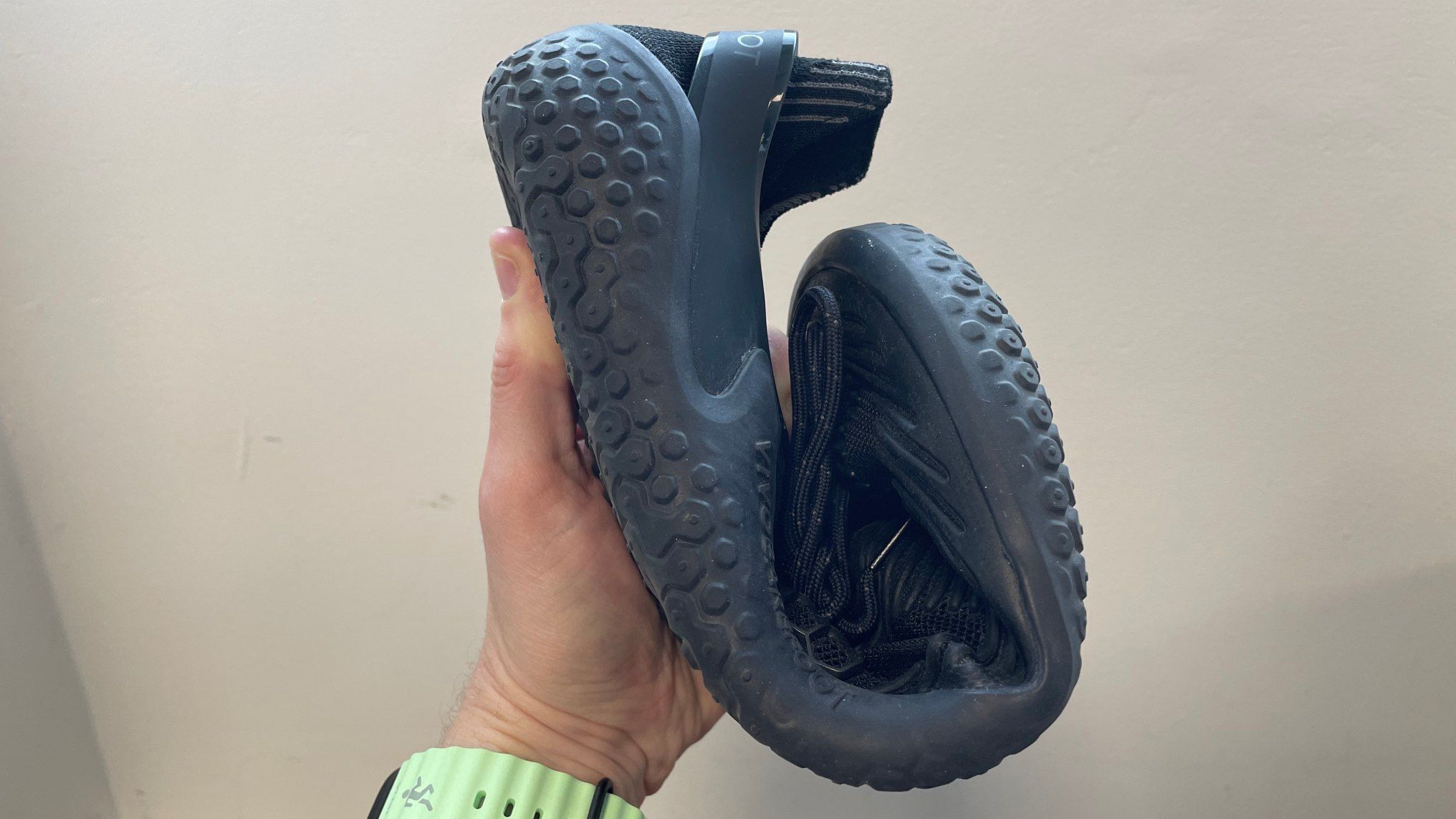
Nevertheless, the magic of barefoot shoes seems to be that they feel lighter, even though they’re not. Even laced up tightly, the 2mm outsole is flexible enough to allow my foot total freedom of movement, flexing with my toes, and snap back into place once in a relaxed position. As you can see in the image below, I could practically tie these shoes into a knot if I wanted to.

1.5mm nodules for grip, comprising three-quarters of the depth of the entire 2mm outsole, ensured enough grip for me to comfortably put my back into moves such as sled pushes or shuttle runs, while the outsole wraps around for extra stability. The wide toe box allowed for my feet to spread and lock into free-weight moves like barbell overhead presses, squats, deadlifts, and even the ski-erg, helped by the stiff heel strap which functioned as an anchor point.
The foam insole provided a bit of cushioning for plyo moves, but what really made a difference was the flexibility of the shoe, allowing me to land naturally and transition from ball-to-heel to reduce the impact of squat-jumps.

As you can tell, I absolutely love them, and after one month, I’m completely satisfied with their performance. I normally retire shoes after testing, but barefoot shoes might be my go-to choice for the gym in the months to come. Find the best deals near you below:

Follow TechRadar on Google News and add us as a preferred source to get our expert news, reviews, and opinion in your feeds.


